PoDoCo program grant application round open March 1st – April 13th

Are you a company with cutting-edge renewal ideas and looking for the help of a talented postdoc to investigate your ideas? Are you a young postdoc interested in putting your research knowledge and expertise into practice? PoDoCo program may be just right for you!

PoDoCo is a matchmaking program supporting long term competitiveness and strategic renewal of companies and employment of young doctors in the private sector. The duration of PoDoCo period is 1-2 years and it consist of two phases: research period and targeted research period. PoDoCo program is funded by PoDoCo foundation pool and companies participating in the program. All companies operating in Finland and all young doctors who have recently completed or will soon complete their doctorate degree are welcome to join the PoDoCo program.

PoDoCo foundation pool offers research grants of 6-12 months for the research period. Grants awarded by PoDoCo foundation pool are intended for academic research investigating new innovative ideas to boost the strategic renewal of Finnish industry.  A one-year research grant is EUR 28 000.

PoDoCo program opens application round for grants from 1 March 2017 to 13 April 2017. Results of the application round will be published at latest on June 2017.

PoDoCo program has two application rounds each year and awards some 17 postdoctoral grants in each round. Nine foundations will allocate altogether almost 1 000 000 euros to the program during year 2017. The program’s foundations are Finnish Cultural Foundation, Jenny and Antti Wihuri Foundation, Maa- ja Vesitekniikantuki ry, Svenska Kulturfonden, Finnish Foundation for Technology Promotion, Maj and Tor Nessling Foundation, The Foundation for Economic Education, KAUTE Foundation and Technology Industries of Finland Centennial Foundation. PoDoCo program is operated by DIMECC Ltd.

Further information about the program and the application round is available on PoDoCo website at www.podoco.fi, and from Program Manager Essi Huttu, essi.huttu(at)dimecc.com, tel. + 358 40 840 9259.


www.podoco.fi

Nearly EUR 25 million to academic research and the arts

The Finnish Cultural Foundation awarded a total of 1,108 grants in its Annual Gala on 27 February. A total of 12 per cent of all applicants received grants. The Finnish Cultural Foundation’s Prizes, each EUR 30,000, were presented to actor Anna Paavilainen, philosopher Veikko Rantala and architect Jenni Reuter.

Grants were awarded to a total of 1,108 individuals, working groups and organisations (1,064 in 2016). The success rate of the applications in academic research and the arts was 12 per cent, as in previous years, but the rate varies between fields, and was, for example, in painting as low as 7 per cent. The total number of applications submitted was 9,206. The number of applications in the field of the arts saw an increase, while the number of applications in academic research slightly decreased over the previous year.

Of all grants, 52 per cent went to academic research (54 per cent in 2016) and 48 per cent to the arts (46 per cent). The average size of the grants was EUR 22,100 in academic research and EUR 16,100 in the arts. The share of women among the grant recipients was 58 per cent this years, compared to economics, in which the women made up 80 per cent of the grant recipients. Eleven per cent of the applications and 9 per cent of the recipients of the grants were foreign nationals.

The largest grants showed a heavy leaning towards the arts. Of all grants awarded, 33 per cent were given for artistic work. The scheme aiming to improve the quality of life of people in need of care by means of arts received applications from 252 applicants, with 23 grants awarded, worth EUR 430,000 in total.

The grants awarded for the arts form a significant funding base supporting the position of foreign-born artists in Finland as well as the internationalisation of Finnish artists. The International Artists’ Centre Finland received EUR 50,000 for establishment costs. Support for Asylum Seekers Finland also received EUR 50,000 for the further development and rollout of a project bringing together Finnish artists and artists amongst asylum seekers in Finland. This year, the Finnish Cultural Foundation also specifically invited applications for residency grants. In addition to personal residency grants, a grant of EUR 90,000 was awarded to Perpetuum Mobile for running the Artists at Risk safe residencies.

Applications for funding doctoral research made up 29 per cent of all applications, while the share of post doc research was 12 per cent, showing a slight decrease.

In addition to the grants awarded at the Annual Gala, the Central Fund also makes funding available through the Finnish Foundations’ Post Doc Pool and the Post Docs in Companies Pool. This means that the Central Fund awarded a total of EUR 25 million in grants, as in the previous year. The Regional Funds will also distribute an additional EUR 12 million at their own annual galas in the spring.  

A complete list of grant recipients is available at www.skr.fi/myonnot

Prizes for outstanding cultural achievements

Actor, director, scriptwriter Anna Paavilainen

Anna Paavilainen (b. 1983) graduated from Theatre Academy Helsinki in 2006. She joined the Finnish National Theatre in 2008, where she played key female roles over several years, including Desdemona in Othello, Célimene in The Misanthrope and Hedvig in The Wild Duck.
Paavilainen has a great ability to combine a full immersion in the role with unique clarity of thought. She is also an outstanding musical talent and she boldly uses all her skills in building a work of art.

After leaving the National Theatre, Paavilainen has pursued her career as a freelancer scriptwriting and directing her own performances. She uses acting as a medium to address structural issues in theatre and society, such as the position of young female actors and the pressures on young people regarding their external appearance. Paavilainen’s works Play Rape and Sinuus, the latter created together with Marja Salo, were poignant but extremely funny works of stage art. Paavilainen has established together with Marja Salo the Omatuntoklubi at the National Theatre, which is a club providing an accessible arena for experimental theatre. Anna Paavilainen is also a prolific film actor, director, cinematographer and scriptwriter.

The Prize has been awarded for bold and poignant statements

Mathematician, philosopher Veikko Rantala

Veikko Rantala (b. 1933) is one of the most internationally renowned Finnish philosophers. A major theme in Rantala’s career has been crossing the boundary between “Two Cultures”, the division between natural academic researchs and the humanities, and to explore the conditions in which genuine dialogue could take place.

Throughout his career, Veikko Rantala has been a proponent of cross-disciplinary exchange. Rantala earned his first degree in the 1950s in mathematics after which he taught mathematics in the upper secondary school for more than 10 years. During his time as a teacher, he became interested in philosophy and took up studies in the subject in the late 1960s. Rantala took his PhD in 1973 after which he worked as a researcher at the University of Helsinki until 1985, when he became professor at the University of Tampere. Rantala retired in 1998.
For his doctoral dissertation, Rantala developed the so-called urn models in the field of logic. This helped in resolving several epistemological problems, such as the “problem of impossible worlds”, which were previously beyond reach. The urn models have lent themselves to many philosophical discussions, such as the development of the theory of definability, in which Rantala has made a significant impact.

Veikko Rantala has discussed in his numerous articles and books the problems of conceptual and theoretical evolution as well as the modelling of scientific progress. Alongside and based on these topics, he moved on to collaborate increasingly with researchers of aesthetics as well as musicology and cognitive academic research. The collaboration led to several international publications. Rantala has published several works in Finnish and he has also written widely for the general public on topics such as music appreciation, literature and film.

As a person, Veikko Rantala has an unassuming character and a genuinely philosophical mind, and he has always remained open to different ways of thinking. This has come necessary when building bridges between two worlds, philosophy and mathematics.

The Prize is awarded to a person who has helped broaden our thinking and build bridges of understanding.

Architect Jenni Reuter

Jenni Reuter (b. 1972) is a partner in an architectural office of three women, Hollmén, Reuter and Sandman. She is also the Associate Professor in Architectural Principles and Theory at Aalto University.

Jenni Reuter is a pioneer in a strongly male-dominated field. Hollmén, Reuter Sandman Architects’ works include the Women’s Centre in Senegal, a Shelter House in Tanzania and the Learning Centre in Egypt. These projects are funded by Ukumbi, the NGO established by the three architects, in which the members are mostly women.

Jenni Reuter has carried out several projects in developing countries to alleviate poverty and to offer protection to those who need it the most. She weaves her architecture into the life of the community. A key element in her projects is to engage those in need of help in the design process and the execution of the project, so that they can be free of any sense of obligation towards the architect. According to the underlying philosophy, giving is a joy but a sense of obligation a burden in the long run. Deep caring and empathy that crosses cultural boundaries, as demonstrated by Jenni Reuter, are valuable assets in our time. Jenni Reuter combines theoretical expertise with pragmatism and fearless action: she is not afraid to get her hands dirty.

Jenni Reuter has designed Villa Sundsveja in Dragsfjärd and several architectural exhibitions, among many other things. She aims to find alternatives for conventional norms: an example of this is the private home Kissankäpälä in Espoo, which has a natural ventilation system.
Jenni Reuter is not seeking to be perceived as a heroic architect who designs buildings to build her own brand. Her work shows that showy high-profile architecture is transient and not the type of architecture that in the end will prove valuable for humanity. Reuter challenges society to approach architecture as a way of bringing equality rather than deepening the existing divide between people.

The Prize is awarded for empathetic, human-scale architectural that successfully crossed cultural boundaries.
 

Time stopped in Mankby

The medieval village of Mankby was deserted in the sixteenth century. A team of researchers examined the history of the unique site in a project that spanned several years.

The story of Mankby unfolded gradually. The village turned out to have been a diverse whole, and the results of the project were surprising.

– At the very beginning, we discovered a fossilised medieval village, with most of the buildings constructed during its final stage more or less visible to the naked eye. Excavations provided us with access to its earlier stages. There are not many fossilised villages of this type in Finland, and it is already safe to say that an equally large and well-preserved medieval village can hardly be found anywhere else in Finland, says Georg Haggrén, an adjunct professor of historical archaeology, about Mankby, a village that used to be located in what is now Espoo.

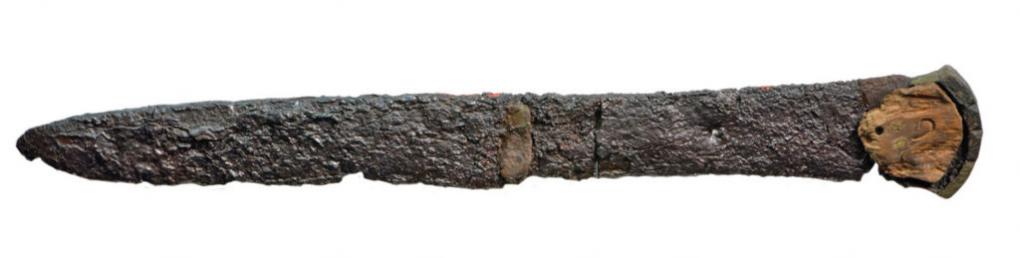
A nkife from the village of Mankby

A knife from the medieval village of Mankby.

Haggrén and his team have been examining Mankby since 2007. A book, Mankby – A deserted medieval village on the coast of southern Finland, was published as a result of the long process in May 2016.

The oldest buildings discovered in Mankby are from the thirteenth century. By Finnish standards, Mankby was a large village, with its eight houses and around 50 inhabitants. All of the houses were relocated in 1556, when Espoo Manor was established. Some of the buildings were transferred by peasants, while others were used by the Crown for purposes related to the manor.

– This means that there is a sense in which time stopped for Mankby 500 years ago. In some respects, land use has been practically non-existent since then, which makes Mankby a unique site, says Haggrén.

– There is very little information about medieval Finland. Archaeology provides us with better access to daily life than written sources, which focus more on administration. There is more information about the period beginning in the seventeenth century, but Mankby had already been abandoned at that point.

However, written material has been discovered about the very final stages of the village, and this material indicates the number of houses and also provides some information about farming, mostly consisting of the names of farmers.

Researcher Tarja Knuutinen was in charge of the excavations in the lower part of the village. This area covered around 100 square metres in the eastern part of the village and included sites of buildings, ancient fields and roadbed.

– I examined a building that was only slightly visible above the ground when we started. It was a building from the final stages of the village that had probably been taken down when the village was abandoned. In addition, we discovered earlier structures dating back as far as the fourteenth century.

According to Knuutinen, the building from the early sixteenth century is very similar to later smoke cottages. It is part of a building tradition that continued almost until our time. Another building examined in Mankby turned out to be a double cottage – that is, a markedly larger house. According to the researchers, it was not the home of an ordinary peasant, but the home of a member of the rälssi class, which was exempt from taxes and enjoyed many other privileges.

The artefacts discovered in Mankby are varied and indicate an active culture of trading that provided even peasants with items from as far as Central Europe.

The development of the village and its layers can be seen in its lower part: the village was first used for cultivation and then for construction.

– The fossilised fields have now been dated to the fourteenth century, and their cultivation may have continued until the early fifteenth century. In terms of research, they constitute an interesting whole, as there are not many similar fields located in the middle of a village. In Mankby, we have gained access to a system of fields and its ditches and foundations.

The artefacts discovered in Mankby are varied and indicate an active culture of trading that provided even peasants with items from as far as Central Europe. These artefacts include fragments of glass goblets, three-legged cauldrons made of red clay and jugs made of stone clay, as well as pieces of horse accessories, such as stirrups, and jewellery and buckles and other items related to clothing.

– From the very beginning, we found an exceptionally large number of knives: sheath knives used for daily work and eating, as well as fine table knives that reached Finland along with influences of Central European culinary culture in the fifteenth and sixteenth centuries. These influences clearly had found their way to Mankby as well, says Elina Terävä, who was responsible for the examination of artefacts.

The varied artefacts also indicate that people living in modest homes had items that are not traditionally associated with the austerity of peasant life. This came as a surprise to the researchers as well.

– The artefacts are quite fine. We discovered a surprisingly large amount of imported goods, which is a sign of trading. Small ornamental items made of iron, for example, indicate that life was not only about necessities. The people wanted a little luxury, which was provided by items used in Central Europe, for example.

Photo: The knives attracted the researchers’ attention. With its length of more than 20 centimetres, this knife was exceptionally large, as well as being unusually ornate. The knives were decorated using bronze and bone, among other materials.

Application period for regional fund grants 10 January – 10 February 2017

The application period for grants from the 17 regional funds of the Finnish Cultural Foundation starts on 10 January 2017. Regional funds support the cultural work being done in each respective region by awarding grants and prizes.  In 2017, the regions will distribute grants worth a total of EUR 12 million.

The regional fund supports work in cultural fields and different projects; science grants are aimed at dissertation work in particular and the scientific work that follows it. Organisations may seek grants for carrying out different types of cultural projects. When deciding on grants, precedence is given to those applicants who live or were born in the region in question, work carried out in or for the region, as well as cultural and development projects that are significant to the region.

Every regional fund awards at least EUR 40,000 in one or two grants to top projects in the region. In addition, each fund awards at least EUR 20,000 for children’s and young people’s culture. The smallest grants are EUR 2,000, with the exception of study grants, which may be less. Regional funds also have their own areas of emphasis, for example, projects to renew the region’s vitality or identity, communality, as well as children’s and young people’s culture.

The application period ends at 4 pm on 10 February 2017

Applying for a grant is done electronically at www.skr.fi/haku. The application must be submitted to the system by 4 pm on Friday 10 February 2017. Statements must also be submitted to the system by 4 pm on 10 February. Only those applications that have been submitted by the close of the application period will be considered.

Grants will be distributed at the annual party of each regional fund in April or May.

More information on regional funds and grants can be found on the website of each regional fund.

Information on the operations of the Finnish Cultural Foundation and grants can also be found here:
www.facebook.fi/kulttuurirahasto
twitter.com/skr_fi
www.youtube.com/kulttuurirahasto
 

Application Guidelines

The taciturn Finns – is there any truth to the stereotype?

Anna Vatanen

The image of the taciturn Finns is a much-repeated stereotype that is still common. At the same time, Finns are automatically subject to being compared with other nationalities.

“However, no one has actually studied the nature of this taciturnity,” says Anna Vatanen, who is a postdoctoral researcher at the University of Helsinki. “In what situations are Finns reticent and compared to whom?” Vatanen decided to take on the task herself.

Vatanen looks at how people who are acquainted with each other behave in natural interaction situations. She studies how they react to moments of silence during a conversation and how they create such moments: what marks the beginning and the end of silence and what happens in between. Is the silence natural or awkward? Do the persons involved feel the need to busy themselves with something else during the silence? Vatanen bases her analysis on videotaped conversations.

Is the silence natural or awkward? Do the persons involved feel the need to busy themselves with something else during the silence?

Vatanen looks for pauses and repetitive patterns in the pauses. Her aim is to find any general strategies and relate them to the common suppositions about Finnish taciturnity and findings from studies in other languages.

Moments of silence

Although it is early days, Vatanen already suspects that there is something unique to the way Finns relate to silence. Earlier research has shown that pauses occur even among English-speakers. However, during these pauses, the parties typically focus on something else, like petting a dog or fetching a book. In conversations between Finns, there are moments when nothing happens at all.

“They just remain there, quite relaxed,” Vatanen explains.

“The most interesting thing is not necessarily how long the pause is, but what happens during it.”

Vatanen’s research material includes discussions while eating breakfast, driving in a car, playing board games and visiting a friend. Naturally, some pauses occur when a speaker focuses on something else, such as the next move in the game. But, as Vatanen points out, such situations do not always require everybody else to stop talking.

“Even a couple of seconds of silence may feel like a long time. If there are many such moments and they don’t seem awkward, it probably means that the people involved are alright with them.”

What is silence?

“As a matter of fact, ‘silence’ only means that nobody is speaking in a situation,” says Vatanen. “But there are other kinds of interaction, such as nods and looks, which makes silence slightly misleading.”

It is also a matter of how people manifest their connections. Words are not always required; just being there is sometimes enough.

“As a matter of fact, ‘silence’ only means that nobody is speaking in a situation,” says Vatanen.

“Maybe it’s characteristic of Finnish-speakers to refrain from saying anything at all. It may be a normal way of being together. On the other hand, even if Finns have a different attitude to silence than other nationalities, it does not mean that Finns are always, or in general, ‘taciturn’. Furthermore, you mustn’t treat ‘Finns’ as a homogeneous group with just one, common way of doing things.”

In spring, Vatanen will travel to Australia to work with her colleagues there. She is eager to learn about the Australian researchers’ views on the subject and if they see it as something strange or anomalous.

“I don’t think I will be able to establish where the notion of the taciturn Finns originates, but I hope and believe I will be able to reveal something about the reality behind the stereotype.”

Text: Jenni Heikkinen

Finnish Cultural Foundation is making available grants totalling 25 million

Grants of the Finnish Cultural Foundation’s Central Fund for 2017 will be open for application in October. The Finnish Cultural Foundation will award a total of 37 million euros in grants in 2017. The Central Fund accounts for 25 million and the regional funds for 12 million of this amount.  

Research grants are mainly intended for doctoral studies and for post-doctoral research. Research Workshop grants are the special grants available during this application round. The grants available under joint funding for doctoral students provide an opportunity to combine a grant with an employment relationship.  

In arts, grants are provided for work and a broad range of different projects, and special grants are also available under a scheme aiming to improve the quality of life of people in need of care by means of arts. Organisations may seek grants for carrying out different types of cultural projects and  artists are also encouraged to submit separate applications for grants for work in residential centres.

Finnish Cultural Foundation is changing over to a paperless application process

The applications for grants must be submitted online, at skr.fi/en/grants by Monday 31 October. For the first time, the entire application process is paperless, which means that you no longer need to print out your application and send it by mail.  

“In addition to our own officials, nearly one hundred outside experts take part in the evaluation of the applications each year. None of them receives any compensation for their work. Many years ago, we decided that we won’t change over to a paperless application process until a large proportion of our evaluators are prepared to read applications on screen only. This year almost 90 per cent of the arts and science experts announced that they are ready to do it,” explains Juhana Lassila, Director of Cultural Affairs of the Finnish Cultural Foundation.

The grants of the Central Fund will be awarded at the annual gala on 27 February 2017.

You are warmly welcome to attend a grant information briefing in the music hall of the Old Student House (Vanha ylioppilastalo) in Helsinki on Wednesday 12 October at 16:30.

Further information:
http://skr.fi/en/grants
https://twitter.com/skr_fi
https://www.youtube.com/user/kulttuurirahasto
 

Post Docs in Companies -grants

Post Docs in Companies, PoDoCo, is a matchmaking program supporting long term competitiveness and strategic renewal of companies and employment of young doctors in the private sector. The duration of PoDoCo period is 1-2 years and it consist of two phases: research period and targeted research period. PoDoCo program is funded by PoDoCo foundation pool and companies participating in the program. All companies operating in Finland and all young doctors who have recently completed or will soon complete their doctorate degree are welcome to join the PoDoCo Program

PoDoCo foundation pool offers research grants for the research period. Grants awarded by PoDoCo foundation pool are intended for academic research with high industry relevance for post docs who have recently completed or will soon complete their doctoral degree and wish to work in companies. PoDoCo foundation pool offers young doctors 6-12 months research grants for public research on a topic that is relevant for at least one company’s strategic renewal. A one-year research grant is EUR 28 000.

PoDoCo program opens application round for grants from 15 September 2016 to 31 October 2016. Results of the current application round will be published at latest on December 2016.

PoDoCo program has two application rounds each year and awards some 13 postdoctoral grants in each round. Seven foundations will allocate altogether max 700 000 euros to the program during year 2016. The Program’s foundations are Finnish Cultural Foundation, Jenny and Antti Wihuri Foundation, Finnish Foundation for Technology Promotion, KAUTE Foundation, The Foundation for Economic Education, Maj and Tor Nessling Foundation, and Technology Industries of Finland Centennial Foundation. PoDoCo program is operated by DIMECC.

Further information about the program and the application round is available on PoDoCo website at www.podoco.fi, and from Program Manager Essi Huttu, essi.huttu(at)dimecc.com, tel. + 358 40 840 9259.

Olli Mäki’s story charms director

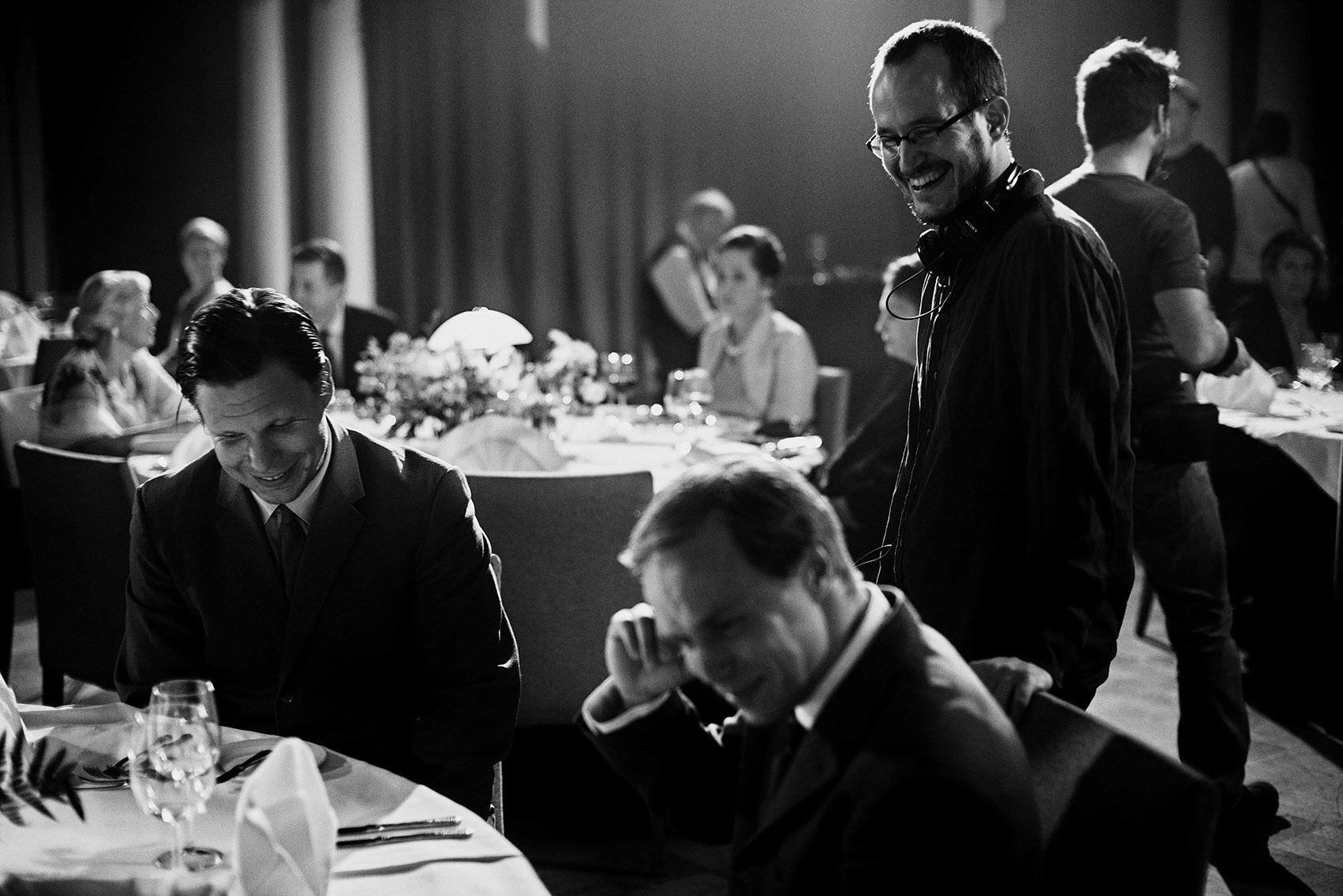
“Artistic freedom is everything for a film-maker. Maybe it’s easier to ask for it once you have proved yourself to be trustworthy”, wonders film director Juho Kuosmanen.

His movie The Happiest Day in the Life of Olli Mäki won the prize of Un Certain Regard at the Cannes Film Festival, and great success has been predicted for the movie and its director.

The overall effect of the publicity the movie has got thanks to Cannes will only become clear later, but Kuosmanen says that at least the partners in the movie have liked the attention. According to Kuosmanen, The Happiest Day in the Life of Olli Mäki seems to be selling well overseas, and the director is also happy if other Finnish film-makers receive attention thanks to the film.

“When one film-maker from a country is noticed, it usually means that people start looking at the whole country.”

Juho Kuosmanen has received grants from the Finnish Cultural Foundation for artistic work and making his movies.

An exceptional man, an exceptional movie

The idea for The Happiest Day in the Life of Olli Mäki came in 2011. Kuosmanen tried to write a couple of scripts, but they just did not seem to progress. Taulukauppiaat (The Painting Sellers), the movie Kuosmanen directed as his graduate work, had won best student movie award at Cannes earlier.  This meant that Kuosmanen’s first full-length feature film would also be shown at the festival, putting even more pressure on the work. The Kuosmanen came across the story of boxer Olli Mäki.

“I thought that through it I could address the same feelings, i.e. pressure and success, and what it means to different people.”

The Happiest Day in the Life of Olli Mäki depicts Mäki’s preparations for his upcoming world title fight. At the same, he realises that he has fallen in love.

Kuosmanen was interested in how before the fight Mäki was built up to be a national hero, even though the boxer himself was expecting something less than heroic.

“Olli Mäki was a good boxer, but his kind nature was in conflict with the harshness of the sport.” As he was an exceptional boxer, it was necessary to make an exceptional boxing movie.

Recreation from silent movies

Now Kuosmanen is working on two scripts, and over the winter he is shooting a silent movie for the Loud Silents festival. In store is a new version of Finland’s oldest film, Salaviinanpolttajat from 1907.

Kuosmanen has previous experience of making silent movies; in 2012 he made the movie Romu-Mattila ja Kaunis Nainen. It is being shown again in Paris, at the film archive in conjunction with the premiere of  The Happiest Day in the Life of Olli Mäki.

“The periods between films are long, as are the processes, especially when you want to be involved in everything. For this reason it is good to have some shorter projects in between, so that there is still that feeling of doing things together and a bit of playfulness. Silent movies are refreshing projects and they also bring with them ideas.”

The Happiest Day in the Life of Olli Mäki is in theatres from 2 September 2016.


Apply for working grants in residential centres between 18 Aug and 16 Sept

The Finnish Cultural Foundation awards grants for international artists’ residency programmes each year. Applications for working grants in the residential centres can be made between 18 August and 16 September 2016 via the electronic grant application system.

In 2017, grants are available for the following locations: Hôtel Chevillon in France, SeMA Nanji in Seoul, South Korea, Tokyo Wondersite in Japan and O Espaço do Tempo in Portugal. The grant amounts to €2,000 a month (€500 per person per week for O Espaço do Tempo).

More information here.

Call for Argumenta applications

Argumenta – funding for scientifically interesting projects that bear importance in terms of society at large

The next call for Argumenta applications will take place between 15 August and 9 September 2016. The applications must be submitted via the Finnish Cultural Foundation’s electronic application system. The application is a two-stage process: heads of the projects selected from among the applications on the first application round will be requested to provide more detailed project plans and budgets.

The purpose of the Argumenta funding model is to provide a basis for sustainable arguments helping to find answers to open questions in important research fields. Argumenta projects are of cross-disciplinary nature, and they extensively analyse theories and practices from competing angles, which should encourage debate on the issues. The aim is to bring together decision-makers and researchers and make the results of the debate public so that they can have an influence on societal decision-making.

Criteria
1. The topic must be scientifically interesting and important in terms of society at large.
2. The topic must involve scientifically controversial issues that are the subject of a cross-disciplinary debate, in which the aim is to reach a consensus on the matter.
3. The scientific arguments produced in the project must be made public in such a manner that they can influence societal decision-making.

A network of seminars and workshops, which may also involve other activities, is at the core of Argumenta. However, project funding should not be used to cover the research expenses. The funding is to cover the costs arising from the work of the coordinator and the organisation of the seminars and other events. Argumenta projects should primarily be scientific in terms of their content and objectives, even though the seminars may be open to researchers, members of the public at large and decision-makers alike.

At Argumenta, the emphasis is on a cross-disciplinary approach. Even though a problem is often studied in different fields of science, it may be difficult to find a common language for formulating the solutions. At Argumenta, the purpose is to create a series of seminars and a common language for them. This helps to keep the projects free of scientific phraseology and allows all those involved to debate what the researchers are actually doing.

So far, funding has been provided for 15 Argumenta projects, which have covered topics ranging from responsible mining to human mortality, and the relation between genes and society.

For more information, please contact senior advisor Johanna Ruohonen, johanna.ruohonen(at)skr.fi, +358 40 5163475.

More information