Openness and Community for the Art World

Globe Art Point ry received a grant of EUR 240,000 for its initiative entitled GAP LAB & GAP INFO, Living Lab and Databank for New Finnish Art and Culture, in February 2018.

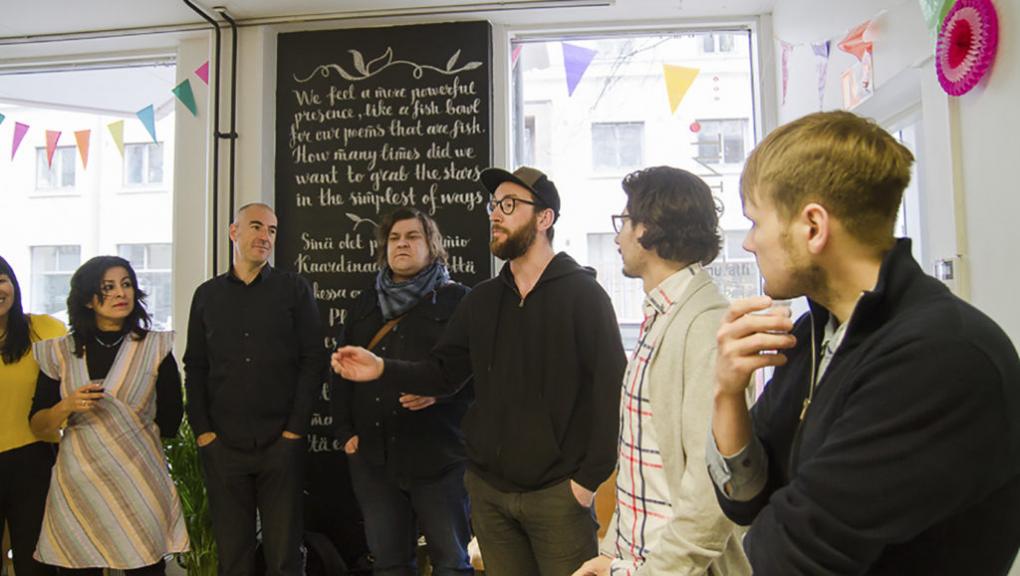
At the opening ceremony of GAP LAB & GAP INFO.

The largest grant awarded by the Finnish Cultural Foundation in 2018, totalling EUR 240,000, was given to Globe Art Point.

Globe Art Point is an association established in late 2016 for the purpose of promoting increased openness in the field of arts and culture in Finland. It supports opportunities for non-Finnish artists to collaborate with their Finnish counterparts and with local art institutions. The Globe Art Point (GAP) work space in Helsinki organises advisory services, workshops, lectures, discussions and stakeholder encounters. It can also be used by artists and teams for work and meetings.

“The goal is to enhance mutual understanding and collaboration between artists from various backgrounds, the public, and art institutions.”

GAP LAB & GAP INFO, Living Lab and Databank for New Finnish Art and Culture is an initiative intended to foster the diversification of the Finnish arts and culture field in line with the country’s rapid internationalisation. The initiative consists of two parts, of which the first, GAP LAB, will result in projects within performing and visual arts. The products will be shown to the public as elements of the partnering art institutions’ own programmes.

The second part, GAP INFO, is aimed at improving the openness and accessibility of the arts field for artists of non-Finnish origin.

“The goal is to enhance mutual understanding and collaboration between artists from various backgrounds, the public, and art institutions,” explains the association’s Managing Director, Tomi Purovaara.

“We will compile an online Artists’ Welcome Package, which will help non-Finnish artists successfully navigate their chosen career paths.”

GAP INFO will collect and disseminate information in English on operators, processes, legislation and funding related to the Finnish field of arts and culture.

“We will compile an online Artists’ Welcome Package, which will help non-Finnish artists successfully navigate their chosen career paths,” Purovaara says.

The Artists’ Welcome Program produced within GAP LAB, on the other hand, will comprise workshops, guidance and art institution visits, in order to deepen the information gained from the welcome package.

“GAP LAB is a collaborative endeavour, in which a team of curators will select projects to be implemented from proposals received through an open application system. The curator team and the artistic productions will include both non-Finnish and Finnish participants, and the curator team will also welcome representatives from various minority communities,” remarks Purovaara.

The initiative was devised by two employees of Globe Art Point together with a board consisting of seven non-Finnish artists, as well as some outside experts. The projects included in the initiative will be carried out by GAP LAB’s work teams in collaboration with staff from selected art institutions. The latter will include theatres, galleries, museums and festivals, among others.

The association is headquartered on Malminkatu in Kamppi, Helsinki, and the GAP LAB work space will be rented somewhere in the Helsinki region. Although the initiative is designed for Finland, during 2018 Globe Art Point will work on building a Nordic network of partners, with whom the outcomes and best practices of the initiative can be refined and disseminated.

“We are also planning a next phase, involving the establishment of a European network,” says Purovaara, describing the association’s ambitions.

EUR 38.5 Million in Grants for Arts and Science

In February 2018, The Finnish Cultural Foundation will pay out a total of EUR 26 million in grants from its Central Fund, which is one million euros more than in the previous year. Additionally, the regional funds will award a further EUR 12.5 million in grants.

Grants have been awarded to 1,090 individuals, working groups or organisations based on applications received by the Central Fund in October 2017. The acceptance rate of applications was 14% for science and 11% for the arts, with variations depending on the field; in fine art, for example, the acceptance rate was between five and eight per cent. A total of 8,895 applications were received. There was an increase in applications within the arts, compared to a decrease of some four hundred applications in the sciences.

The largest grant, totalling EUR 240,000, was awarded to Globe Art Point for establishing a living lab and databank related to new Finnish art and culture. Globe Art Point is an association of foreign artists living and working in Finland. The initiative, planned to take place between 2018 and 2020, will be designed and managed by the association’s Managing Director, Tomi Purovaara. The initiative aims to increase the linguistic and cultural diversity of Finland’s art institutions and projects by promoting the integration of non-Finnish artists in Finland, and their collaborations with local artists, among other things. Such diversification will support the inclusion of people from different cultural and linguistic backgrounds in the Finnish arts field.

This year, the largest grants in the science sector were awarded in the sphere of agriculture. This is due to additional funding of EUR 1 million revealed in October 2017, intended for extensive research projects related to farming, particularly within the fields of soil and pollinator health, crop diversity, climate change adaptation, and the ecological or ecosystemic impacts of pesticides and fertilizers.

The scientific sector received 54% of the grants, while 46% went to the arts. The average grant amount was EUR 24,000 for science, and EUR 17,100 for the arts. Women accounted for 58% of grantees, which was at the previous year’s level. Non-Finnish applicants made up 10% of applications and 9% of grantees.

Besides the grants awarded by the Central Fund at the annual gala, the Cultural Foundation provides funding for applicants from the Foundations’ Post Doc Pool and the Post Docs in Companies Pool. This brings the grant total for the Central Fund up to EUR 26 million, which is one million euros higher than in 2017. Additionally, the regional funds will award EUR 12.5 million in grants over the spring, representing an increase of half a million euros.

A list of awarded grants can be found (in Finnish) at skr.fi/myonnot.

Application period for regional fund grants 10 January – 9 February 2018

The 17 regional funds of the Finnish Cultural Foundation grant funds for promoting and developing research, the arts and other fields of endeavour in each respective region. The application period for grants starts on 10 January and ends at 4 pm on 9 February 2018.

Applications and statements must be submitted at the Online Application Service by the close of the application period.

More information on regional funds and grants can be found on the website of each regional fund.

A combined info of the regional funds will be held in Oulu on Tuesday 23 January 2018 at 15.00–16.30. The event will be broadcasted live and can also be watched afterwards (in Finnish) on Facebook (www.facebook.com/kulttuurirahasto) and You Tube (www.youtube.com/kulttuurirahasto). More information about the event can be found at www.skr.fi/pp.

The application period for Finnish Cultural Foundation grants 2018 has started

Grants of the Finnish Cultural Foundation’s Central Fund for 2018 are open for application in October. The Central Fund will award a total of 26 million euros, a million euros more than last year.

The application period for Central Fund grants is from 1 to 31 October 2017. Applications must be submitted at the Online Application Service  by 31 October 4 p.m.

The Finnish Cultural Foundation grants are awarded to individual applicants, working groups and communities to promote Finnish culture. Research grants are intended for doctoral studies and post-doctoral research in all areas.  In arts, grants are provided for work and a broad range of different projects, and special grants are also available under a scheme aiming to improve the quality of life of people in need of care by means of arts. Organisations may seek grants for carrying out different types of cultural projects. The Finnish Cultural Foundation also supports significant cultural projects that require more financing than usual.

In 2018, an extra million euros will be awarded for research on sustainable agriculture utilising biological interactions. Among the applicants, three to five projects will be selected which either produce new research data or apply existing data in practice.

Further information

Let´s dig deep!

The Finnish Cultural Foundation is launching a new Dig It! archaeology initiative. The initiative will provide Finnish school students with opportunities to get involved in archaeological projects in their own local area. Archaeological activities are ideally suited for phenomenon based learning as set out in the Finnish curriculum as well as learning outside the classroom.

Public archaeological excavations aimed at adults are often extremely popular, yet few opportunities exist for school students to get involved in similar projects.

“We hope that the Dig It! project will help to promote children and young people’s interest in scientific research methods, their own local heritage and history in general,” commented Antti Arjava, Secretary General of the Finnish Cultural Foundation.

The Finnish Cultural Foundation has announced the launch of a new Dig It! grant, available to archaeologists, working groups run by archaeologists and registered cultural heritage organisations, including museums and archaeological societies. The value of individual grants can range from EUR 5,000 to EUR 30,000 and will be offered to 5–10 projects each year.

Eligible projects must provide the participants with an introduction to archaeology as well as opportunities for them to prepare for the research element of the project in advance. It is envisaged that the period of active research will take approximately one week, but each project may comprise several research elements, involving several groups of school students. The archaeological research element can feature a variety of methods, including excavation and surface surveys on agricultural land.

“In Finland, artefacts from the 17th to the 19th centuries can commonly be discovered on land that historically has been used for agricultural purposes, and these items can have significant educational and local historical value. Even more recent signs of human life and activity can prove fascinating, particularly when they are directly relevant to the young participants’ own local environment,” Arjava said.

Funding recipients are expected to evaluate the research findings and outcomes together with the project participants and to publish the results on the project’s own website or via social media.

Applications can be submitted using the Finnish Cultural Foundation’s online application service from 15 to 30 November 2017. The successful projects will be announced in January 2018.

The Finnish Cultural Foundation is organising a free seminar on community archaeology on Friday 29 September, 12:30–16:00, at Helsinki University’s Porthania building. The event is open for all but will be particularly useful for those in the process of devising a project plan. Speaking at the seminar are international experts on community archaeology: Suzie Thomas from the University of Helsinki, Dr. Don Henson from the University of York (United Kingdom) and Charlotte Paulsen, Curator, Skanderborg Museum (Denmark). The seminar will be held in English.

For further information read here.

For further information about the seminar event and to register for the seminar, please visit www.skr.fi/mullankaivajatseminaari


Oxygen to bottom sediments

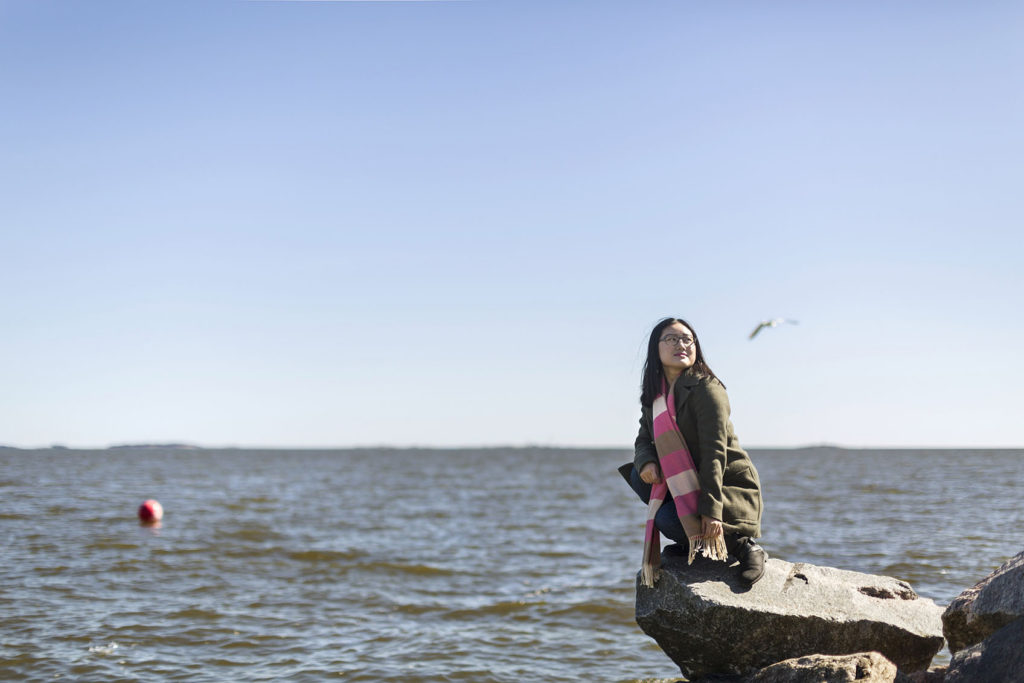
Yan Sun is studying new fascinating ways of using microalgae in the bioremediation of oil pollution.

When Yan Sun, a doctoral student in environmental sciences, is fishing at Lake Vesijärvi in Lahti during her leisure time, she prepares the catch in Chinese style.

“The internal organs, especially the swim bladder, are the most delicious part. My Finnish friends are horrified by this and claim that you cannot eat the whole fish,” Yan says.

She assures us that the water in the Lake Vesijärvi is now amazingly clean and that in some places, even drinkable. In fact, the cleanliness of water is close to her heart. In her dissertation research, Yan Sun is examining how to make the bioremediation of oil pollution in bottom sediments more effective by relying on microalgae.

Microalgae comprise a large variety of floating algae and other photosynthesising organisms, most of which are unicellular. Using them in the bioremediation of oil and other pollution has been studied for decades. However, the research method has been quite straightforward: the microalgae absorb oil and also degrade it as they grow.

In her research, Yan presents a new logic for using microalgae. Their main task is no longer to absorb oil, but to produce oxygen.

“Most microorganisms that are good at degrading oil can only survive in oxygenous environments. However, bottom sediments are often anoxic, which means that oil degrades very slowly,” Yan explains.

When microalgae are added to the bottom sediments, their main task is to be there and by being there they convert an anoxic environment into an oxygenous environment.

“By supporting microalgae, we will strengthen the natural oil degradation mechanism. This method is very environmentally friendly.”

This creates a beneficial self-perpetuating circle: the microalgae are photosynthesising organisms, which means that they use solar energy to convert carbon dioxide and water into sugar and oxygen. After this, aerobic microorganisms (microbes that base their metabolism on oxygen) absorb and degrade large amounts of oil and release carbon dioxide into the water. Microalgae will then convert this carbon dioxide back into oxygen in the photosynthesis process.

“By supporting microalgae, we will strengthen the natural oil degradation mechanism. This method is very environmentally friendly. You do not need to add chemicals to water that may be toxic to some species, or organisms that may cause chaos in the ecosystem in one way or another.”

Yan points out that microalgae-based bioremediation is also an excellent method from the perspective of the climate change.

“In photosynthesis, microalgae reduce the atmospheric release of carbon dioxide generated in oil biodegradation and they also absorb carbon dioxide from the atmosphere as they grow.”

Yan points out that even the best biodegrading organisms are quite slow at decomposing complex oil molecules. In an ideal situation, the oil will degrade completely into carbon dioxide. However, in most cases, the degradation will produce a slightly lighter and (usually) less toxic chemical.

Another factor hampering the use of microalgae in bottom sediments is that photosynthesis requires sunlight, which is, however, absent in the bottom mud of polluted sea areas.

Yan is planning new ways of improving the access of sunlight to the bottom of seas and lakes.

In fact, as part of her dissertation research, Yan is planning new ways of improving the access of sunlight to the bottom of seas and lakes. She cannot, however, disclose the details of the mechanism, because there are plans to apply for a patent for the idea.

Yan spent some time as an exchange student at the Tampere University of Technology in 2010 as she was studying for a bachelor’s degree in environmental sciences at the Guangzhou University. Two years later, she moved to Lahti to study for a master’s degree.

“I had already calculated the results in my head, when the Finnish students were still working on the exercises with their pocket calculators.” According to Yan, in China, mathematics is studied much more intensively at the upper level of comprehensive school and at upper secondary level than in Finland.

However, at university level, the situation is the opposite. For a mathematically gifted student like Yan, taking the bachelor’s degree in China was easy. Everything took place in the classroom: students only needed to read textbooks, because they contained all the knowledge, and to do calculation exercises.

“In Finland, I had to start doing things myself. It was a shock. I had to prepare projects, find scientific articles and read them, and write lots of text. It took a long time before I got used to this system. However, in the end I did.”

Yan has particularly fond memories of the laboratory course during her master’s studies. Students collected soil, water and snow samples in a city, suburb and a rural area and compared the amount of pollutants in different locations.

“The professor in charge of the course published an article based on the research carried out by the students. In courses like this, China lags well behind Finland.”

Text: Antti Kivimäki
Photos: Pekka Hannila

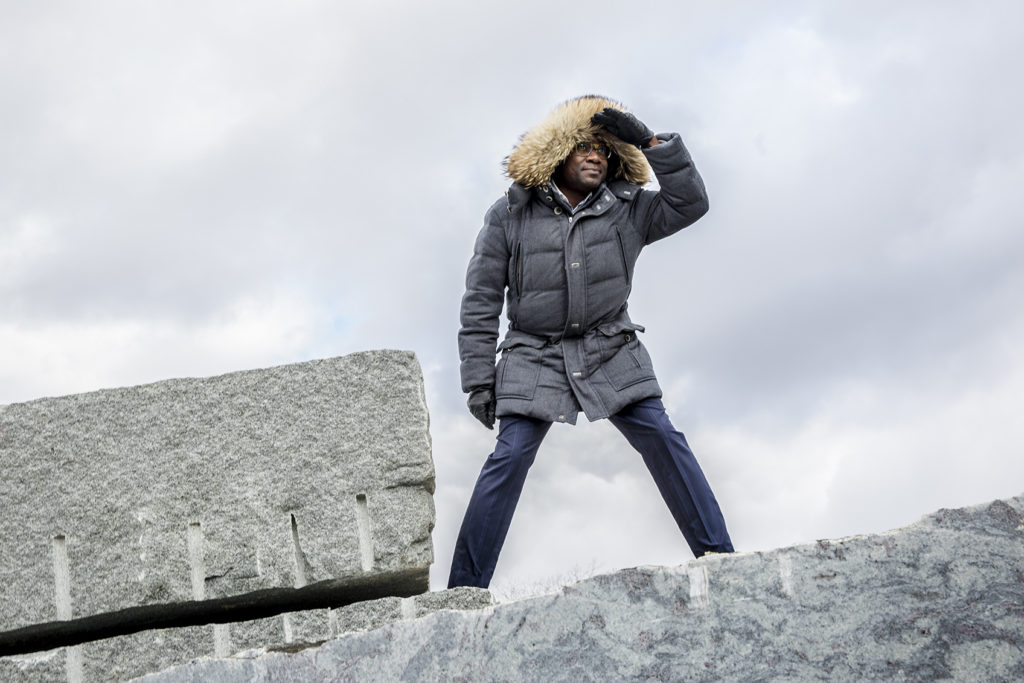
Lincoln Kayiwa can distinguish between 50 shades of granite

Finnish soil rocks! In the hands of designers, granite is no longer bound by the limitations of architecture.

There is a brand in Finnish bedrock waiting to be exploited. It is called granite, a truly precious material. More than half of Finnish bedrock consists of different types of granite. “Finnish granite is characterised by its diversity and it is aesthetically interesting. The material has great potential,” says Lincoln Kayiwa, a Ugandan-born designer. “You must see it for yourself.”

Kayiwa is presenting granite in the showroom of Loimaan Kivi. There are fifty different types of granite. It is easy to understand why a designer has been captivated by the beauty of granite. This is a stone treasure: pitch-black Amadeus patterned in purple, the dazzlingly blue-green Ylämaa spectrolite. The range of colours and patterns is immense.

The treatments – polishing, heating, and cutting – can produce a vast range of breathtaking varieties. Polished stone glows like glass and its smoothness feels strangely soft. It is clear that the red and grey granite in staircases, building foundations and sculptures is only one way of using this material.

Kayiwa became interested in Finland in his home country Uganda as a student, when listening to a lecture on modern design given by a visiting professor.  A long slide presentation of the gems of design introduced Kayiwa to such Finnish celebrities as Eero Aarnio, Eliel and Eero Saarinen and Alvar Aalto.  When studying in London, Kayiwa applied for and received a student exchange place in Finland and, after taking a master’s degree in arts and design from Aalto University, decided to stay in the country. In Finland, he also got married and established a studio of his own.

He is currently studying the potential of granite, in cooperation with Loimaan Kivi. The partnership has already produced results in a wide range of different fields.  A designer does not give orders, but is engaged in a dialogue with the other party. The people processing the stone are thoroughly familiar with the material.

“They know how thin a piece of granite can be or how an edge should be rounded.”

Jewellery is the new trend in granite. Kayiwa shows drawings of a bracelet in which a silver or golden frame encloses a black granite ring.  He enjoys combining playful elements and minimalism, a popular style in Finland. The end result is elegant and shows an understanding of the characteristics of the materials. Kayiwa does not make mass products. The context, as well as the combination of the material, object and the content are important.

Marble is held in such a high regard everywhere that there is little interest in other natural stones.  Italians have been very good at marketing marble and the country has benefited from it in many ways. There are more than 70 companies in the natural stone sector in Finland.

In Kayiwa’s view, the Finnish stone industry should invite designers and partners from different parts of the world and give them a chance to work with granite companies.

There are already many things happening in the granite sector. The new look will be on display in the Helsinki Design Week exhibition in the autumn.

Text: Taina Saarinen
Photos: Robert Seger

New grant for supporting the international mobility of artists

A new form of support has been introduced to increase the international mobility of artists. The Finnish Cultural Foundation announces a grant for the expenses of international work with no destination restrictions. In addition, the Foundation’s residency programme expands with a new location in Sydney.

In August 2017, the Finnish Cultural Foundation will open a new mobility grant for applications. The grant is aimed at covering the expenses of artistic work abroad. Artists from all forms of art may apply for the grant as individuals or working groups. The grant is intended for trips abroad that last more than two weeks. The grant ranges from €3,000 to €10,000.

“In addition to our own residency programme, we want to support other international efforts of artists and create opportunities for new art initiatives,” says senior advisor Johanna Ruohonen from the Finnish Cultural Foundation.

New residency in the heart of Sydney, Australia

The diverse residency programme of the Finnish Cultural Foundation will expand in August 2017 when applications will open for Artspace in Sydney, Australia. The residency takes place between June and August in 2018, includes a working grant and is intended for a single artist or a duo. Artspace is in partnership with UNSW Art & Design to provide resident studio artists with access to their state of the art Paddington campus facilities.

Acting in an advisory role in the development of the residency programme, Juha Huuskonen, director of the HIAP – Helsinki International Artist Programme, is glad to see Australia added to the list: “Australia’s art scene is very dynamic. Artspace is one of the oldest and most distinguished residency organisations, and its current director, Alexie Glass-Kantor, has expanded it into a diverse contemporary art organisation. The programme is a great opportunity for Finnish artists to develop their practise.”

Residencies for different forms of art

Other residencies open for applications for 2018 are the O Espaço do Tempo in Portugal for dancers and stage art working groups, Hôtel Chevillon in France for writers, translators and visual artists, and SeMA Nanji in South Korea and Tokyo Wondersite in Japan, both for visual artists.

The working grant for the residencies is €2,000 per month, or €500 per week for O Espaço do Tempo.

“During residency, artists can work free of their everyday routines, and develop their networks. Our residency partners are high-quality institutions and we are extremely glad to have them receive our grantees,” says Ruohonen.

Residencies for 2018 are open for applications between 10 and 31 August 2017.


Further information:

About mobility grant

About residencies

Johanna Ruohonen, senior advisor, Finnish Cultural Foundation, tel. +358 9 6128 1247, johanna.ruohonen@skr.fi


Reading Clans to promote children's reading

The Finnish Cultural Foundation and Kopiosto are together donating two million euros for establishing and developing school libraries, procuring books and supporting reading among children in all the schools of continental Finland. The Lukuklaani (‘Reading Clan’) project came about as a response to concerns over the reading skills and subsequent social exclusion of Finnish children. Public discussion on the subject has been characterised by demands for national action on a scale similar to the North Karelia Project.

According to the results of the PISA surveys, children’s reading skills declined more sharply in Finland than in any other OECD country between 2000 and 2012. At the same time, a gap in reading skills has formed between girls and boys, which is larger than in other countries. Furthermore, boys, girls and multilingual students with poor reading skills are at risk of social exclusion. The differences between the genders start to form as early as primary school, and by ninth grade girls are one and a half years ahead of boys when it comes to reading. In the 2015 PISA survey, the decline in reading skills was reversed, showing a slight increase. However, one out of every ten Finnish youths is still unable to reach a level of reading skills that would allow them to continue their studies and fully operate in Finnish society.

“According to PISA surveys, reading skills have declined the most among the children of the most disadvantaged families. Since the ability to read is a basic requirement for education and employment, this means that there is a risk of disadvantage and social exclusion being passed down. This may in turn further deepen the social division of Finns,” says Professor Riitta Pyykkö, Chairman of the Board of Trustees of the Finnish Cultural Foundation.

“Good reading skills are the key to lifelong learning and full-fledged citizenship. It is high time we wake up to the fact that a growing number of young people are not reaching the minimum level for reading skills,” says Professor Jouni Välijärvi from the Finnish Institute for Educational Research at the University of Jyväskylä, who is also the national coordinator of PISA in Finland.

Together with Kopiosto, the Finnish Cultural Foundation has begun to create a comprehensive national cooperation network for promoting children’s reading skills.

“So far the Finnish Cultural Foundation has made a decision to provide EUR 1.4 million in funding to the two-year Lukuklaani project, but we are currently looking into other, more far-reaching measures as well. Promoting the reading skills of children, closing the gap between girls and boys and helping disadvantaged families can only be achieved through widespread and determined national cooperation,” says Riitta Pyykkö.

The target group of the Finnish Cultural Foundation and Kopiosto’s Lukuklaani project consists of all the primary and comprehensive schools in Finland. Although the project is targeted at all primary school-aged children, it will focus particularly on 3rd and 4th graders and boys. The project will be implemented in 2017 and 2018, with a total budget of EUR 2 million.

The Lukuklaani project is divided into two phases: in the first phase, starting in the 2017 autumn term, schools can participate in a competition for establishing or developing their school library, with prizes to be awarded for the best ideas. The prize money will be primarily used for book acquisitions, but schools are also urged to develop their libraries into functional spaces, which could be used to organise book talks or themed weeks, for example.

“It’s the teachers and pupils themselves who know best how to promote reading at school. This is why we are hoping for schools to provide us with some different and inspiring ideas. There are no restrictions regarding media – the material to be acquired can consist of anything from rap music to novels. However, it would be beneficial for schools and school libraries to pursue cooperation with school afternoon activities, parents’ associations, public libraries or library buses, for example. An even better alternative would be for cooperation to be built in unexpected ways, such as with a school judo club, for example,” says Deputy Managing Director Jukka-Pekka Timonen from Kopiosto.

In the second phase, starting in spring 2018, schools can order a book club package to support their teaching. The book club package contains approximately 50 books for all schools, as well as pedagogic material for teachers, the aim of which is to make it as easy as possible for teachers to implement the book club method. These book clubs, which the project calls book clans, allow pupils and schools to share their reading experiences and compete with each other on the number of texts read. For schools, this is all free of charge.

“Logical thinking is best developed through reading fiction. Fiction typically leaves gaps that the readers must fill in themselves. Reading allows people to live many lives and learn from the choices of the characters in the books,” says author Jari Järvelä, who is a member of the foundation’s Board of Trustees and the initiator of the project.

The Finnish Cultural Foundation and Kopiosto’s cooperation partners in the project include the Finnish National Agency for Education, Suomen Luokanopettajat ry, Suomen Rehtorit ry, the Finnish Parents’ League, the Finnish Reading Centre, Äidinkielen Opettajain Liitto ry, the Finnish Institute for Children’s Literature and the Association of Finnish Local and Regional Authorities. In addition, the Finnish School Library Association is involved in evaluating the school library development plans, assembling book packages that would interest children and preparing the pedagogic material for teachers.

“The new core curriculum for basic education emphasises multiliteracy and experiential reading, and highlights the development of school library operations. This is why the Lukuklaani project is well-suited to everyday school work and for combining teaching in different subjects. Reading develops critical and cultural reading skills, which are becoming increasingly important in modern society,” says Olli-Pekka Heinonen, the director of the Finnish National Agency for Education.

“In terms of practical school work, it is important for teachers to be able to easily and quickly provide pupils with reading material, which is why providing schools with books and tools that facilitate the work of teachers is so important,” says Marko Jokinen, the chairman of Suomen Luokanopettajat ry.

“The reading habits and example set by families have a major impact on children’s reading. This is why we are also encouraging parents’ associations to develop ways to participate in the Finnish Cultural Foundation and Kopiosto’s project,” says Ulla Siimes, the executive director of the Finnish Parents’ League.

Alongside the Lukuklaani project, the Finnish Cultural Foundation and Kopiosto are also preparing a research project on children’s reading in collaboration with the University of Helsinki and the Finnish National Agency for Education.

“Children’s reading skills are a matter of great national importance. This is why we are also encouraging other parties to work towards promoting children’s reading skills. This is the only way that we can bring about a North Karelia project for children’s reading,” says Jari Järvelä.

The Lukuklaani project is being administered and implemented by Kopiosto ry.

Additional information:
Finnish Cultural Foundation, Director of Cultural Affairs Juhana Lassila, tel. +358 (0)40 517 8500
Finnish Cultural Foundation, Chairman of the Board of Trustees Riitta Pyykkö, tel. +358 (0)50 430 4845
Finnish Cultural Foundation, Member of the Board of Trustees and Chairman of the steering group Jari Järvelä, tel. +358 (0)40 837 7621
Kopiosto ry, Deputy Managing Director Jukka-Pekka Timonen, tel. +358 (0)40 722 8082
www.lukuklaani.fi