The people behind culture: Wisam Elfadl creates platforms for science and art
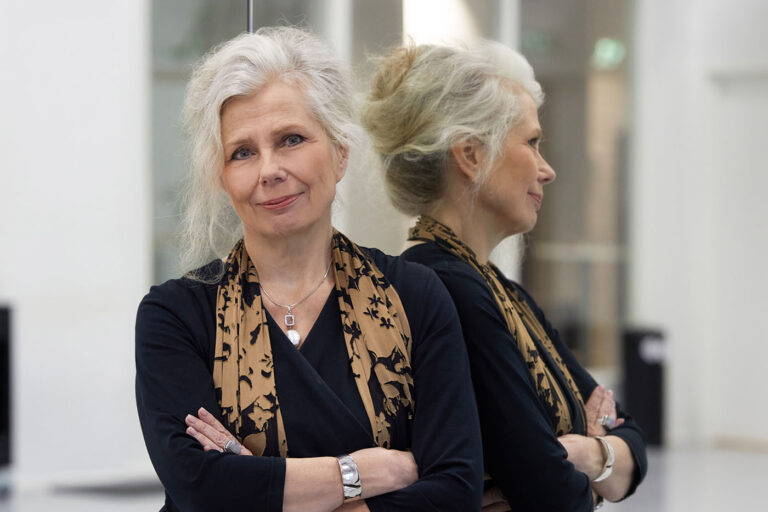
The Finnish Cultural Foundation’s new producer, Wisam Elfadl, brings research and art to wider audiences through public events. She wants children and young people to engage with culture.

You are the Finnish Cultural Foundation’s new producer – how would you like to develop its events in the future?
We plan to make the events more consistent and establish a more coherent production framework. Our Science & Art (Tiede & Taide) events are held across Finland, and they are open to everyone. The theme throughout autumn and next spring is democracy, and in these events we highlight what is being achieved in research and the arts locally. I’m really looking forward to travelling around the different regions myself.
We also want to create new kinds of events in collaboration with different stakeholders. In the future, we want to take a more active role in identifying potential partners and opportunities for collaboration.
The Finnish Cultural Foundation stands for research and the arts – what does this mean in terms of your role?
The foundation supports research and art, and the events provide a platform for them. In Finland, we don’t really have many TED Talk-style events or opportunities to practise performing on stage in front of a large audience. Many scientists are doing incredible research and projects, and I’m keen to make their work better known.

You graduated in cultural management from Metropolia University of Applied Sciences and have vast experience in the cultural sector – what drew you to cultural production in the first place?
As the eldest of my siblings, taking care of people is rooted in my personality and my culture – I want people to enjoy themselves. At the same time, I crave intellectual and sensory stimulation. When I entered the field, I just wanted to organise fun parties for myself and my friends. With them, I’ve been able to create concepts, seminars and different kinds of gatherings that have inspired many others.
I’m involved with the Museum of Impossible Forms cultural centre in Kalasatama, Helsinki, where we organise seminars, film screenings and discussions. It attracts practitioners who have yet to be discovered by institutions. At the events, they get to talk about their working methods, their art and their own areas of interest.
Wisam Elfadl“I’ve been able to create concepts, seminars and different kinds of gatherings that have inspired many others.”
The most heart-warming event was when I managed to persuade my brother Basam to present his cassette tape collection. Saban Ramadani’s presentation has also stayed with me. He presented his master’s thesis, which explored the white institution. In his video installation, Saban scrubbed the floors of the Amos Rex museum. The floor scrubbing continued at Stoa cultural centre in Itäkeskus in Helsinki, where the event was held. I like looking at structures and the hierarchies within them.
Were you familiar with the Finnish Cultural Foundation? Did anything surprise you when you started working at the foundation?
I had previously known the foundation only from the perspective of a grantee. It’s only now that I’ve realised what a huge operation processing grant applications actually is. They are reviewed by real people, and the process takes almost six months.

What role does culture play in your everyday life?
The funny side of working in this field is that going to events, exhibitions or museums is, in a way, work – my brain is switched on when I’m there. Many of my friends are artists or work in the cultural sector, and I engage with culture by supporting them. I’d like to go to more concerts, especially outside Helsinki.
Wisam Elfadl“I would like to change the perception that culture is somehow insignificant or that it has no impact on public health. ”
If you could change one thing about the discussion around culture in Finland, what would it be?
I would like to change the perception that culture is somehow insignificant or that it has no impact on public health. I didn’t take part in any artistic activities until adulthood, and I would like parents to understand how important arts education is for children from an early age. When children are exposed to culture early on, their brains develop differently. Children’s arts activities also bring their parents into contact with culture. Art broadens the way we see the world and teaches empathy and social skills. If you have access to culture from childhood, it is easier to stand for research and art as an adult.
The People Behind Culture
The People Behind Culture series introduces people who work to support research, art and culture as trustees or employees of the Finnish Cultural Foundation.