The people behind culture: Iiris Autio Advocates Stronger Connections Between Art and Society
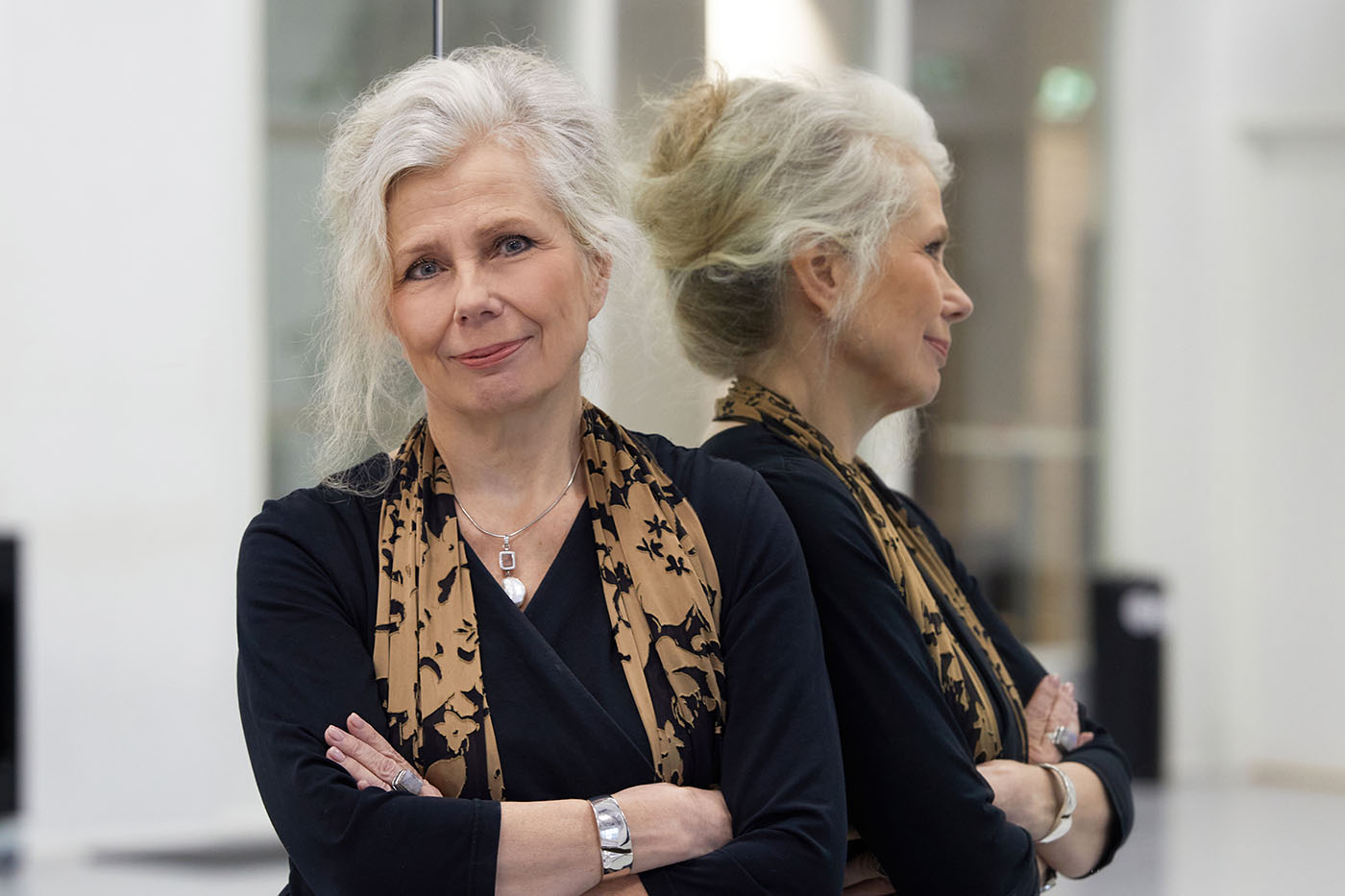
An expert in arts management and cultural export, Iiris Autio took up her position as Chair of the Supervisory Board in October. She emphasises the importance of strategic funding and believes in the international potential of Finnish art and culture.
Where did your interest in culture, and dance in particular, begin?
From an early age, I loved the visual arts, literature, music, dance and theatre. I was drawn to the world of culture, but soon realised that I didn’t have what it takes to be an artist. I was also interested in social and political issues, which led me to study international politics at the Faculty of Social Sciences at the University of Helsinki.
My first summer job, in the late 1980s, was at the Retretti Art Centre, where I came to understand that artists and cultural organisations need professionals with expertise in funding, management and marketing to succeed. At university, I came across a report by Ritva Mitchell, which predicted that the role of arts managers would become increasingly important in the future. I found the idea fascinating and started to pursue a career in arts management.
I completed the Arts Management PD postgraduate programme jointly organised by the Sibelius Academy, the Theatre Academy and the University of Art and Design Helsinki. Later, I completed a master’s degree in arts management in London, supported by a grant from the Finnish Cultural Foundation.
My first job after graduation happened to be in dance marketing and sales, although I could just as easily have ended up working in music, opera or the visual arts. I have been Managing Director of Tero Saarinen Company since 2001.
How would you describe the Finnish Cultural Foundation?
The Foundation is one of Finland’s most significant funders of science, art and culture, with a unique history. It was established in response to a need that emerged from civil society, supported by a nationwide fundraising campaign. Its structure, comprising a central fund, regional funds and named funds, also makes it exceptional. Although the Finnish Cultural Foundation is a private foundation, it has the character of a national institution. In recent years, the Foundation has developed and renewed its activities, strengthening its impact not only as a funder but also as an active participant in society.
What is the role of the Supervisory Board?
Under the Finnish Foundations Act and the Finnish Cultural Foundation’s own rules, the Supervisory Board is the Foundation’s highest governing body, bringing together influential figures from across the arts, sciences, culture and business. Its role is to oversee the Foundation’s administration and ensure that it operates responsibly and with a long-term perspective.
However, the significance of the Supervisory Board extends beyond its statutory responsibilities. Its expertise and networks give the Foundation exceptionally broad connections across different sectors of society. This makes the Board a valuable resource for the Foundation.
What kind of support and collaboration do science and the arts need in the current climate?
Particularly in times of financial constraint, funding should be as strategic and impactful as possible. Peer review is essential for ensuring quality, but one of its recognised challenges is a tendency to spread limited resources evenly rather than make clear choices.
Strategic direction is needed to enable sufficiently substantial, long-term investments that can deliver meaningful impact. At the same time, we must ensure that emerging talent across different fields, as well as independent research and artistic practice, have sufficient opportunities, even when the impact of such investments cannot be predicted in advance.
Partnerships and collaboration can achieve larger, more meaningful and impactful results than organisations working alone. A good example of this is collaboration between foundations.
You have extensive experience in cultural exports, particularly in dance. What do Finnish art and culture need to achieve greater international reach?
Art and culture do not exist in a vacuum. They are in constant dialogue with the surrounding world. Finland’s most celebrated artists have also been part of the international movements of their time.
Finnish art needs international engagement to develop, but it also needs a strong domestic foundation to succeed. We must be able to provide the core funding and infrastructure for art and culture ourselves – internationalisation cannot solve that challenge.
On the other hand, the international market offers creative professionals economic opportunities on an entirely different scale from those available in a small country like Finland.
However, artistic excellence is not enough in an increasingly competitive international environment. Success requires stronger expertise in arts management, production and intermediary services, long-term network building and the resources to develop international activities.
If we invest in the entire cultural value chain, art, culture and intangible creative content could become significant drivers of economic vitality. South Korea provides an interesting example of what can be achieved through a long-term strategy and political commitment. In Finland, too, this would require a conscious decision to recognise culture not only for its intrinsic value, but also as a means of diversifying and renewing the economic structure.
What are you excited about right now?
I find myself constantly inspired by the development and progress of my own organisation and our sector as a whole, as well as the wider possibilities that culture has to offer.
These days, we spend an enormous amount of time in front of various devices and have, in many ways, become disconnected from our bodies. Dance is one of humanity’s oldest forms of expression, and its power lies in its ability to enhance wellbeing, participation and a sense of community, as well as to bring people together across linguistic and cultural boundaries.
The more technologically advanced our world becomes, the more valuable embodied wisdom and everything that makes us human will be. That is why I continue to believe in the fundamental importance of culture, now and in the future.