The Finnish National Ballet’s Summer Academy coaches talented Finnish ballet dancers
The Finnish Cultural Foundation has awarded €180,000 to the Finnish National Ballet’s Summer Academy. The purpose of the academy is to provide top-level international training to Finnish ballet students aged 14–18 over the course of three summers.

The Summer Academy aims to offer equal opportunities to ballet students regardless of their background or where they live, to retain domestic talent in Finland, and to raise the skills of Finnish ballet dancers to top international level.

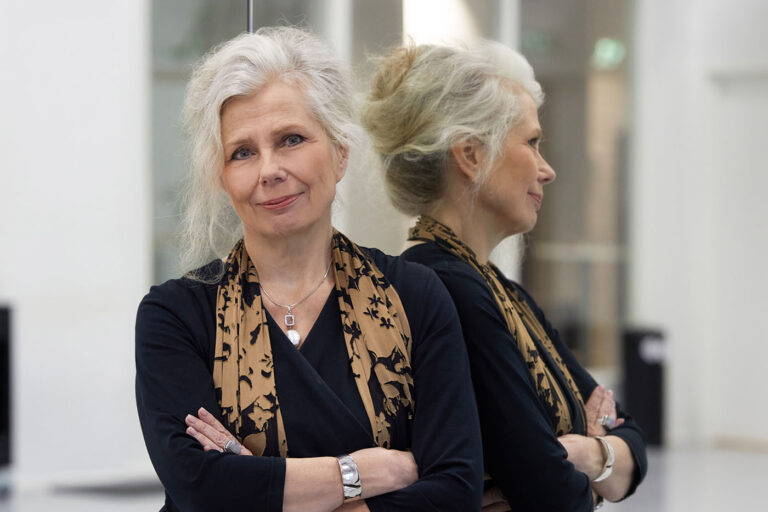
According to Javier Torres, Artistic Director of the Finnish National Ballet and head of student selection for the Summer Academy, Finnish ballet schools operate on the basic principle that anyone can become a professional ballet dancer. He disagrees.
In Torres’s opinion, a dancer’s physical attributes are a critical factor. There is a certain physique that is ideal for ballet.
“For example, if a dancer’s hip turnout is not wide enough, they will never become a professional. In Finland, the same class may include dancers who have the physical attributes necessary and dancers who do not.”
Of course, it is possible for a ballet dancer without the required qualities to switch to another genre and become a top dancer in that. It is why, according to him, Finnish ballet schools do produce professional dancers, but not enough professional ballet dancers. Of course, there are some, such as Atte Kilpinen from the Turku Conservatory and Werneri Voitila from the Tampere Conservatoire.
The Summer Academy aims to offer equal opportunities to ballet students regardless of their background or where they live, to retain domestic talent in Finland, and to raise the skills of Finnish ballet dancers to top international level.
Torres believes that there are super-talented dancers in Finland, but they don’t get a chance to shine because classes are designed to suit the majority. If you really want to excel, you need training that is tailored specifically to you.
The Summer Academy aims to discover these talents. Admission is designed to be financially accessible to everyone.
Showcasing talent regardless of background
Finland is a large but sparsely populated country, which makes it impossible for young people living in remote areas to pursue ballet at the highest level.
“Even if you have the necessary talent, training abroad is very expensive. You need a hefty sum of money to get into international courses.”
Because the Finnish National Ballet’s mission is to nurture Finnish ballet culture, training new dancers is crucial. Becoming a top dancer obviously requires domestic and international networks, and it is a good idea to start building these at a very young age. Torres also emphasises that the Summer Academy brings top international teachers to Finland.

“The purpose of this training programme is to ensure that talented individuals want to stay in Finland and don’t all go and work abroad.”
Torres explains that the Summer Academy does not choose teachers just because they are big names that everyone knows; instead, it focuses on hiring excellent, skilled educators.
“Often big names are used to attract people to courses that may ultimately offer little in return. The best teachers are often not the very best dancers, but people who, due to their own challenges and limitations, have had to figure out how to improve themselves as dancers.”
Disciplined workouts produce skilled dancers
But what does the training actually involve in concrete terms?
“We train between three and four hours a day. The training is divided into two sections. In the first part, we focus on technique. How do I raise my hand, how do I turn?”
The first part lasts from 1.5 to 2 hours and, according to Torres, could be described as ballet gymnastics.

“In the second part, we combine technique with ballet repertoire practice. We practice technique according to the repertoire, which means that the techniques practised in class become part of the versatile language of the ballet repertoire.”
Almost all the dancers in the Finnish National Ballet come from other countries. The Finnish National Ballet is the only professional classical ballet company in Finland, employing 75 dancers each year.
According to Torres, there are many reasons for the low number of Finns, one of them being that Finnish dancers do not achieve an international standard.
Torres emphasises that dancers in Finland are no less talented than anywhere else. The long distances, remoteness from leading international teachers and a lack of support mean that Finland does not produce as many top professionals as it has the potential to.

Another reason is that ballet is not very trendy, because it requires such intense commitment and hard work. Results often take several years to become apparent. Torres believes that discipline is something that is rarely demanded of young people today.
“Everything happens at the touch of a button and you don’t have to make any effort to achieve things. We want our Summer Academy to show people that hard work pays off and that growing into an artist enriches your life.”