Priority is given to applicants who are currently living or have born in the region, work carried out in or for the region, and cultural and development projects of special regional importance.
Spearhead projects requiring larger-than-usual funding will receive a minimum of 40,000 euros in the form of one or two grants.Such projects require fresh or exceptional points of view, content, quality, or design.
20,000 euros have been earmarked for Art for Institutions projects in the January round of applications.The aim of this form of support is to promote the equal realisation of cultural rights and to improve the quality of life of people in need of special support or care, through art.The work or project may take place in welfare and nursing institutions or other environments, the residents or users of which may otherwise have limited access to art.Possible institutions include sheltered homes, day centres, and homes of the elderly, hospitals, prisons, reception centres, care units for substance abusers, and child welfare institutions.
The Local Culture Projects grants are specified for projects that aim to preserve and rejuvenate the local culture and cultural environment, such as documenting and increasing awareness of local heritage, as well as histories, exhibitions, and events of local communities and societies.
A person engaged in full-time gainful employment is eligible for a working grant (so called passion grant) for the purpose of carrying out a scientific or an artistic project not related to their full-time work. It is possible to apply for this grant as an individual or as a part of a working group. The size of the project is not specified, but the maximum amount of a working grant per person is limited to 3 000 euros.
For more information go to skr.fi/en/januaryround Please read the application guidelines carefully before sending the application. More information about the regional funds and contact information can be found on skr.fi/en/regional-funds
The application period closes at 4.00 pm on Feb 10. Ask also your referee to submit a reference in the Online Reference Service on the application deadline date.
The artists chosen for these residencies include visual artists Anastasia Artemeva for the Tokyo AIT residence, Parsa Kamehkhosh for the Tokyo Arts and Space residence, Gregoire Rousseau for the IFP residence in Beijing, and writer Tommi Parkko for the residence of the FILBA literature festival in Buenos Aires.
– At the moment I am working on several books and, next fall, probably on particular poems and a non-fiction book on writing poetry.The main thing about residencies is that you can focus on your own work.During this COVID-19 year, I have taken up writing in the middle of the woods.Being alone gives you an opportunity to focus, describes Parkko.
Besides the residencies in Tokyo, Beijing, and Buenos Aires, The Artspace residency in Sydney was open for application.However, during the latter part of the application selection process, in November 2020, The Artspace secured a significant, almost 3.5-million-euro funding to renew its facilities. Because of this, the Artspace will be closed for renovations until the summer of 2022, which meant that it was not possible to select a new artist for the residency.
– Due to the Coronavirus, the Cultural Foundation was forced to postpone all of its 2020 residencies to 2021, which is why selecting new artists was possible only for part of the residencies.Traveling to many of the residency locations is still practically impossible, and we can only hope that it will be possible to carry out both the postponed and these new residencies during 2021, explains Senior Advisor Johanna Ruohonen who oversees the residency programme.
– I hope that the situation with the pandemic will improve by next summer. This year has shown that we must be flexible and give priority to health and safety.At the same time, I believe that cross-border and cross-cultural communication is more vital now than ever, when the movement of people and information is restricted, reflects Artemeva, soon to embark on her Tokyo residency.
A working grant in a Cultural Foundation residency is 7,000 euros for a period of three months.An additional travel grant, the sum of which for remote residencies is 1,000 euros, will be awarded, provided that the journey is made by air.The Cultural Foundation encourages artists traveling to their residencies to choose as climate-friendly means of travel as possible, which is why artists bound for residency destinations reachable by rail and ferry traffic are awarded supplemented travel grants, provided they travel to their residencies by means other than air travel.In these cases, the travel grant to Asian destinations is 5,000 euros.
The residency programme of the Cultural Foundation currently features nine residencies in eight countries.The programme is being developed in co-operation with the Helsinki International Artist Programme (HIAP).The artists applying for the residencies are chosen through a two-stage evaluation process, in which the receiving residency makes the final selection on the basis of the preselection made by the Cultural Foundation.The August application round for the residency programme received a total of 58 applications.
Text: Laura Iisalo
Photos: Laura Iisalo and Weldon Green
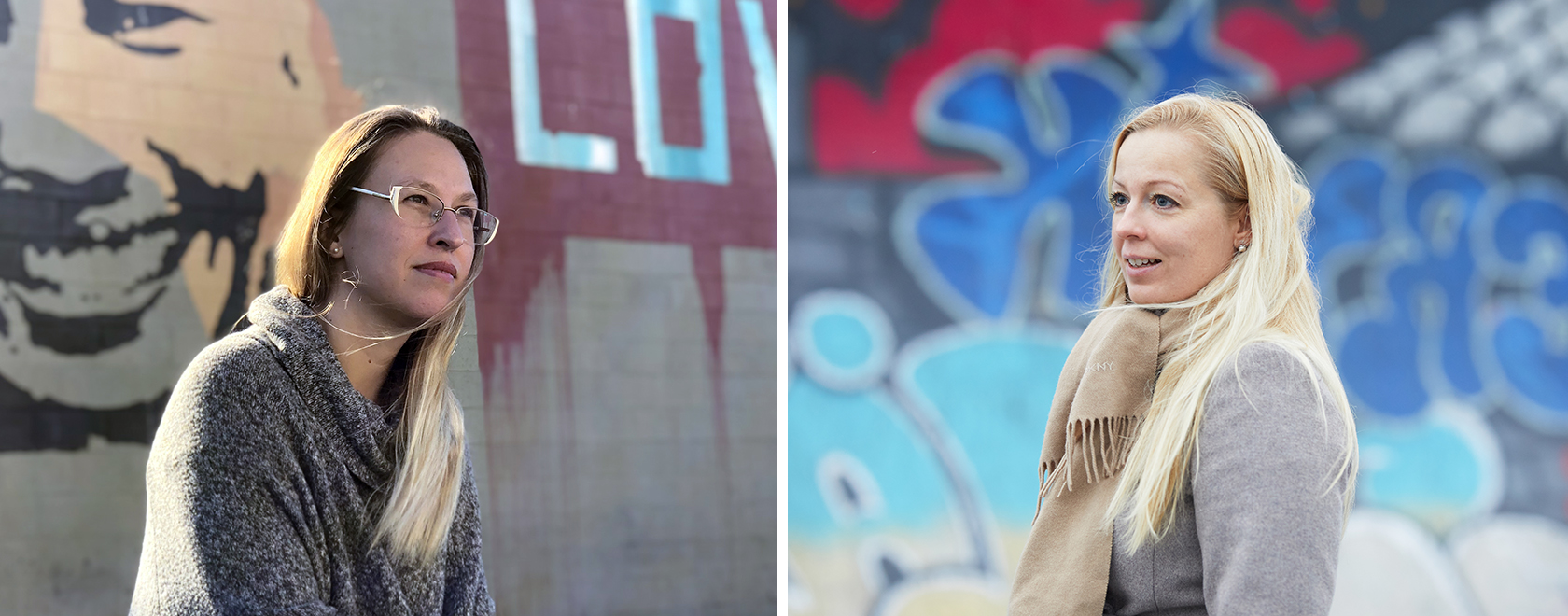
PhD Crystal Green is conducting her postdoctoral studies at the University of California, Los Angeles. Photo: Weldon Green
A recent graduate from the educational department at the University of Jyväskylä, Crystal Green, headed to the United States with her family soon after her graduation. She is conducting her postdoctoral studies at the University of California, Los Angeles, funded by the Foundations’ Post Doc Pool. Acquiring international experience was a significant, but not an obvious choice.
– I was relieved when I had my PhD done, but I soon realised that it was actually just the beginning; it was as if I had just been born as an academic. Without sufficient support it can be difficult moving forward into a postdoctoral career when a mobility period and international experience are expected in the CV, she says of her experience.
In her postdoctoral research Green looks into how equality and non-discrimination are facilitated in teacher education. She has collected data at two teacher training sites, one in Finland and one in the United States. She will then analyse her findings in order to understand how equality is understood, and what is the role of teacher education in prompting social justice and equality in society.
Green finds it especially important that while marginalisation in a community is often abstracted or reported in quantifiable terms, it actually stems from real-life human experiences.
“Painful experiences can be used as a power to better understand other people and the situation they are in.”
– It was amazing and very emotional to witness pre-service teachers talk about their personal experiences of discrimination. These painful experiences can be used as a power to better understand other people and the situation they are in. Educator Paulo Freire used to say that education is about becoming more fully human, and we bring ourselves and our experiences into education. I also believe that ultimately the goal should be to humanise education, she says.
When her two years in California come to an end, Green hopes to return to Finland to continue her academic career. Her current goal is to become docent eligible by gathering the required evidence to meet the qualifying criteria.
– It is really well understood in Finland what the importance of teacher education is, and what it means to society. I also find academia there very open and forward thinking. It can get very competitive in the United States and I feel like I’m currently running a sprint. In Finland the research pace leaves more time for thinking, which I think is very important, says Green.
A multidisciplinary research community provides new perspectives
Postdoctoral researcher Kreeta Niemi was awarded a grant from the Post doc pool for an academic year at UCLA. Photo:Laura Iisalo
Postdoctoral researcher Kreeta Niemi, who graduated from the Department of Teacher Education at the University of Jyväskylä in 2016, is also heading to the United States in October 2021. She chose UCLA because of its multidisciplinary research community – and also because so many pioneers and current top researchers in interaction studies come from California.
– Los Angeles is the mecca for conversation analysis, which is my main research method. Interaction is a very wide phenomenon, which requires a multidisciplinary approach and I’m very excited to collaborate with international scholars and colleagues from varying fields. But I’m not only going there to learn, I hope to give something to the community too, she says.
Niemi is planning to take with her the data that she has collected over three years in research funded by the Academy of Finland, in which she has looked into children’s interaction in modern learning environments. Her goal is to find out what kind of opportunities and constraints those entail.
There are currently 33 schools in Finland that are classified as modern learning environments, and in the future flexible and versatile spaces will be the norm. The trend goes hand in hand with the phenomenon-based learning approach, which aims to study problems stemming from the real world with a holistic approach.
– Studying in an open learning environment is more project-based, self-guided, and technology has a greater role. Those are all good things but require adequate support and guidance. At its best this kind of environment enables new ways to get closer to society and adapt to the evolving needs of the world, Niemi says.
She hopes that the research will give new information that teachers, educational professionals and, for instance, architects can use to develop more efficient learning environments.
– There is a lot of potential involved in supporting self-direction and community building but these spaces need to adapt to multiple uses, and enclosed spaces are also needed. In Finland the teachers are genuinely keen to develop learning environments and practices. A bit of time is just required for everything to come together, Niemi concludes.
The Post Doc Pool’s Spring Call is open from 15 Dec 2020 until 31 Jan 2021. For more information go to postdocpooli.fi/en
PhD Crystal Green received a Post doc pool’s grant in 2020 and 2021 for her research concerning Social Justice and Equity Promotion in Teacher Education.
PhD Kreeta Niemi received a Post do pool’s grant in 2021 for hes sresearch concerning Rethinking Learning and Teaching within Modern Learning Environments.
Lotta Jokiniemi received a grant to for her research in Barcelona University.
Altogether 122 post-doctoral scholars from around Finland took part in the autumn application round. Thus a grant could be awarded to 25 % of the applicants.
Amongst others the Cultural Foundation awarded Neda Neisi, whose comprehensive study of the AMB supported rotor; Normal operation and rotor dropdown, received a 54 000 euros funding. Medical Doctor Lauri Holmström received a 70 000 euros funding for his study of Genetic underpinnings of sudden cardiac arrest due to non-ischemic myocardial diseases.
Doctor of Philosophy, Lotta Jokiniemi, will conduct her study in Spain, in the University of Barcelona. Her study of neutrino scattering of atomic nuclei in connection to new physics Beyond the Standard Model (BMS) received a 38 000 euros funding.
You can find all the Cultural Foundation’s post doc grantees here.
An important support for young researchers
Säätiöiden post doc -pooli has proven to be an important instrument of research funding which has enabled young scholars with families to finance research periods at top universities abroad. The grants awarded by the Pool are determined flexibly in accordance with the applicant’s needs and they often include their family’s moving expenses and children’s day care or school fees.
The Pool has a role in making Finnish research more international. After twenty-two application rounds over 600 scholars have already received funding through the Pool for at least a one-year research period abroad.One third of the grantees have received a two-year funding.
The Pool’s next application round will take place from 15 December 2020 until 31 January 2021, when some 1.6 million euro will be given in grants. The results of this round will be published in April 2021.
The Säätiöiden post doc -pooli was set up in the autumn of 2009. During the fourth three-year-period 2019-2021 there are thirteen foundations involved, allocating altogether 3.2 million euro annually to the pool. The Pool’s foundations are Emil Aaltonen’s Foundation, Alfred Kordelin Foundation, the Foundation for Economic Education, the Paulo Foundation, Päivikki and Sakari Sohlberg Foundation, Finnish Academy of Science and Letters, Finnish Cultural Foundation, the Finnish Medical Foundation, Swedish Cultural Foundation in Finland, the Society of Swedish Literature in Finland, Finnish Foundation for Technology Promotion, Jenny and Antti Wihuri Foundation and the Ulla Tuominen’s Foundation.
Further information: www.postdocpooli.fi, info(at)postdocpooli.fi or from coordinator Mikko-Olavi Seppälä, tel. + 358 400 868 006
The approach for Argumenta is emphatically cross-disciplinary. Although the same problems are often studied in different disciplines, it may be difficult to find a common language for formulating solutions. The purpose of Argumenta grants is to apply interdisciplinary dialogue to producing new answers and conclusions for challenging issues in society, and to communicate these results to a broader audience than the academic community.
Professor Eeva Furman and the Sustainability Panel Community team from the Finnish Environment Institute (SYKE) received EUR 110,000 for their Six Paths to Sustainability project.
There are many worrying trends in the world: inequality is growing, biodiversity is shrinking, climate change is advancing and waste is accumulating. A conscious and quick paradigm shift is needed: a sustainability revolution.
– For most people, even the term ‘sustainability revolution’ is unfamiliar and off-putting. For people to understand it and be prepared to act accordingly, new methods and ways of talking about it are needed, Furman says. The Six Paths to Sustainability project brings together researchers from various disciplines with ordinary people to verbalise the sustainability revolution.
Next year, the topic will be discussed in libraries and museums all around Finland, with people working together to create pictorial, verbal and aural stories. These will help in shaping a shared understanding of what constitutes sustainable food and energy, how urbanisation and the economy can become sustainable, and what new opportunities there are for well-being.
– A revolutionary turn onto a sustainable path is still possible. We trust that everyone in Finland wants to be involved in building a safe future for us all, Furman explains.
Panu Halme, PhD, and his team from the University of Jyväskylä received EUR 150,000 for their project Towards a Common Understanding on Changes in Sustainability of Forest Use.
There are many players taking part in efforts to determine the sustainability of forestry in public discussion. “Forestry operators and their stakeholders have their own interests, based on which they tend to brand the forest industry as either highly sustainable or completely unsustainable. This causes debates on forestry sustainability to go around in circles. What the situation especially demands is a broader, science-based evaluation and definition of sustainability-related concepts, and improvements to how they can be measured,” says Halme.
The project brings together researchers and stakeholders with an interest in the sustainability of forest use, to discuss what the elements of sustainability are in Finnish forestry. The objective is to identify the elements of sustainability that the various players consider important when measuring and evaluating sustainability. The project will analyse the principles of measuring these various elements, as well as the related challenges; develop indicators for assessing progress in these elements; and generate methods for visualising the conflicts in these elements, as well as their impacts.
Assistant Professor Panu Savolainen and his team at Aalto University received EUR 145,000 for their project Sustainable Construction, Techno-Economic Perspectives and the Value of Architectural Heritage.
Photo: Annakaisa Tavast
The life cycle of the built environment has a significant impact on the fulfilment of targets related to a sustainable, carbon-neutral society. Finland’s building stock is being renewed at an increasing pace, however, and even in city centres younger and younger buildings are being torn down. The topic is regularly brought up in the media.
– The factors affecting the life cycle of buildings are financial, technical, functional and heritage-related, as well as ones of urbanisation, location and ownership patterns. Parallel to these are questions of the society’s values and opinions, politics and economic control. Due to the differences between these fields and methods, each argument is very different. So far, especially in the public domain, discussions have mostly consisted of recognising the problem and bringing it up sporadically, Savolainen explains.
– Currently the demolition of modern buildings is not debated enough between various experts, nor is the debate sufficiently deep or solution-centric. Publicly, discussions are led by a reliance on authorities and heightened emotions. Future opinion leaders – children and young people – are not included in understandable and easily accessible ways, Savolainen says. The purpose of the project is to deepen and increase public debate on the fate of modern buildings, and on the various points of view involved. The aim is to build dialogue between academic disciplines and with the public, and to make this dialogue more understandable for the society and for political decision-makers.
When Monika Czyżyk built a rocket: on bamboo, synchronicity, and subconscious memories
An interview by Athanasía Aarniosuo
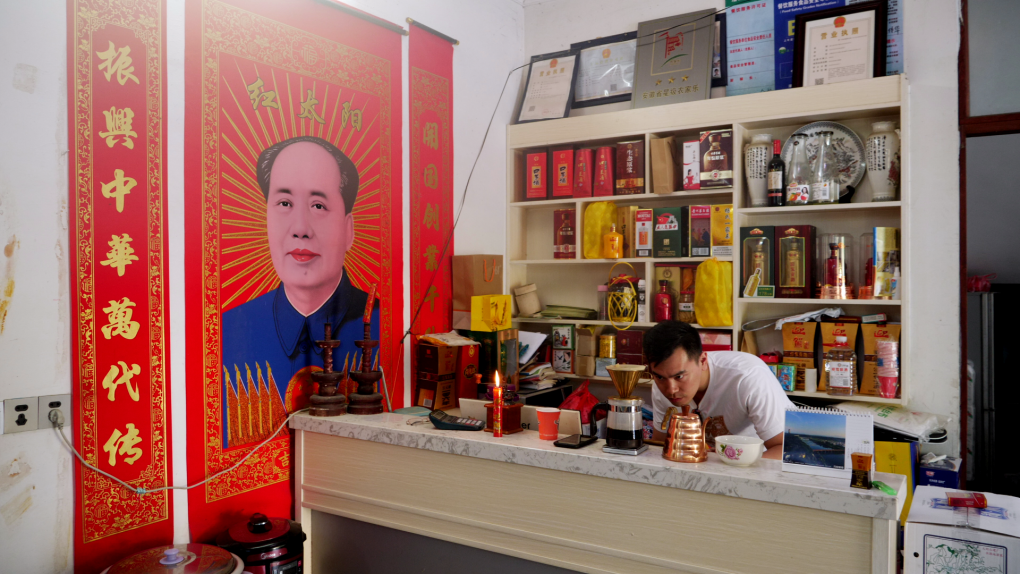
As soon as Monika arrived in Beijing she met Hu Wenna, an urban planner who works with revitalisation of villages at China Academy of Urban Planning and Design – CAUPD. She invited Monika to visit Anhui province in order to experience life in traditional Chinese villages. Monika was welcomed by social worker Wang Zheng, who introduced her to local people in Shangcun and Wanjian villages. It was a busy time with many revitalisation projects taking place. Monika witnessed coffee workshops and was welcomed to document them. Filming was a means of communication between Monika and the local people, with the camera acting as a very natural, kind communication tool.
As CAUPD was interested in the presence of artists in the village, Monika proposed a process of building an outdoor bamboo rocket sculpture together with the local community, which initiated a process of performances, workshops, sharing knowledge and learning from one another.
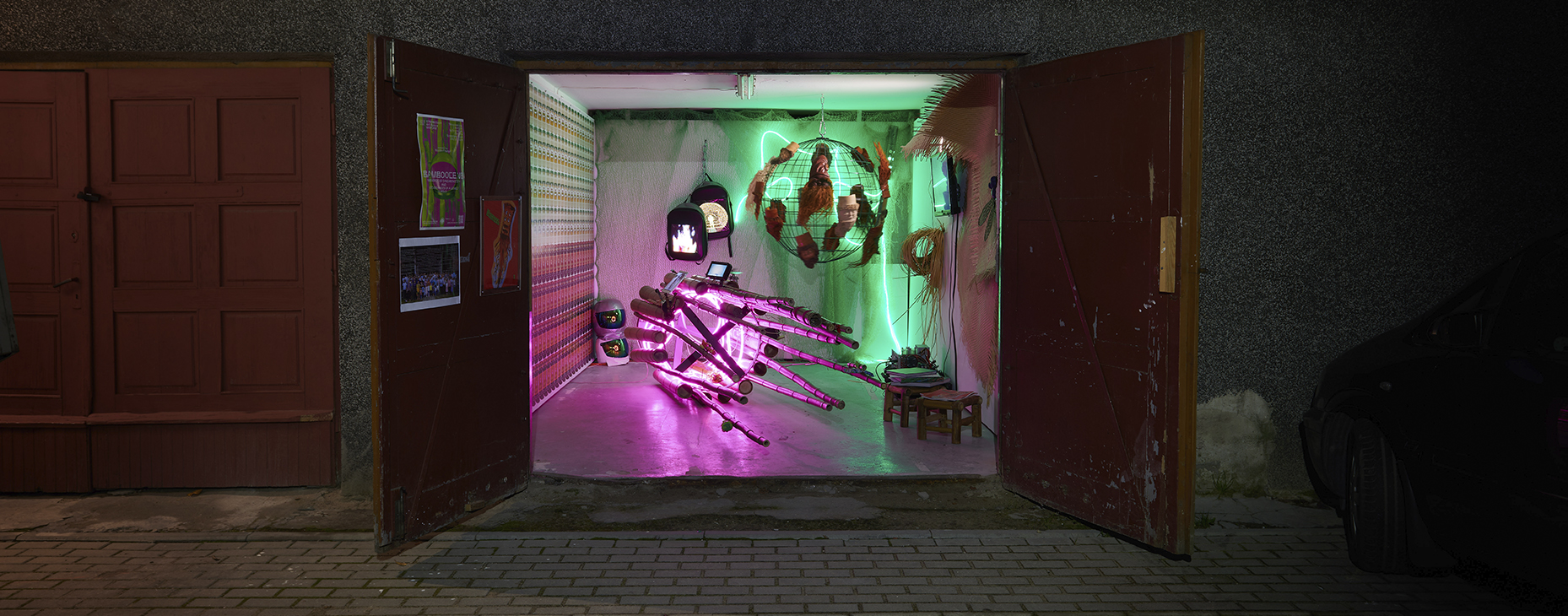
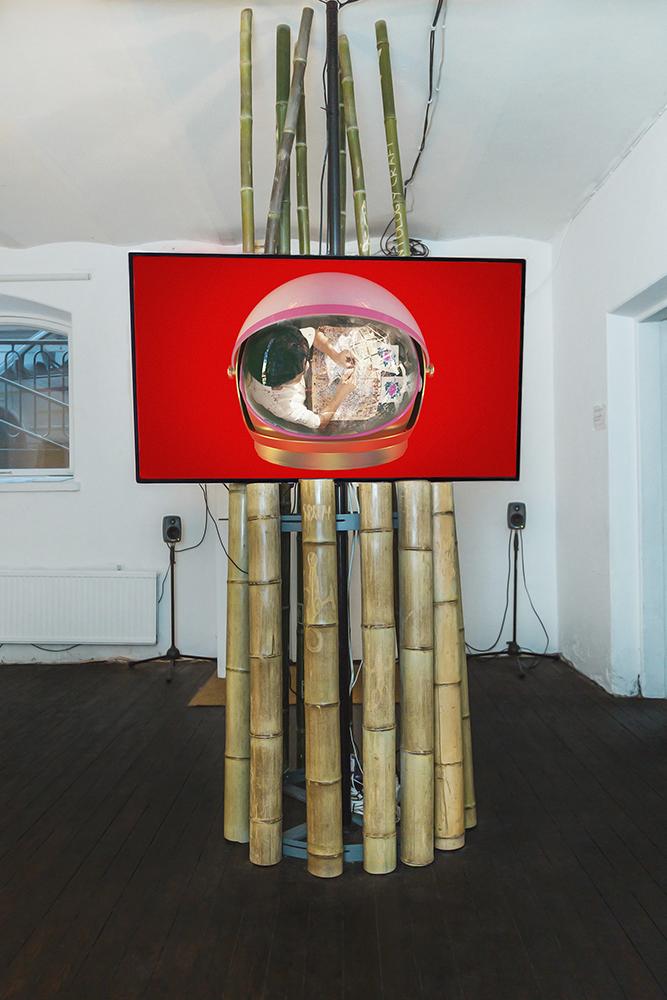
Installation view Bamboocene Memories of Synchronicity 2020. Photo: Laura Mainiemi
While working with bamboo, Monika discovered that bamboo plants flower at the same time all over the world if they are derived from the same mother plant, regardless of geographical location or climate. It was a magical thought, Monika found, that showed her how amazing the bamboo plant really is. The unique flowering impressed her so much that this moment of synchronicity is also featured in the documentary film about rocket-building.
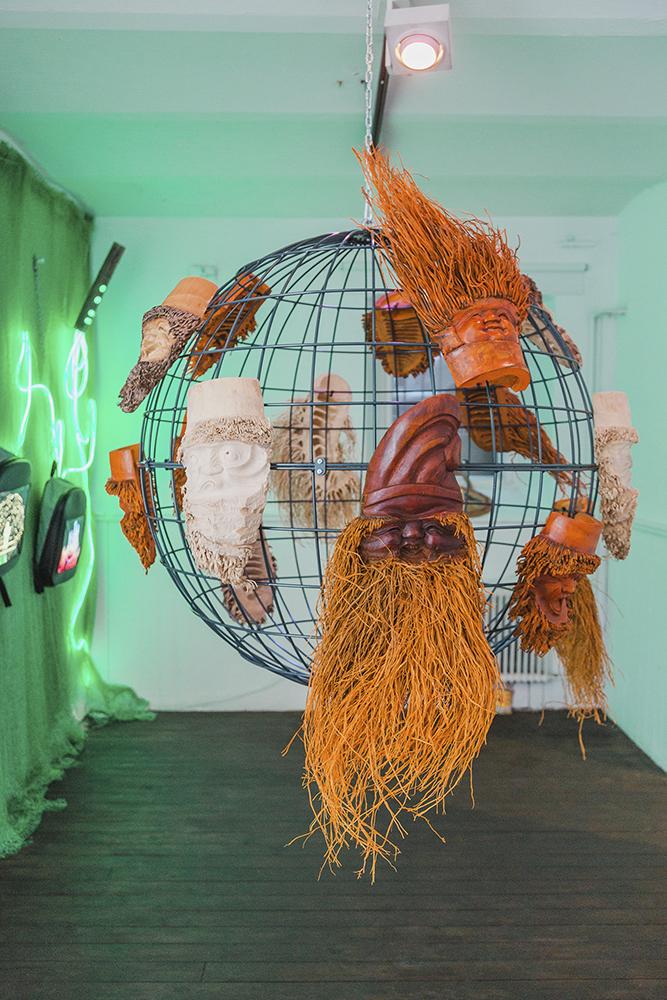
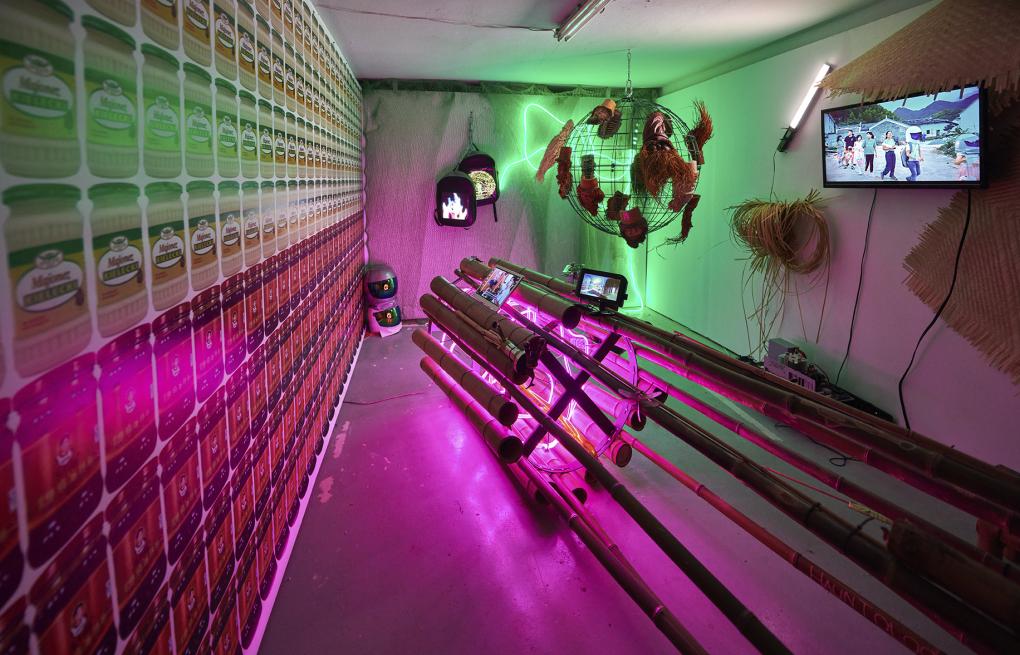
The resulting documentary film, I Want to Build a Rocket, has been displayed together with various mixed-media sculptures such as bamboo root masks which hang on a metal globe made by Monika’s father, clusters of wood that were used to build the rockets (with the help of the Finnish Astronautical Society), red Finnish thermoses that were referenced during filming, sculptures of dragonflies, green mesh, and led lights.
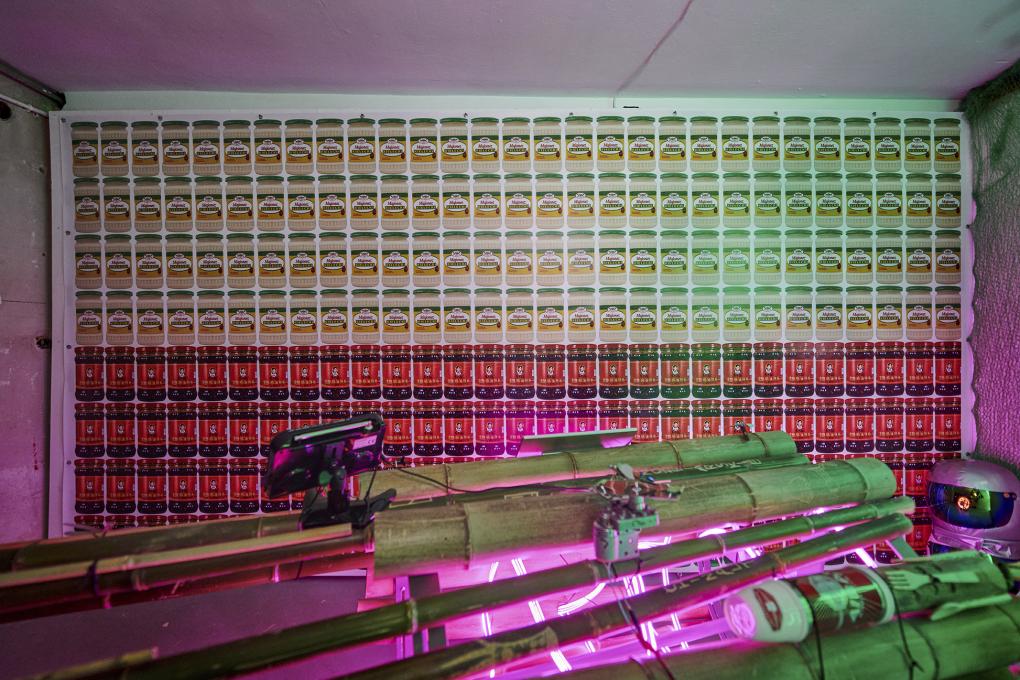
Currently, Monika is showing the work in an exhibition curated by Kathryn Zazenski for Stroboskop Art Space in Warsaw, Poland, until the end of November. The work is a variation of an exhibition she put on at Myymälä2 gallery in Helsinki. In Poland, Monika is showing one additional work: a banner featuring a composition of a print of two condiments, Majonez Kielecki from her hometown in Poland and a well-recognized condiment from China. The banner combines memories with local products, while the composition has been arranged to represent the Polish flag. Patterns of behaviour come from subconscious memories, for people just like bamboo plants. The banner contextualises and introduces the objects – in this case the condiment jars – while touching on another similarity between Poland and China: in both countries the communist and post-communist times are visible, with different eras and different styles being present in the architecture of the cities.
Monika very much enjoyed putting on an exhibition in Poland and felt very inspired. She feels the artistic community is very strong, with artists all helping each other, arranging things on their own, and communicating. Working in Poland for some time is something Monika feels could be on the cards in the future.
Memories of Synchronicity (Polish Flag), 2020, banner print, 432 x 220 x 0,5 cm. Stroboskop Art Space. Photo: Bartosz Zalewski.
In the nearby future, Monika would like to continue working on the film, making a condensed screening version of it. She is also going to continue working on a finalized version of a collaborative catalogue, the prototype for which was exhibited alongside her film and sculptural works in Myymälä2 gallery in September 2020. In addition, she will return to an ongoing project from 2016, in which she addresses issues of body, gender, and learning, through Barbie-dolls and videos of her female friends telling stories about their lives. She is also planning a new documentary film situated in various allotment gardens in Poland and Finland.
But first, she will take a much-needed break.
(The interview continues after the image.)
Monika Czyżyk, Geographies of a lonely Pole, 2020, bamboo poles with carved drawings by Torsten Zenas. Photo: Laura Mainiemi
AA: You have recently been traveling around the world, getting to know the area and the local people, and documenting stories. Is your work fiction, travelogue, or documentary?
MC: I often mix documentary interviews with staged scenes. A kind of participatory docu-fiction is often created blurring the research and adding new elements the meaning of which is not entirely clear until the final montage. I think this genre relates to my understanding of the world and creation of art works in general.
Every project I have participated in or activated is very different and based on a specific context and collaboration. There is a notion of a documentary filmmaker in my practice, I react to my surroundings, situations and people I am in contact with. I am always capturing moving image files with a digital camera. I mostly work in local contexts, creating collaborative situations with others to develop community-based performances, stories and acts with co-created fictional elements that combine the shared documented experiences of the participants.
Over the years I have participated in different global residency programs. Usually I enter the new space with some initial thoughts and ideas, often looking for collaborators or participants involved in a local workshop, screening, or other similar situation. I have been lucky to meet really fantastic people during these encounters. Once the energy and motivations are right, I dedicate my time to focus on work in a very specific place and community and often these projects are developed over many years. That’s how I began to work on projects with Footprints of David, a performance group based in the Bariga area of Lagos, Nigeria and with local residents located in Anhui province, China.
AA: What interests you most in experiencing a new culture, and what have you gained the most from past travels?
MC: I sense the romantic image of a traveler in this question.
I am actually not sure how to answer this question. What interests me is the unknown, the unpredictable, thecoincidental, the intuitive, the hospitable, the risk, the trust, the sharable, the memorable, the smiles, the smells. There are so many different styles of travel.
I think I have been always questioning my identity and my belonging to a certain place. The necessity of the escape is my inner drive. All experiences are shaping who we are. I have gained knowledge, experiences, memories, friends, proof that the Earth is not flat.
Being born in 1989 and raised in Poland during some very politically transformative years I think my father implemented the ideas of adventure and exploration in me. I have a genuine interest in meeting people with different backgrounds than myself.
AA: Some of your films and installations evoke images of science fiction and awe. What inspires you?
MC: I would actually say that my main interests are in the realm of docu-fiction and experimental video art. I have been truly inspired by Leslie Thornton’s media works, especially her ongoing Peggy and Fred series, and artist and filmmaker Melanie Bonajo. I also have had the opportunity of seeing in person several films and installations by the outstanding Michel Auder. As far as inspiring and thought provoking conversations goes, I have had the fortune of conversing with the visual artist and theorist Thomas Zummer. Other important filmmakers that continue to inspire me over the years are the films of Agnes Varda and Jean Luc Godard. Another area of inspiration for me exists in global techno culture and dancing.
AA: There’s a sense of optimism and beauty to a lot of your sci-fi work. How do you see the future?
MC: Science fiction for me is a tool to engage the present. Speculative themes are explored in many of the video pieces and often shown through ambiguous performance rituals or through animations that explore new states of being. I enjoy working with technical collaborators coming up with both virtual and physical places, costumes and scenes that may or may not exist in some new reality. I am cautiouslly optimistic about the future transforming through culture. Although observing recent global events, I would need to find some special powers to keep that optimism going.
Still from the documentary film I Want to Build a Rocket, 2020.
AA: You are interested in events that occur simultaneously. Do you have any personal theory about how these coincidences occur?
MC: I guess I would like to believe in some kind of connectivity between humans, time and places we have lived in. It’s a desire to be in multiple places simultaneously. Adesire of sharing a level of understanding that goes beyond national, historical, cultural and spiritual contexts and differences. I would like to think that synchronicity and serendipity are embedded in a cosmic blueprint. Being lost in any artistic project is one way to enter. Stay open! Don’t always have a plan! Open perfect.
AA: You touch upon the subject of “the unique bamboo flowering which happens at the same time all over the world irrespective of their geographical location and climate as long as they were derived from the same mother plant”. Did you purposefully want to address issues of cultural identity and belonging?
MC: I definitely question issues related to identity and belonging. As our subjectivity is built up on certain grounds, we have the necessity to question, destroy, reinvent and destabilise, now more than ever. In my film, while recording scenes of Chinese revitalization I was sensitive to the saying ‘przepis na zachod’ (recipe for Westernization) taking root. I was also thinking about this in the context of my family and Poland in the 1980’s.
AA: You collaborate often with Torsten Zenas Burns. How did your paths and intentions cross?
MC: In 2015, we met at UnionDocs in Brooklyn, NY. while I was participating in a video screening. Over the next few months we started our ongoing series of video and performance works called Monstersweet in New York City, Helsinki and at a residency program called Signal Culture. We actually just finished the latest version which was recently shown in MUU gallery in September. It’s very exciting to collaborate with Torsten. We naturally combine our skills and research interests. Torsten’s usage of performance art and playfulness with analog transformations of the moving image goes in pair and enriches my documentarian and archival moving image working process. As a result, we often produce media works in a genre of docu-fiction with influences from global speculative fictions. Currently we are collaborating on electronic publishing projects related to my residency experience in China.
AA: Can you offer us a glimpse into what’s coming next?
MC: Like everybody on the planet, I am hoping a vaccine is developed and travel opportunities can resume. I am really looking forward one day to returning to China’s Anhui province and visiting all the amazing participants and collaborators that helped make my new film. They have not seen it yet and I would like to screen it for them. I also had a connection with a Chinese art publishing group based in Beijing, in the same building as the IFP residency program I went to. I am really excited to collaborate with them creating new exhibition, film and graphic novel catalogues for distribution in art international book fairs in the coming years.
Monika Czyżyk and Torsten Zenas Burns, Geographies of a lonely Pole, 2020, 24 bamboo poles. Photo: Batosz Zalewski
Shuxun Liu defends his doctoral thesis on Friday the 13th of November in 2020. Photo: University of Turku
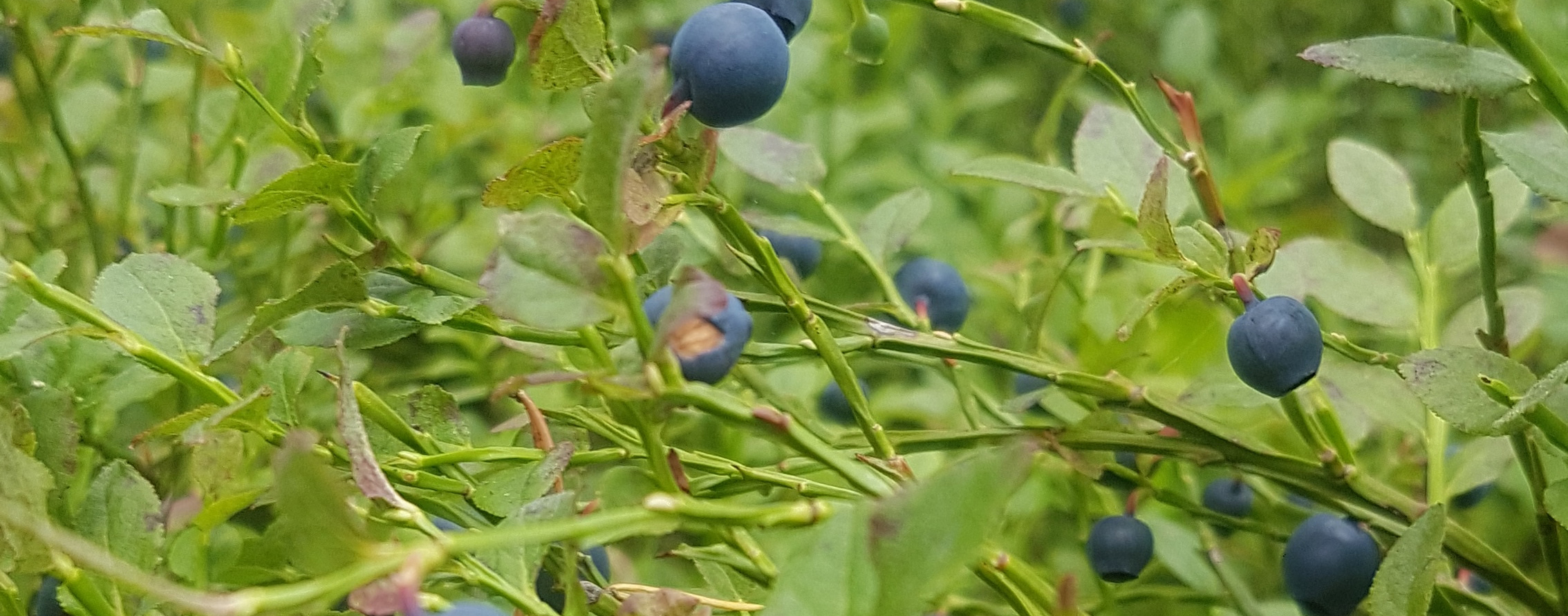
Bilberries are great. They have many proven health benefits, they taste good, and there is an abundance of them in the Nordic forests. Yet for some reason only five to eight percent of the berries are being harvested each year, while the rest is left to rot.
– It is a huge economic loss. If we could create new bilberry products that people enjoy, then maybe that could inspire companies to better utilise this natural resource, says Shuxun Liu, a doctoral candidate who is studying Food Chemistry and Food Development at the University of Turku.
Liu has a particular interest in turning berries into wine. He first looked into the subject during his master’s degree in his native China. Although consumption of traditional grape wines has risen there in recent years, a majority of Chinese are not too keen on the dry taste and wine has never been considered a necessity either historically or culturally.
Instead Chinese people prefer Baijiu, a liquor made of fermented sorghum that can have up to 60% alcohol by volume but according to Liu, old drinking patterns are changing. In recent years, especially younger people have become more health-conscious and they tend to go for drinks that have a lower alcohol content.
To meet these new demands, local wine makers have started to produce berry wines and the trend is growing fast. It was no surprise that when Liu started his master’s degree in Beijing, his supervisors asked him to look into the science of berry wine fermentation.
– It was not me who chose berry wine production, it was berry wine production that chose me, he jokingly says.
At first Liu used conventional Saccharomyces yeast to see how that changed the chemical compound of local mulberries, goji berries and bog bilberries. During his second year Liu decided to experiment by using only the indigenous yeast that is naturally found in the skin of the berries.
In five years’ time, if everything goes smoothly, there might be a new high quality wine made of Finnish bilberries available to purchase.
– I discovered that spontaneous fermentation is very different to the Saccharomyces yeast and that it affected the berry wine significantly. I was like, wow; I knew I needed to investigate it further, he says.
From laboratory to consumers
In 2016 Liu arrived at Turku University to start a new project researching bilberry wine production – only this time his focus was on nonconventional yeasts and their impact on the quality of the wine.
During his four years of doctoral studies Liu experimented with more than ten different yeasts and discovered that each non-saccharomyces yeast has a unique character, and that two of them were performing better than expected.
By using these alternative yeasts he was able to ferment bilberry wines that had a lower alcohol content, less acidity, longer-lasting colour, and a more vivid aroma profile than wines that were fermented using conventional yeasts.
Liu’s next mission is to upscale his production from laboratory to industrial level by collaborating with suitable companies. In five years’ time, if everything goes smoothly, there might be a new high quality wine made of Finnish bilberries available to purchase.
– The work is not done yet, but I hope so, because I do think that food science serves the public. The goal is to produce good products, Liu says.
You can read Liu’s thesis Fermentation with Non-Saccharomyces Yeasts as a Novel Biotechnology for Berry Wine Production here.
In 2020 M.Sc. Shuxun Liu received a 9000 euros grant for his doctoral thesis, Fermentation with Non-Saccharomyces Yeasts as a Novel Biotechnology for Berry Wine Production.
The purpose of the research programme is to fund humanities and social science research in areas that pose major challenges for people in the Nordics, both socially and culturally during the 21st century. Changes in the ways of communication, new mechanisms in opinion formation brought on by digitalisation, economic, social and technological development, migration, conflicts between ethnic groups, polarisation between cities and countryside, effects of climate change and epidemics are some examples of such challenges.
These challenges are often global in nature and can lead to different transnational, national and local solutions. There’s a great deal of current research about societal challenges on a more generic level, but the aim of this programme is to stimulate research into how these challenges can be understood and handled in the Nordics – societies that fundamentally have a lot in common but also clear differences.
Humanities and social sciences have an important role in increasing the understanding and handling of the many challenges we face, by examining how people interact with their environment. In addition to increased knowledge, the researchers can provide critical and constructive analyses of societal development that can help to guide our attempts to master these challenges. To solve the challenges of the 21st century we need deeper insights about the historical, cultural, social and political processes that have lead us to where we are today.
The objective for the research conducted within the programme is to benefit society by producing accessible knowledge that can inform citizens and decision-makers when they look for ways to face the challenges.
The projects must touch on big societal challenges of the future and the circumstances in the Nordics, preferably so that at least two Nordic countries are included in the research. This Nordic focus, however, does not exclude a global perspective, which on the contrary, is often necessary. The funders of the programme want to stimulate and create possibilities for new research collaboration across disciplinary and national boundaries.
Research project applications can be interdisciplinary, but multidisciplinary projects are encouraged. Research projects can be a maximum of four years in length. The maximum amount of funding that can be sought is 1 million euros. Five to ten projects can be financed.
A research project leader must represent a field of humanities or social sciences and have an affiliation to a university, a college or a research institute in Finland or Sweden. The project participants do not need to have this connection.
Societal challenges are often so complex in nature that collaboration with other fields of science may be necessary. The researchers in the project can therefore represent other fields than humanities and social sciences, but the research questions must be tied to these.
Application process
The application process has two steps. In the first stage, researchers are invited to submit pre-proposals outlining the research projects. In the second stage, shortlisted projects are invited to submit a full application.
The application period for the Letter of Intent is from 1 January to 15 February 2021. The Letter of Intent must be submitted in English through The Society of Swedish Literature in Finland’s application system. Guidelines for applicants will be available on the homepage of The Society of Swedish Literature in Finland (länk till SLS engelskspråkiga sida: https://www.sls.fi/en) from the end of November 2020.
More information about the research programme is provided by:
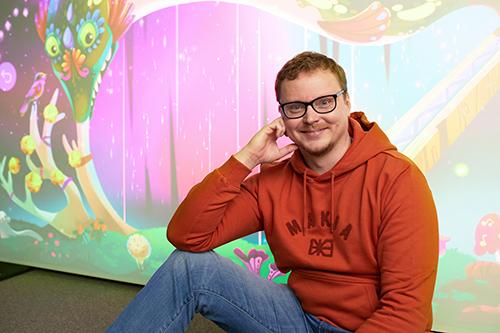
Classical music is sometimes considered abstract and even elitist. This kind of pigeonholing makes Teemu Laasanen upset, and it is also the reason behind his decision to become an advocate for it.
Laasanen has been a piano teacher at the Mikkeli Music Institute since 2003, and the Festival Manager at the Mikkeli Music Festival since 2018. Even though he took his first piano lessons at the age of six, it wasn’t until he was in his twenties and studying mathematics when classical music won him over.
– Classical music requires focusing and quieting down, and it has been left aside in a society that prefers instant gratification. For me it opened up an abundant world and made me decide to study music after all. There has been no turning back, Laasanen tells.
The joy of music is what he wants to spread to others. In 2014 and 2015 Laasanen organised a school tour funded by the Cultural Institute’s South Savo Regional Fund, where he played the piano and told a story he had written around Tchaikovsky’s Children’s Album.
– People often say that music cannot be explained but for me music is a sum of many art forms. Music transmits emotions and the storytelling side comes naturally to me, says Laasanen.
When the tour was over, Laasanen decided to record his story. He asked actor Risto Kopperi from the Mikkeli Theatre to be the reader, and together they created a readable and listenable music story illustrated by Marija Dergaeva. The team was awarded a grant worth 10 000 euros from the South Savo Regional Fund, and the book was published in August 2017.
The first edition sold out fast, and Laasanen already had plans for a new book based on Edvard Griegs’s lyrical compositions. He asked his writer-music educator wife Noora Nikka to take the project on.
Classical music has proven health benefits
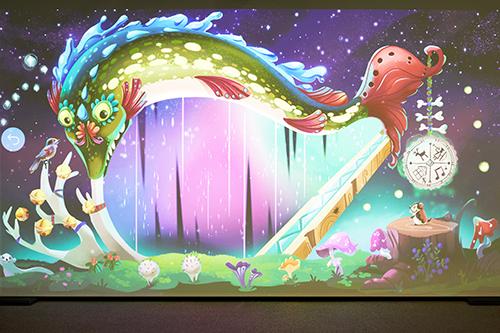
Laasanen’s long-term plan is to build an international series of music fairytales, and to create new ways to make classical music available to the general public. In January 2019 Laasanen, Nikka, and Kopperi founded MusicFairyTales company together, and launched their latest innovationtitled InteractiveSatuseinä Fairytale Wallin October 2020, combining music, technology, and storytelling.
By touching the wall children can take part in the classical music fairytales.
By touching the wall children can take part in the classical music fairytales through playful ways that include painting and playing a fantasy harp. The concept is created together with OiOi, a local company specialising in interactive solutions, and according to Laasonen it is suitable for music therapy and early childhood education. It could also be used in playrooms in places like hospitals, airports, or shopping centres.
So far three music fairytales have been published. The latest one is called Mary the Heart Singer, which is based on music by Sibelius and Madetoja, and created specifically for the fairytale wall. Nikka, who wrote the story, is currently working on the next story that revolves around creations by French composers Debussy and Ravel, and is funded by a six-month working grant from the Cultural Institute.
– Our main target group is children but we have had positive feedback from adults and especially from elderly people. One of our plans is in fact to create music fairytale products for nursing homes too, Laasanen tells.
In five years, if everything goes according to the plan, there will be fairytale walls in tens of locations in Finland and abroad. For Laasanen the project is more than just a business opportunity though. For him it is a way to make classical music available to many across the globe.
– Classical music has many proven health benefits; it can improve concentration and it can help dealing with all kinds of emotions. This is my way to support sustainability and perseverance through music, he concludes.
Teemu Laasanen received a 10 000 euros grant from South Savo fund in 2017 for his readable and listenable music story.
When Finland gained independence in 1917, border security became a mutual concern. During the years of 1922-1924 the Finnish parliament defined an area consisting of 44 borderland municipalities along the Eastern border from Southern Karelia up to Northern Lapland, to be developed to the same level as the rest of the country by means of educational borderland activity.
The work was carried out by various fellowships that doctoral student in Finnish history, Verna Kotiranta, looks into in her doctoral thesis, for which she received funding from the Central Fund in 2018, and from the South Karelia Regional Fund in 2020.
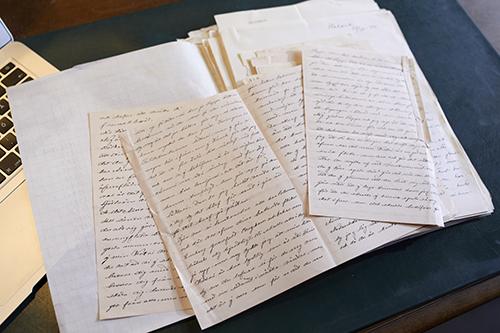
Helsinki-based Kotiranta has travelled the country studying the records at The National Archives of Finland, and rummaged through piles of private correspondence, speeches, newspaper articles, and literature.
– I have put my research together like a puzzle, which is time-consuming but rewarding, like detective work always is, she tells.
Finnish ideal was patriotic and modest
According to Kotiranta, fellowship-based borderland activities were intended to improve economic conditions, and to offer counselling and education in rural areas. Previous research has shown that the national identity of the newly independent Finland was built on sharp political views that painted threatening images of Russia and Eastern Barbarism.
The ideal Finn was considered patriotic, modest, firmly Christian, and abstinent. Unkempt appearance, vulgar habits, and ignorance were considered signs of Eastern influence. The polarized perspective was not atypical, since eugenics was a popular concept in Europe at that time.
The ideal Finn was considered patriotic, modest, firmly Christian, and abstinent.
– These activities were nevertheless moderate compared to fascism and extremist movement. After the Finnish Civil War the borderland areas were seen as a threat to safety. The main objective was to counter communism by means of Christian nationalism, like much of the fellowship activity at that time. The attitudes became less steep by the late 1930’s when the inhabitants met the expectations that were set for them, says Kotiranta.
Networks had central role in borderland activity
When conducting her research, Kotiranta noticed that different types of networks and connections to such parties had a central role in borderland activities. Those included army officers, the Finnish nationalist activist association Academic Karelia Society, and at later stage churchmen with a background in Patriotic People’s Movement. The operators represented diverse domains but were united by their mutual goal, which was to ensure border security.
– It has been interesting to notice how such a small circle of people was outlining the rules and defining the ideals of Finnishness. These were people who came from just a few noble families that were connected through marriages, Kotiranta says.
She is planning to finalize her thesis within the next two years, and after that she is keen to bring her findings to a wider audience by popularizing science. Her investigations are ongoing, and therefore Kotiranta is not yet ready for final conclusions.
– I have unexamined material left, so right now I’m just contemplating. I am open to information that goes against my bias, and I’m confident that something like that comes up, she says.
Doctoral student Verna Kotiranta received a 26 000 euro grant in 2020 from South Karelia Fund to examine nationalist borderland activity after the Civil War.