Tracing forest carbon pools
Small soil invertebrates and soil fungi regulate whether carbon is released into the atmosphere or remains in the soil for centuries. Researchers at the University of Jyväskylä are seeking species with the greatest influence on carbon sequestration.

When trying to solve and understand climate change, it is a good idea to focus on the ground.
The soil stores more carbon than vegetation and the atmosphere combined. Northern coniferous forests, or boreal forests, play a key role in this: their soil stores around 30% of all soil carbon globally.
Their soil is also home to the majority of the Earth’s land organisms, including bacteria, archaea, fungi and small invertebrates. These species regulate the carbon cycle. They break down dead plant matter and determine whether carbon is released back into the atmosphere or stored in the soil for decades or even centuries.
“Above the ground, researchers are studying, for example, how trees and lichen change as the number of reindeer increases. Similarly, soil can be studied to see how its composition changes with changes in soil mesofauna,” says Academy Research Fellow Carlos Aguilar-Trigueros from the Department of Biological and Environmental Science at the University of Jyväskylä.

Many climate models have recently attempted to take into account the impact of soil on the carbon cycle, with varying degrees of success. Most models make no attempt to understand what is going on below the ground. They either make untested assumptions or enter random data and see what comes out.
“Treating the soil as a ‘black box’ is understandable when you think about the millions of different species that exist and how they interact with each other in complex ways. Such immense complexity cannot be modelled easily.”
Aguilar-Trigueros is trying to solve the problem in a different way. He is looking for keystone species that have a major impact on the carbon cycle.
“Large predators are important for soil ecosystems because they regulate the number of herbivores and thus vegetation. Similarly, in studying the soil, it makes sense to focus first on the large predators in the soil.”
Carlos Aguilar-Trigueros“Treating the soil as a ‘black box’ is understandable when you think about the millions of different species that exist and how they interact with each other in complex ways. Such immense complexity cannot be modelled easily.”
Roommates join forces
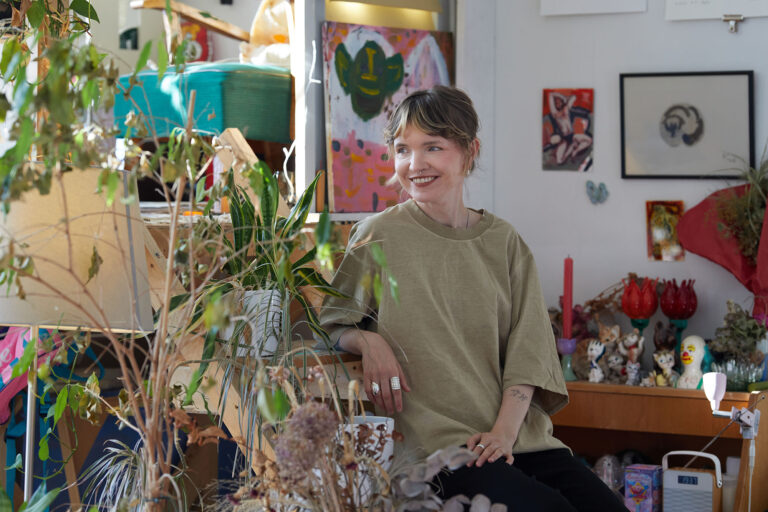
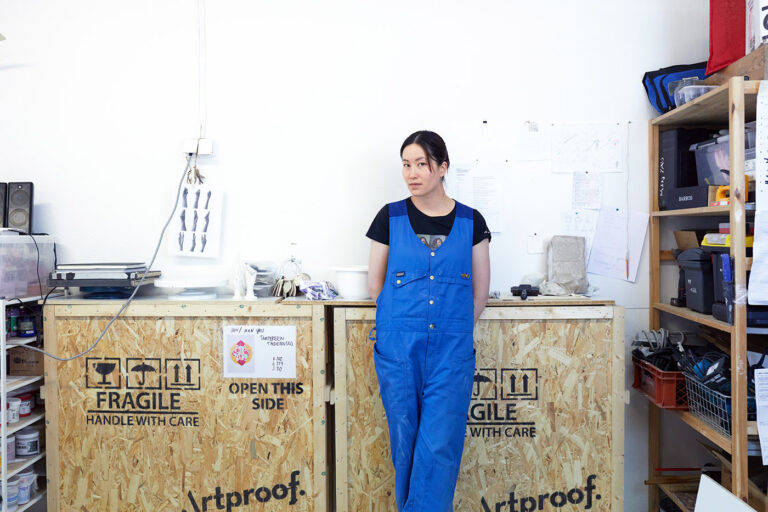
Aguilar-Trigueros is researching this topic in collaboration with Academy Research Fellow Sten Anslan, who is his roommate. Aguilar-Trigueros focuses on the functional ecology of fungi, whereas Anslan has mapped animal communities in the soil of Finland’s coniferous forests from south to north using DNA methods.
The roommates, mycologist Aguilar-Trigueros and soil fauna researcher Anslan, realised that they were both trying to understand the carbon cycle from the soil into the atmosphere. They decided to join forces.
Fungi are the primary decomposers of organic matter. Their enzymatic machinery is capable of breaking down even wood lignin, which is slow to decompose. However, different types of fungi decompose matter in different ways: some release carbon into the atmosphere, while others produce compounds that bind to soil particles and remain in the ground for decades.

Small soil invertebrates, on the other hand, are the main predators of soil fungi. Mites and springtails dig into the ground, eat fungi and defecate. In this way, they regulate the quantity of fungi and the structure of the fungal community, and at the same time, the carbon cycle from the soil to the atmosphere and back again.
“Eventually, soil invertebrates die and remain in the ground. Animal structures are harder and more durable than plant and fungal structures, which is why carbon bound to animals remains in the soil longer. On the other hand, fungi and plants also defend themselves against animals that eat them by developing harder structures,” Aguilar-Trigueros explains.
Testing for carbon routes
To understand the causal relationshipsin the soil, Aguilar-Trigueros and Anslan will conduct mesocosm experiments. In practice, this means they will collect soil samples and take them to the laboratory. This will allow them to fully control the temperature and humidity of the samples, as well as the species present in the soil. They will be able to remove mites or springtails, or change the composition of the fungal community and then measure how carbon is distributed among different carbon pools.
Soil carbon is not a single, unified pool. Particulate organic carbon (POC) is relatively unstable and decomposes easily. In contrast, mineral-associated organic carbon (MAOC) can remain stable in the soil for centuries. Identifying keystone species means figuring out which species direct carbon from easily decomposable particles into carbon bound in minerals and vice versa.
“Identified keystone species serve as indicators. If certain species are present in the soil, this indicates that the soil binds carbon well, just as certain species in waterways indicate that the water is clean and healthy.”
Finland is the ideal forest laboratory
The research carried out by Aguilar-Trigueros and Anslan will take three years, from 2026 to 2028. In the first year, the field data already collected will be analysed and keystone species will be identified statistically. In the second year, laboratory tests will begin, involving the experimental manipulation of soil mesofauna and fungal communities. The third year involves the development of prediction models that will reveal how changes in soil biota will affect carbon storage in the future.
The Finnish Cultural Foundation has awarded the project a grant of €199,000. The grant covers the expensive analyses in particular. PacBio sequencing technology enables more accurate species identification than traditional methods, and measuring carbon pools also requires special equipment.
Carlos Aguilar-Trigueros“Furthermore, it is easy to access forests and navigate them in Finland. That is not a given everywhere in the world.”
According to Aguilar-Trigueros, Finland is an excellent place to study soil carbon sequestration. The country has vast areas of different kinds of boreal forest and is long from north to south, making it easy to study the effects of temperature. It has a long history of forest research and a wealth of background information already available.
“Furthermore, it is easy to access forests and navigate them in Finland. That is not a given everywhere in the world,” says Aguilar-Trigueros.