Experiencing human sound
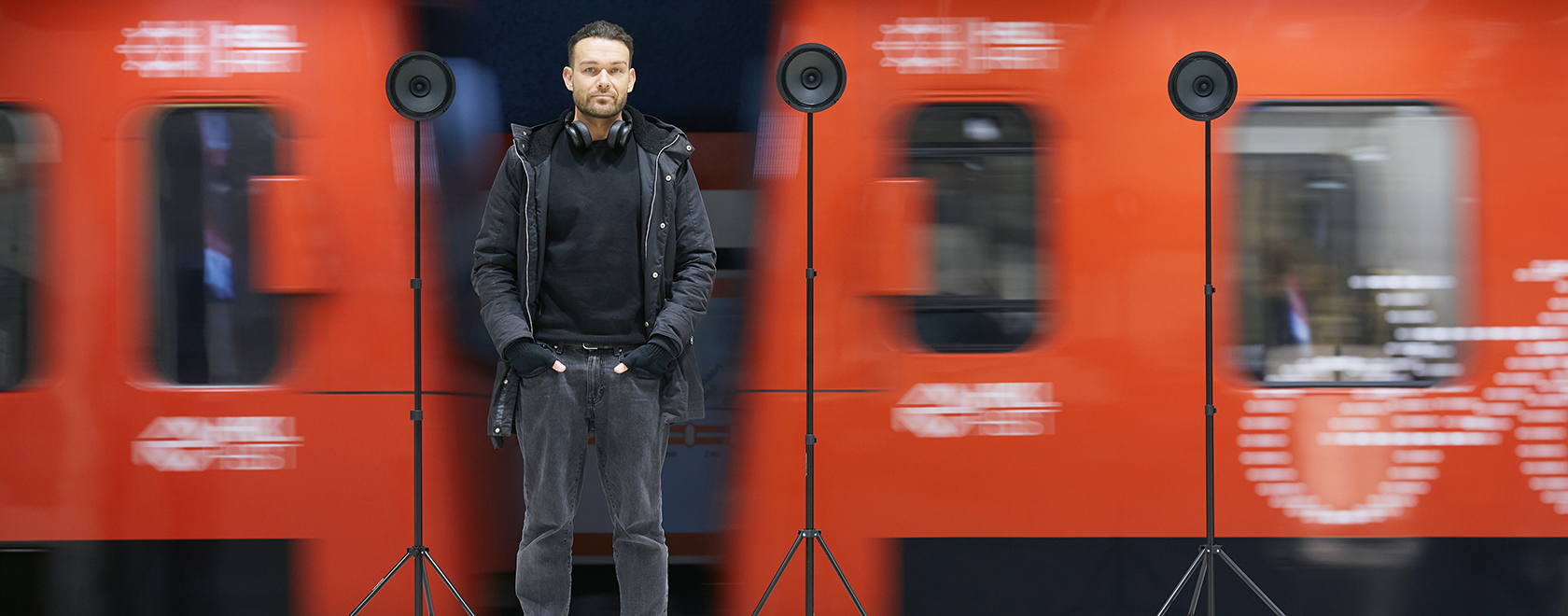
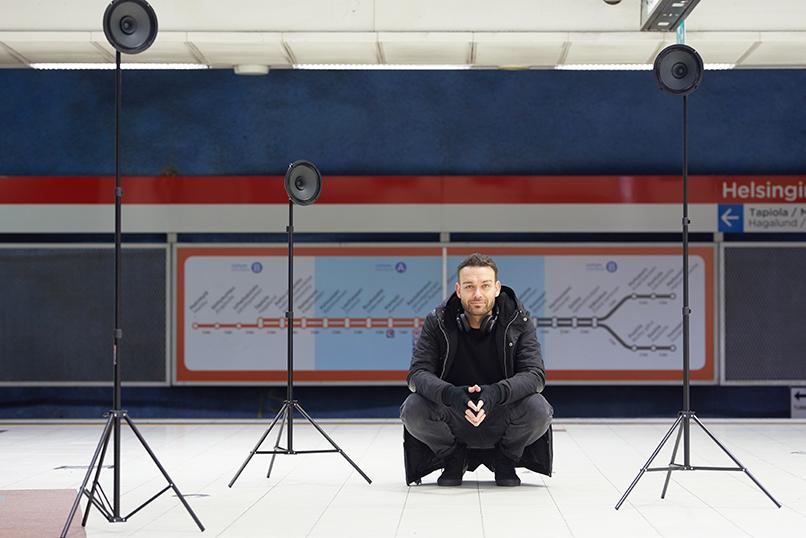
Human relations, familiarity versus strangeness, localness, and everyday culture are themes that turn into immersive sound installations in the hands of Jaakko Autio. He wants to take his art among people, which is where it originates from.

Autio spent a big part of his childhood in Senegal, Africa, where his family moved to because of his parents’ work. That’s where Autio learned what the local saying “I am because you are” means.

– In Senegal everything is about mutual relations, and the idea of privacy differs from the western one. I got to know local music and culture that has been refined throughout centuries, and which brings people together. I witnessed how important it is to throw oneself out there and to become visible, he says.

When Autio was 11 years old, the family moved to Ylivieska, a town of about 15 000 inhabitants in the Northern Ostrobothnia region in Finland. Autio found it hard to adapt. He had never worn socks or brushed his hair and spoke Finnish with a French accent. Now Autio thinks that his sense of foreignness has turned into a strength, which he taps into when making art.

– If you move from Senegal to Yliveiska when you are eleven years old, you have no other option but to try and figure out how you can discover a meaningful life. My destiny was to become a citizen of two countries, and because of it I now find it easy to travel. I have learned to recognise when the fear comes from within, when to let go and when not, he says.

Art maker and social anthropologist
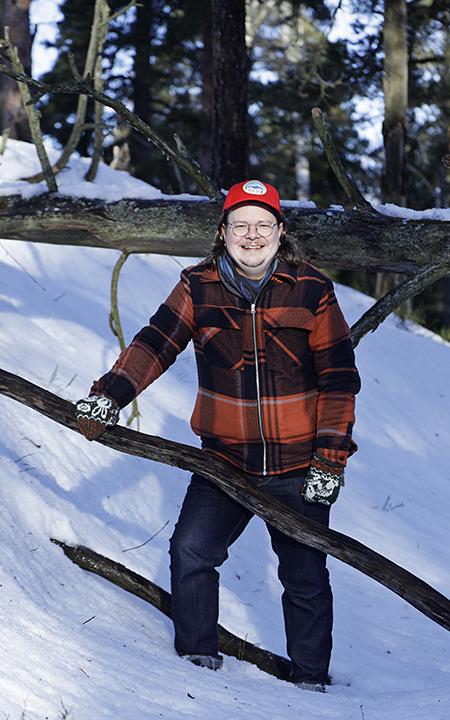
Äänitaiteilija Jaakko Autio

Autio worked in theatre before he started to make art on his own terms. As a sound artist he considers himself to be a storyteller and a people gatherer. Autio rarely makes himself seen but prefers using other people’s voices in his installations.

– I’m like a social anthropologist who spots something precious in the existing culture and makes it visible. It was my parents’ job to solve everyday problems; I’m interested in what happens when the basic needs are met. I’m feel better and drift less when I take this opportunity, he says.

While sound is Autio’s preferred art form, he likes to include visual elements in his installations. In the As Time Sounds II installation, which was exhibited at the Mikkeli Art Museum during the summer of 2021, sounds created by Autio made geometric shapes on the surface of water. The speakers, which almost resemble human figures, bring a humane touch to whatever space he uses.

Reflecting his identity in Narva

Autio is currently in Estonia at the Narva Art Residency for three months, funded by the Finnish Cultural Foundation’s artist in residence programme. It came to him as a surprise that up to 96 % of the locals speak Russian as their mother tongue. The Baroque style Narva was almost completely destroyed during the Second World War bombings, and the new, Soviet style city was built in place. The Estonian population was substituted with Russians.

Autio has plans for at least five new artworks this year. In Narva he is preparing a sound installation titled Where we are, which he will create together with local choirs. It will be exhibited at the Narva Art Residency this summer, and at the Kogo gallery in Tartu during the autumn of 2022.

– Here I’ve been able to reflect my identity with the local people who find the question of homeland difficult. The new installation is loosely based on the Finnish national anthem, which is melodically almost identical with the Estonian one. I intend to create an aesthetic experience, which for just a moment allows us to recognize and remember a world not marked by hostility and conflicts, Autio says.

The results from the Säätiöiden post doc –pooli’s spring application round

The Pool has a role in making Finnish research more international. After twenty-five application rounds over 680 scholars have already received funding through the Pool for at least a one-year research period abroad. One third of the grantees have received a two-year funding.

From the year 2022 onwards, it is possible to apply for funding from the Post Doc Pool even for shorter research periods abroad (i.e. outside of Finland) that last at least 6 months. The Pool’s next application round will take place from 15 August until 15 September 2022, when some 1.6 million euro will be given in grants. The results of this round will be published by December 2022.

Säätiöiden post doc -pooli has proven to be an important instrument of research funding which has enabled young scholars with families to finance research periods at top universities abroad. The grants awarded by the Pool are determined flexibly in accordance with the applicant’s needs and they often include their family’s moving expenses and children’s day care or school fees.

The Säätiöiden post doc -pooli was set up in the autumn of 2009. During the current three-year-period 2022-2024 there are thirteen foundations involved, allocating altogether 3.25 million euro annually to the pool. The Pool’s foundations are Ella and Georg Ehrnrooth Foundation, Emil Aaltonen’s Foundation, Alfred Kordelin Foundation, the Foundation for Economic Education, Päivikki and Sakari Sohlberg Foundation, Finnish Academy of Science and Letters, Finnish Cultural Foundation, the Finnish Medical Foundation, Swedish Cultural Foundation in Finland, the Society of Swedish Literature in Finland, Finnish Foundation for Technology Promotion, Jenny and Antti Wihuri Foundation and the Ulla Tuominen’s Foundation.

Further information

www.postdocpooli.fi
info(at)postdocpooli.fi or from coordinator Mikko-Olavi Seppälä, tel.
+ 358 400 868 006

Broad support for nutrition and health research from the October Round

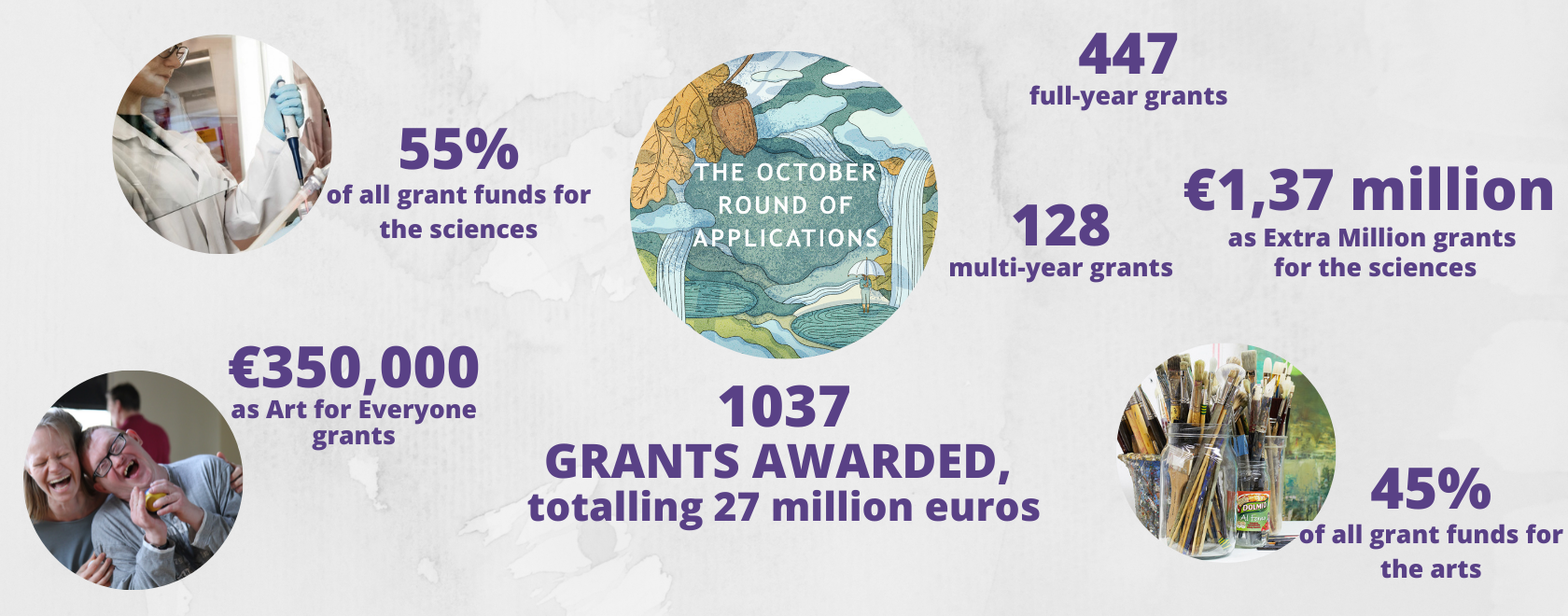
The sciences received 55% and the arts 45% of the grant funds. A total of 447 full-year working grants were awarded, of which 295 in the sciences and 152 in the arts. The most full-year grants were awarded for doctoral dissertation work. 128 multi-year grants were awarded, of which 91 were for two years, 34 for three years, and 3 for four years.

Professori Ursula Schwab. Kuva: Petri Jauhiainen

Professor Ursula Schwab. Photo: Petri Jauhiainen

Scientific studies on, e.g., the health effects of gluten and poverty among employed people

– We also received very high-quality applications for the so-called extra million granted for an annually different theme, which this year was research on nutrition and health. There were 70 applications, of which seven received funding amounting to a total of 1.37 million euros, says Hanna Hiidenpalo, chairperson of the FCF’s board of trustees.

Recipients of this year’s “extra million” include the following:

Professor Katri Kaukinen and Associate Professor Kati Juuti-Uusitalo for research on the positive and negative health effects of gluten (University of Tampere, €250,000), Professor Kaisa Linderborg and her working group for research on the overall health effects of oats (University of Turku and University of Eastern Finland, €200,000), Professor Eeva Moilanen and her working group for research on the health effects of nutrition and on the connections between nutrition and medication (University of Tampere and Tampere University Hospital, €200,000), Professor Ursula Schwab and her working group for research on the connection between genes and lifestyles in the prevention of lifestyle diseases (University of Eastern Finland, €250,000), and Associate Professor Keijo Viiri and his working group for research on molecular damage caused by dietary gluten in coeliac disease and on the disease’s treatment (University of Tampere, €200,000).

Additional major grants were awarded to Associate Professor Marjo Helander and the GLYFOBEE working group for research on the effects of glyphosate on the gut microbiome and learning processes of wasps (University of Turku, €200,000) and to Mikko Jakonen and his working group for research on the employment situation, social welfare, and everyday life of employed poor people (University of Jyväskylä, €180,000).

– Thanks to donor funds, we will be able to support especially music students this year. In the sciences, we can sponsor technical sciences and pharmacy well, whereas there are less funds available for philosophy and for political and cultural research, for example, explains Juhana Lassila, the FCF’s director of cultural affairs.

Support for Romany and Sámi cultures

Ph.D. / taiteilija Mark Aitken.

Ph.D. / Artist Mark Aitken.

Five grants related to Sámi culture were awarded and four grants related to Romany culture. Mark Aitken received €25,000 for postdoctoral research on trauma, empathy, and Sámi knowledge in the age of Arctic exploitation. Maria Nätynki received €26,000 for doctoral dissertation work on Sámi touch culture. Hilja Grönfors and her working group received €71,000 in the form of an Art for Everyone grant for organising a music and film tour in prisons, child protection centres, and hospitals about Romany culture. Antti Kivimäki and his working group received €6,000 for artistic work of the ensemble Orkestra Suora Lähetys, which has a Romany background.

Art for Everyone grants enable activities in prisons and refugee reception centres

Eight Art for Everyone grants were awarded, amounting to €350,000. The goal of these grants is to give more possibilities to experience high-quality culture to people who need support or care and thereby increase cultural equality.

Art for Everyone grantees include the following: Kai Maksimainen and Seppo Kirjavainen, €39,000 for writing workshops in prisons. Katriina Haikala and her working group, €71,000 for the community art project Women’s Room, one of whose goals is to make use of artistic working methods to empower women threatened by homelessness. The dance institute Vantaan tanssiopisto,35,500 for organising dance workshops in reception centres for refugees. The theatre Legioonateatteri, €34,000 for a project that uses arts to promote the autonomy of intellectually disabled people. Teatteri Telakka,38,000 for preparing a performance about the history of intellectually disabled women.

Grants from the regional funds in the spring, special grants in March

The FCF will award grants totalling about 50 million euros in 2022. Grants totalling 27 million euros in the Central Fund’s October round of applications are being awarded now, and 13.5 million euros will be awarded in the regional funds’ January round of applications. The rest will be awarded through the post doc pool and the FCF’s March and August rounds.

In March, the FCF will accept applications for instrument loans, mobility grants, and Argumenta grants for scientifically interesting topics and for topics of far-reaching importance for society. A new kind of cultural support will be created that publishers of Finnish translations of high-quality world literature for adult readers can apply for.

In addition, the FCF will use funds to benefit culture through various projects. The total support for culture during the financial year will amount to about 60 million euros.

All the grantees of the October round of applications of the Central Fund can be found here.

Arctic artists “chewing the tundra” in Vienna

Text: Antti Kivimäki
Photopraphy: Heikki Tuuli

Taiteilija Pia Lindman

Climate change does not treat the world’s regions equally. The Arctic region is warming at three times the rate of the global average. Glaciers are retreating and opening up shipping lanes and access to natural resources, and this is arousing commercial interests.

The Arctic’s living organisms are experiencing a dramatic change caused by pollution, climate change, mining, the global economy, and politics. The experiences of each community are of course unique, but simultaneously they are all experiencing this change collectively, in the larger context, says the visual artist Pia Lindman.

She has been building the Chill Survive network together with the Icelandic anthropologist Tinna Grétarsdóttir since 2016.  

Lindman ja Grétarsdóttir have travelled around the Arctic from Greenland to Siberia, become acquainted with local communities, and organised residencies where researchers, artists, and local communities have become acquainted.

We try to convey information about what these changes mean in the everyday experiences of people. We want to convey what can’t be expressed in words, and this experience comprises the relationships created by people as well as all other living nature.

Lindman ja Grétarsdóttir have collected around them a network of about fifty artists, researchers, and activists, and its core activities have consisted of networking and collecting information. 

Now the hard work is beginning to bear artistic fruits.

Chill Survive will organise its first large exhibition, called Chewing the Tundra, in the centre of Vienna in the WUK art centre from November to July of this year. Fifteen artists from the Chill Survive network from Greenland, Iceland, Norway, Denmark, and Finland will bring their art – videos, performances, paintings, sound art – into the 400 square metres of the Exnergasse exhibition hall.

Taiteilija Lauri Linna

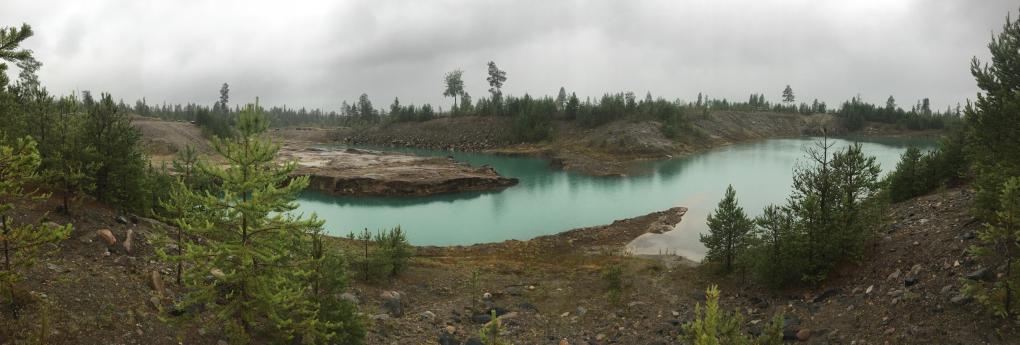
One of them is Lauri Linna. He is building a documentary installation for the hall called Juomasuo – suo, jossa oli juotavaa vettä, in English “Juomasuo – a bog that had drinkable water”, about a bog whose Finnish name means “Drinking Bog”.

This bog in the municipality of Kuusamo is where a mining company is planning a cobalt and gold mine. For Linna, the surroundings are dear childhood landscapes where he spent time with his granddad, who lived from nature conservation, fishing, hunting, and hiking.

In the Exnergasse, Linna will create a scale model of the planned mining area with used smartphones and plant seeds and plants he has collected from the area in a herbarium. Last summer, Linna filmed the bog, its vegetation, and human activities in the environs with a video camera. He will continue filming and collecting this summer.

I asked the Finnish Museum of Natural History how to preserve the plants in the herbarium so their DNA remains intact so they can be cloned in the future if necessary. When the mining ends someday, these seeds and other plant material can be used to replant the vegetation destroyed by the mine, Linna explains.

After the exhibition, the seeds and plant material will be donated to Kuusamo’s municipal archive.

In the Exnergasse installation, Linna’s video documentary will run on the screens of used smartphones. Linna collects them from people in Kuusamo.   

The percentage of cobalt and gold in used phones is higher than in the planned mine’s bedrock. If all Finns donated one used mobile phone, we would get close to the amount of ore that can be extracted from the mine, Linna says.

He says that he has understanding for mining as such: People need work, and cobalt is important for climate change mitigation because it’s necessary for batteries in electric cars and for storing electricity.

I also like discussing with people who have a different opinion. The nature of that area, however, is such that it’s hard to imagine a kind of mining there that wouldn’t produce pollution and spoil the environment. The lake Kitkajärvi, which is called Finland’s biggest spring, is nearby. The river Kitkajoki is 800 metres away and continues on to the Oulanka National Park and Finland’s most popular hiking trail and on to the historically important Karelian village of Paanajärvi/Panozero in Russia.

Juomasuo on kuusamolainen suo, jolle kaivosyhtiö suunnittelee koboltti- ja kultakaivosta. Kuva: Lauri Linna

Juomasuo is a bog in the municipality of Kuusamo, where a mining company is planning a cobalt and gold mine. Photo: Lauri Linna

Other participants from Finland in the Chewing the Tundra exhibition are the artist Leena Valkeapää; the reindeer herder Oula A. Valkeapää; the geneticist and artist Anu Osva, who has studied Northern Finncattle and the horses of the Yakuts; the dancer and visual artist Anra Naw, who belongs to the East Siberian indigenous Chukchi people and now lives in the Finnish municipality of Inari; and the visual artist Pauliina Jokela, who lives in Iceland.

Lindman has asked Austrian museums and universities to send to the exhibition objects in their possession that come from the Arctic. The artists participating in the exhibition will bring recordings, microbes, lichen, and other material they have collected on their expeditions.

Lauri Linna, M.A., received a grant of €13,000 for artistic work in 2022, and Pia Lindman, M.F.A., received a grant of €6,000 for development of the Chill Survive networks activities.

Towards sustainable costume design

Text: Marika Aspila

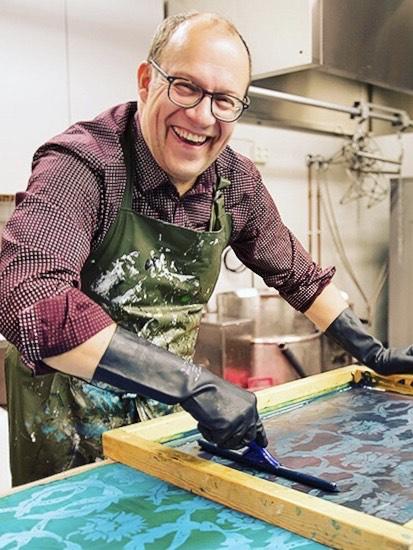
Pasi Räbinä. Kuva: Kaisa Tiri

Pasi Räbinä. Photo: Kaisa Tiri

Having designed costumes for 35 years and for more than 100 productions, including tens of thousands of individual pieces of clothing, Pasi Räbinä knows the materials and how they are treated. He has worked full-time as a costume designer at the Oulu City Theatre since 1991, but he has also always simultaneously worked as an independent artist and designer and received awards as a stage costume innovator and pioneer. 

I’ve consistently developed various fabric treatment techniques and thereby come closer to results in which the fabrics themselves are interesting, Räbinä recounts.

With the grant money he just received, Pasi Räbinä is starting a project in which he will study promising new ecological clothing materials for use in costume design. Climate change, loss of biodiversity, and overexploitation of natural resources require quick changes at all levels of society. Costume designers, who design hundreds and thousands of pieces of clothing for theatre and opera performances, also have to seriously ponder what they can design in the future, what materials they can use, and what to do with the hundreds of costumes after the last performance of a work.

My plan is a pioneer project like we haven’t had before in Finland. My goal is to increase awareness of sustainable development in our field, says Räbinä.

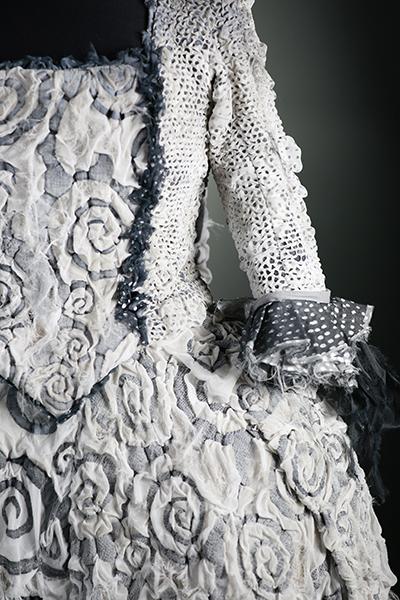
The Addams Family, Oulun kaupunginteatteri 2015-16: Aaveen (tanssija) rokokoopuku, kerroksellinen kreppipainanta. Kuva: Kaisa Tiri

The Addams Family, Oulu Theatre 2015-2016: Phantom’s (a dancer) costume. Photo: Kaisa Tiri

The challenge for the future is how can we reduce textile waste to hurt nature less. In my opinion, it’s crucial to influence how designers work already at an early stage and get them to think while making costumes what kinds of materials would be sensible for sustainable development and the circular economy. The concept of “circular economy” in my research doesn’t mean only recycling; instead, it means a comprehensively new approach to the manufacturing of clothing and materials. The idea is to strive towards reuse of most pieces of clothing used for costumes. My goal is to help costume designers by developing a model and way of working in which the costumes of a performance are designed to last long and be recyclable.

According to Pasi Räbinä, the Finnish clothing and textile industry is a trailblazer in the development of new ecological textile fibres. Metsä Group and Stora Enso are developing promising new materials and innovations. Spinnova is a Finnish pioneer in the conversion of wood-based cellulose into textile fibres using the Ioncell process. From the perspective of recycling and a circular economy, the Finnish Infinited Fiber Company is already far along in its product development of turning textile waste into new textile fibres.

The goal of these companies is to make cloth fabrics that are more environmentally friendly and use less natural resources. I intend to familiarise myself with their activities and manufacturing methods and apply my research to my costume design, Pasi Räbinä explains.

Costume designer Pasi Räbinä, M.A., received a grant of €17,500 for research on the use of ecological materials in costume design.

Strong culture, a strong identity

Text: Minnamaria Koskela
Photography: Katrin Havia

Hilja Grönfors

Romany children are overrepresented among Finland’s social service customers, and young Romanies are more likely to end up in prison than their peers from the majority population. According to singer-musician Hilja Grönfors, who has volunteered in prisons, among other organisations, many Romany youths of today have lost their identities, while drug problems have increased exponentially and gang culture is eating away at the traditional upbringing of the people, where the central tenet is respect for others – particularly elders.

With a multidisciplinary team of professionals, Grönfors plans to carry out a tour of child welfare reception centres, hospitals and prisons with music and films that are about Romany culture. The project also involves film director Katariina Lillqvist, the film production company Camera Cagliostro, and the Museum of Roma Culture.

We are really pleased and thankful for the grant. It will allow us to fulfil this important project. The ill-being of alienated Romany children and adolescents is a ticking time bomb that must quickly be addressed.

In the project, children and adolescents of Roma descent are shown performances compiling old Romany songs and relevant documentary films, which teach them about their culture. According to Grönfors, the children and young people who are most likely to become marginalised are those who don’t know whether they belong in the Romany culture or the majority population.

Culture, such as music, forms the basis of one’s identity. Music and film are tools that we use to reinforce the cultural roots of Romany children and adolescents.

The tour will also include music workshops, in which the young people can participate. Music has traditionally played a central role in Romany culture. Songs have always been used to provide guidance to children. Besides educational songs, there are market songs and love songs – although Romany music never discusses love explicitly but through metaphors, such as symbolic flowers.

The social status of Romanies in Finland improved somewhat in the 1980s. Giving up their itinerant lifestyles and moving into family-specific apartments brought an increase in living standards, but also meant a loss of community spirit and the song tradition.

My aim is to revive this nearly lost tradition by collecting and recording Romany songs, as well as writing new songs and lyrics. Even now, I am working on four new songs.

Hilja Grönfors has truly earned the title of Grand Old Lady of Romany music. In 2005, Kaustinen Folk Music Festival awarded her the title of Master Folk Singer, and in 2014 she received the Finnish National Prize for her efforts to maintain Romany cultural heritage.

The songs describe the life of the Roma and they all share an element of hope. Tenacity and hope have always played an important role in our culture – otherwise we would have been eradicated by now, due to the vicious treatment we have received through the ages, Grönfors concludes.

Musician Hilja Grönfors and her team received an Art for Everyone grant of EUR 71,000 in 2022 for arranging a tour of prisons, child welfare reception centres and hospitals with music and films about Romany culture.

Personalised data for preventing type 2 diabetes and fatty liver disease

Text: Antti Kivimäki
Photos: Petri Jauhiainen

About half a million Finns have adult-onset (type 2) diabetes. Their risk of getting heart and blood vessel disorders is much higher than that of other people.

Professori Ursula Schwab. Kuva: Petri Jauhiainen

Lifestyle changes can prevent or delay the onset of type 2 diabetes. This is known from very many studies from around the world, and there’s no need to investigate that any more, says Ursula Schwab, professor of nutrition therapy at the University of Eastern Finland, with a laugh.

But these studies have not been able to observe the effect of hereditary factors. So do genes affect who benefits from lifestyle changes and who doesn’t?

This is what Schwab and her colleagues are investigating with the help of men from the city of Kuopio.

The longitudinal study Metabolic Syndrome in Men (METSIM), led by Professor Markku Laakso, has used interviews and measurements to follow more than 10,000 men randomly chosen from the Kuopio population register. The men were chosen from 2005 to 2010 when they were 45 to 73 years old.

Schwab and her colleagues chose 635 men from this cohort. Half of them have a high and half have a low genetic susceptibility to get type 2 diabetes.

Today more than one hundred gene variants are known that cause susceptibility to type 2 diabetes, but when we chose the men in 2016, only 76 were known, so we created the groups based on these.

At first, there were group meetings for the men. Later, tips for exercising and health-promoting diets, such as high-fibre products and recommended dairy products, were offered more online.

Previous comparable studies have focused on personal guidance. We wanted to now try what kind of effectiveness can be achieved with group and online guidance organised using less resources.

“Health-promoting lifestyles have also helped those whose genes cause a higher risk of getting lifestyle diseases. So here too, we’re expecting that lifestyle changes will help both groups similarly.”

What results does Schwab expect to get?

According to previous studies, health-promoting lifestyles have also helped those whose genes cause a higher risk of getting lifestyle diseases. So here too, we’re expecting that lifestyle changes will help both groups similarly, says Schwab.

But one can’t be sure before the results have been analysed. So we’ll wait patiently for what the results tell us.

***

In another, similar study, nutrition scientists at the University of Eastern Finland are investigating whether genetic susceptibility cause differences in how switching to recommended dietary fats affects the storage of fat in the liver.

One hundred men of whom half have the PNPLA3 gene variant that makes them susceptible to fatty liver disease were selected from the above-mentioned METSIM database. The PNPLA3 gene regulates fat storage.

The men were instructed to use soft vegetable fats instead of hard animal fats in their diets, and the study monitors whether there is a difference in the degree of fat storage in the liver depending on which variant of the PNPLA3 gene the men have.

The PNPLA3 gene variant that predisposes to fatty liver disease is very treacherous since it simultaneously protects against type 2 diabetes. Often people with this variant don’t have high blood sugar or cholesterol levels, but their liver can be fatty. If fatty liver disease has progressed enough, it’s possible that nothing can be done anymore, Schwab explains.

Genetic studies are connected to the megatrend of personalised medicine in a broader sense. When genetic understanding increases, those in risk groups can get more personal advice.

In addition to working as a researcher, Schwab takes care of patients in the Kuopio University Hospital.

Patients who have problems with blood fat levels often ask whether they can eat eggs. If I only knew whether they have a certain gene variant, I could answer more precisely than now. People who have this gene variant absorb dietary cholesterol well, so they are recommended to not eat more than three eggs per week. But others can eat eggs more freely, Schwab explains.

Generally speaking, people could be more motivated to eat health-promoting nutrition if general recommendations were customised into personal recommendations that take into account their specific characteristics.

Professor of nutrition therapy Ursula Schwab and her research team at the University of Eastern Finland received 250,000 euros for research on the connection between genes and lifestyles in the prevention of lifestyle diseases.

Advances in gluten research

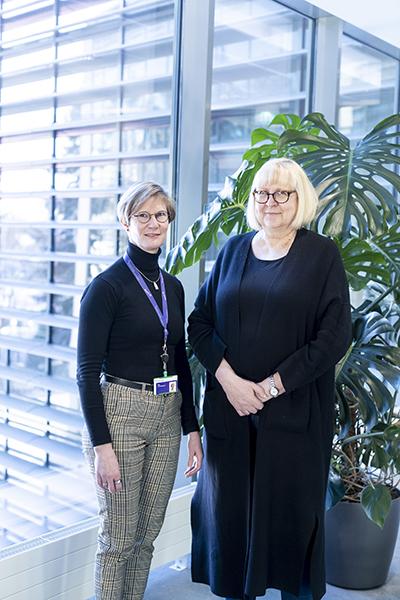
Kati Juuti-Uusitalo (vas.) ja Katri Kaukinen.

Kati Juuti-Uusitalo (left) and Katri Kaukinen.

Wheat, barley and rye contain a protein called gluten. In about two percent of the population, it causes an inflammatory reaction that damages the lining of the small intestine, in other words celiac disease.

Gluten is however also avoided by many people who don’t have celiac disease. Many feel their lives are healthier without wheat, barley and rye – and the trend has reached Finland too.

People can have cereal (grain) allergies and also non-celiac gluten sensitivity, but most of the hype about grain-free food is not based on research results, says Katri Kaukinen, professor of internal medicine and director of Tampere University’s Celiac Disease Research Center.

Cereals in the sense of grains have fibre, vitamins, and minerals. They also provide an efficient way of producing large amounts of energy for humankind. In fact, one might ask whether avoiding cereals hurts people more than it helps.

Extensive epidemiological data is available in Finland that can be used to find an answer to this question, and the Celiac Disease Research Center has started to do this with Kaukinen at the helm. 

A 20002011 longitudinal study of the Finnish Institute for Health and Welfare extensively followed the development of the health of adults. About 4,000 people were interviewed about their eating habits, and they gave blood and urine samples. Some of their genes were also studied.

The data enables differentiating celiacs from people who avoid gluten for other reasons. The data also shows whether gluten avoidance has benefited them.

I’m quite critical, but we’ll soon get results and see what’s true about gluten avoidance, Kaukinen promises.

The Tampere celiac researchers are also trying to find better diagnostic methods of identifying  family members of celiacs who need special diets.

There are good celiac disease tests, but they don’t identify all celiacs, especially in the early stage.

Improved tests could for example identify biomarkers in blood, urine, and excrement. A risk calculator that takes into consideration many different factors could also be useful.

There is also plenty left to research on treatments. It was thought that the inflammatory reaction of the intestinal lining would eventually heal when a celiac stops eating cereals. 

It has however been recently observed that the intestinal lining does not heal completely. Its damages may partly be inborn anomalies that are part of celiac disease. In that case, the nutrient absorption of celiacs is permanently disturbed, and they may need medication or dietary supplements for the rest of their lives.

Research on permanent damages of intestinal lining (villi) at Tampere University is under the direction of Kati Juuti-Uusitalo, university lecturer in biotechnology. 

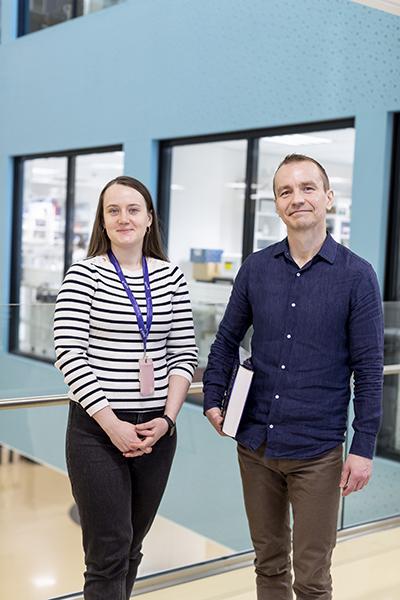
Väitöskirjaohjattava Valeriia Dotsenko (vas.) ja Keijo Viiri.

Valeriia Dotsenko (left) and Keijo Viiri.

And celiac medication is being studied at Tampere University’s Celiac Disease Research Center by a research group led by Keijo Viiri, associate professor in molecular biology. His research group is collaborating with a German pharmaceutical company and studying a drug the Germans developed that prevents the activity of the small intestine’s TG2 transglutaminase enzyme.

The gluten component gliadin is what sets off inflammation in celiacs. TG2 is a normal protein in the human small intestine that modifies gliadin such that its glutamines turn into glutamate. Celiacs get an inflammatory reaction from gliadin that changes in this way. The hypothesis to be tested is that the inflammatory reaction does not come when the TG2’s activity is inhibited,  Viiri explains.

The drug has worked well in preliminary clinical trials and seems to prevent the damages caused by gluten.

Viiri’s research group has however observed that microscopic i.e. histomorphometric analysis does not always tell all about an intestine’s ability to function. What is required is measurement of gene activities, in other words so-called molecular histomorphometry.

A celiac’s intestine may look normal, but its surface may be so damaged at the molecular level that dietary minerals, for example, are not absorbed properly.

Viiri’s research team is studying the gene activity of the patients and control group members in the  data collected by the pharmaceutical company. At the same time, they are studying whether the drug’s healing effect can be observed in the form of possibly higher nutrient, mineral, and vitamin levels in the bloodstream.

The goal is to find out if the pharmaceutical company’s TG2 inhibitors work as well at the molecular level as they do at the microscopic level.

If the drug works well at the molecular level, does that mean celiacs can begin to eat wheat, barley, rye, and oats?

I’m a researcher, not a doctor, so I won’t venture to give an opinion on that. But there’s always a small amount of gluten even in a gluten-free diet, and the most sensitive celiacs get symptoms from this so-called residual gluten, Viiri points out.

It’s hard to avoid gluten on trips abroad too. So continuous medication could make life easier for celiacs even if they don’t quit their diet.

Edit 8.9.2022: removed oats from the list of crops containing gluten.

Professor Katri Kaukinen and Associate Professor Kati Juuti-Uusitalo received a grant of €250,000 in 2022 for research on the positive and negative health effects of dietary gluten.
Associate Professor Keijo Viiri and his working group received a grant of €200,000 for research on celiac disease treatment and on molecular-level damage caused by dietary gluten.

More than 200 PoDoCo projects have helped companies in renewal

Latest research expertise contributes to the twin transition in industry

This round of applications highlighted twin transition projects. Companies are interested in developing technologies that make more efficient and environmentally friendly use of resources. With the help of postdocs, companies can utilize the latest information to reduce their carbon footprint, says the PoDoCo program leader Dr. Seppo Tikkanen from DIMECC Ltd.

Altogether 201 postdocs have used their expertise to renewal of companies since the beginning of the PoDoCo program in 2015. The program has received 397 applications for cooperation projects. Of the fully implemented PoDoCo projects, 90 percent have led to the employment of PhD in the partner company.

Four grants to postdocs of LUT University

Lappeenranta-Lahti University of Technology LUT was strongly represented in both the applications and the grants awarded. The companies will be able to utilize the expertise of LUT University’s electrical engineering postdocs in four funded PoDoCo projects.

Dmitry Egorov, PhD from the University of Lappeenranta, focuses on the development of electric motors with Danfoss Editron in his PoDoCo collaboration. As power densities increase, more knowledge is needed about the interrelationships between electromagnetism and thermal and structural design.

The PoDoCo program with Danfoss Editron Oy represents a unique opportunity for me to get intensive training and industry-related experience in comprehensive design of electromechanical conversion systems, which otherwise I would not be able to grasp within my current affiliation or time equivalent to the duration of the program, says Dmitry Egorov.

Recovering rare-earth elements

In his PoDoCo project, Pasi Salonen, a recent PhD from the University of Turku, is developing a method for the treatment and recovery of rare earth elements (REE), especially from electronic scrap and industrial by-products. Rare-earth elements are used in many new solutions to combat climate change, such as wind farms and electric cars, so the demand has increased rapidly.

In the project promoting circular economy, Salonen, together with Weeefiner Ltd in Jyväskylä, is developing 4D-printed filters for capturing metals, which means 3D-printed filters that have been chemically functionalized.

– I have always been interested in the academic research world as well as industry, and PoDoCo combines both. The PoDoCo project involving 4D REE scavengers done in collaboration with Weeefiner Ltd is interesting and meaningful and allows me to utilize the knowledge obtained in my PhD in practice. The PoDoCo program makes academic and industrial careers simultaneously possible, says Pasi Salonen.

PoDoCo program:

The next PoDoCo grant application round takes place March 1 – April 15, 2022.

There are no limitations regarding the branch of science or branch of industry.

Further information:

PoDoCo-ohjelman vetäjä, Seppo Tikkanen,
DIMECC Oy, seppo.tikkanen(at)dimecc.com, puh. 040 840 2780

Projects supported by SKR:

 
Applicant Company Discipline Grant (€)
Kumari Kajal Finnadvance Oy Chemistry and Mathematics – Environmental sciences 30 000
Panchal Bhaveshkumar Valio Ltd. Agricultural sciences – Other agricultural sciences 30 000
Leyter Potenciano Machado Elisa Oyj Chemistry and Mathematics  30 000
Müge Tetik Skanska Oy Technical sciences 30 000

A survey for researchers working with eDNA or aDNA

At the moment we are approaching researchers who work with or would like to work with environmental DNA or ancient DNA. Our aim is to evaluate the state of the art in the relevant scientific fields and to investigate their most pressing needs. The survey may be filled by all scholars linked with Finland and working in Finnish or foreign institutions, irrespective of their career level.

If you use environmental or ancient DNA samples, this is your time to be heard. Please fill in the survey questions: https://link.webropolsurveys.com/S/0C5BD2CF04D50D2A

Further information:

Dr Tânia Keiko Shishido Joutsen (tania.shishido@helsinki.fi)