Future cities boost health and wellbeing
Text: Laura Iisalo
Michael Oduor’s photo: Harri Tarvainen
Timo Perälä’s photo: Reijo Koirikivi, Studio P.S.V.
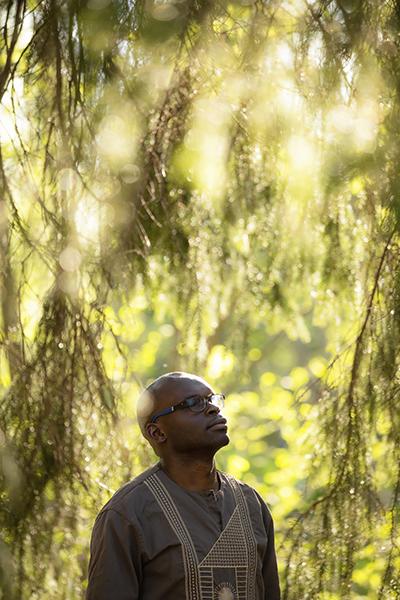
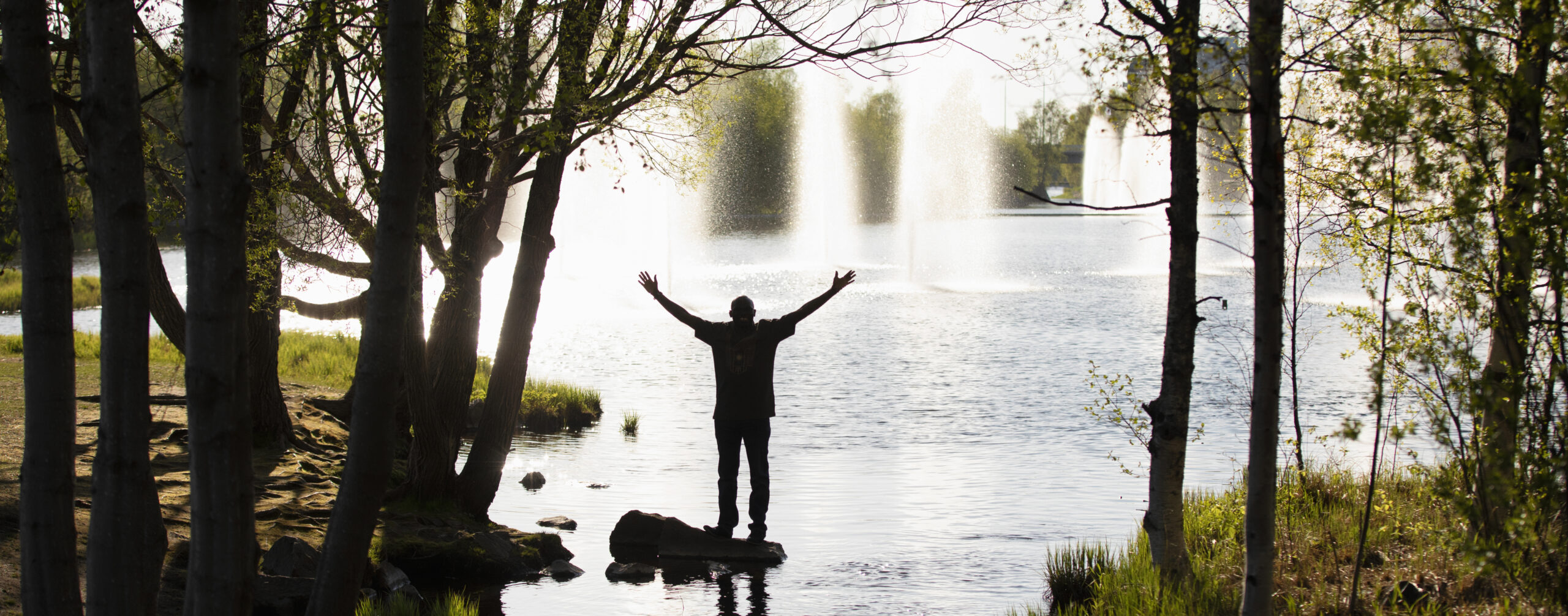
Onko tulevaisuuden kaupungeissa entistä enemmän puistomaisemia ihmisten hyvinvointia lisäämässä? Kuva: Harri Tarvainen

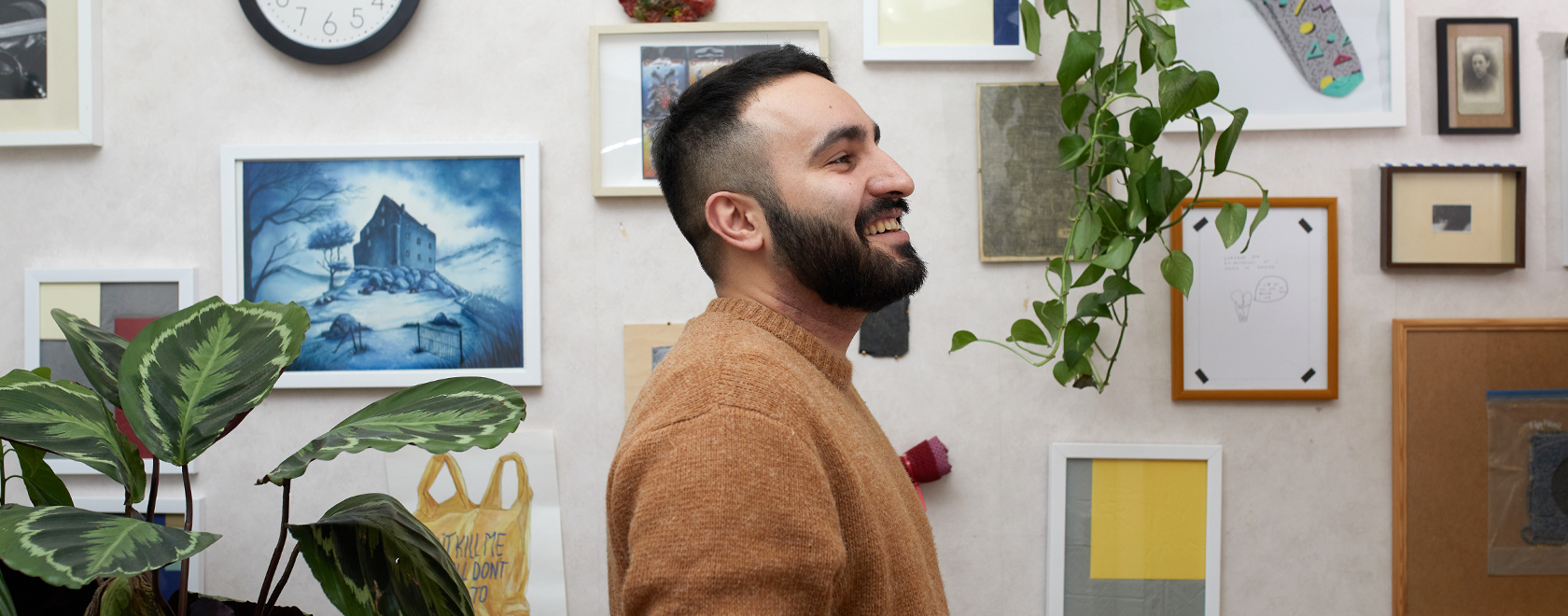
Will there be more gardenlike environments in cities in the future to make people healthier? Michael Odour in Ainola park, Oulu.

How to create an environment that encourages or even forces its inhabitants to be more active? The subject will be thoroughly examined in a project titled Urban Lifestyle Engineering, which combines expertise of postdoctoral researcher Michael Oduor, who received his PhD in 2018 at the Oulu University, with practical knowledge gathered throughout the years by Oulu-based design agency Navico.

The first phase of the research project is funded by the PoDoCo grant worth 28 000 euros. During this period the aim is to look into best practices across the globe and analyse their impact on both personal and societal level.

The focus will be especially on technology, and how it is utilized as part of urban design – this is a topic closely related to Oduor’s doctoral studies, which looked into persuasive systems design and its impact on human behavior.

– Technology could be used to inspire people towards a more active lifestyle, as it is a beneficial tool for tracking and summarizing habitual changes over time. The goal is to discover efficient ways to create healthier and more sustainable settings that increase social interaction, and make people appreciate their environment more by using technology. These so-called smart cities have been trending globally for a few years now, Oduor tells.

From research to concrete results
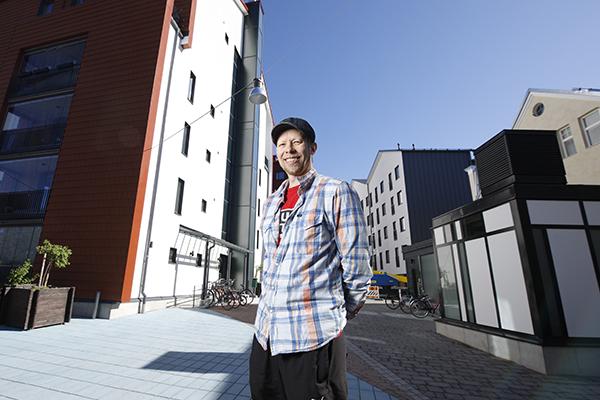
Timo Perälä, yksi Navicon perustajajäsenistä.

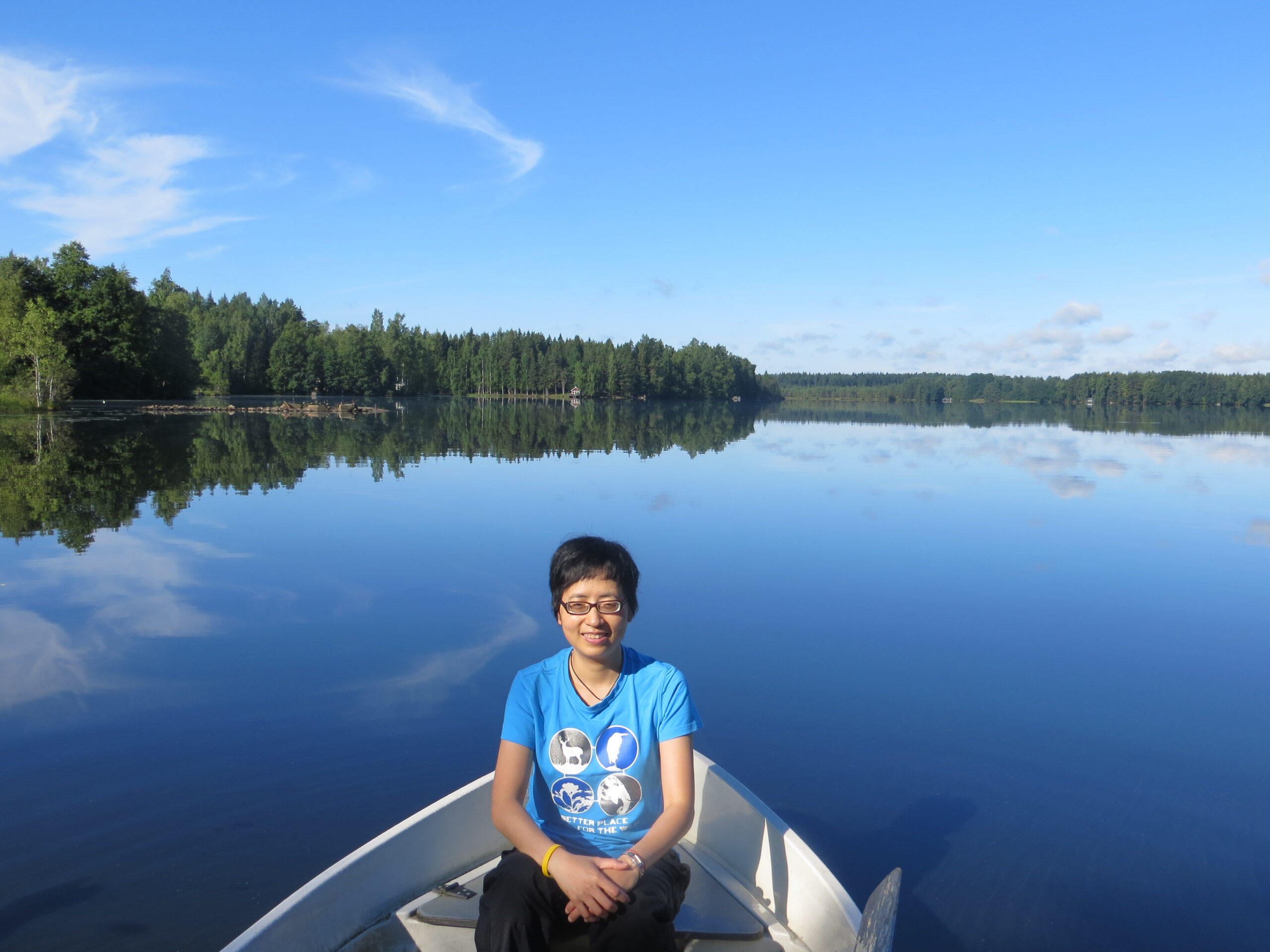
Timo Perälä works for better environment and healthier way of moving.

One of Navico’s founders, Timo Perälä, has worked and volunteered in sports long enough to notice that in the past few decades people’s physical performance has declined. He believes that changes in lifestyle are partly caused by the way cities are designed and built – for cars.

– People go to the gym more these days but they move less on a daily basis. They might workout vigorously for an hour but they don’t get enough low intensity movement, which is a bad combination for overall health. It is a global phenomenon, which is reflected in the society and economy. There is no point talking about increasing productivity if people are not feeling well, he says.

Health concerns occur at a younger and younger age. In his work Perälä has seen 16-year-old children that have back fractures or other problems in their support and musculoskeletal system, which can severely impact their future.

– Parents want to buy wellbeing and drive their children to sports practices, which reduces their daily movement. This makes the children susceptible to injuries and physical rehabilitation early on – how will they cope in working life if this is the trend, Perälä wonders.

The intention is to take the collected data from the Urban Lifestyle Engineering research project and put it to use as soon as possible in order to develop better design and operational practices, which can be applied internationally.

– The research side relies strongly on Michael’s skills and with his expertise we can measure the impact and deepen our understanding. We want to use the knowhow to improve people’s daily lives, because that’s where it really matters, Perälä concludes.

What is PoDoCo?

Grants awarded by PoDoCo foundation pool are intended for academic research investigating new innovative ideas to boost the strategic renewal of Finnish industry.

PoDoCo is a matchmaking program supporting long term competitiveness and strategic renewal of companies and employment of young doctors in the private sector. PoDoCo matches newly graduated doctors with companies, and financially supports the collaboration projects between doctors and companies. For more information go to www.podoco.fi

March Round Mobility Grants Awarded to 39 Artists

This year the minimum grant was lowered to EUR 2,000, so that there could be more recipients and wider variety of purposes of use.

Koreografi Sonya Lindfors ja UrbanApa -taideyhteisö saivat liikkuvuusapurahan maaliskuussa 2020. Kuva: Janne Mikkilä

Sonya Lindfors photographed by Janne Mikkilä

This year’s largest grants, worth EUR 10,000 each, went to three applicants. Choreographer and artistic director Sonya Lindfors and her team received a grant for residency and performance-related travel. Their UrbanApa art community will take its dance performances Cosmic Latte and Camouflage, on the topics of otherness, blackness and diversity, to Belgium, Sweden and Germany.

– After the coronavirus pandemic, international festivals and other events will have even less funds than before, so they will not be able to cover artists’ travel and accommodation costs. This might mean that they invite fewer foreign artists to participate. With this grant and a travel budget we will be able to plan things on a longer time scale, Lindfors explains.

– I believe that the time for individual gigs has passed. It is not sustainable and it doesn’t build interaction with the local community, which is a really important element for us. Now we have a chance to make longer-term agreements. We want our work to be both ecologically and socially sustainable, and we want to leave a mark on the local community. This is why we always combine our tour performances with lectures, workshops or other collaborations with local artists.

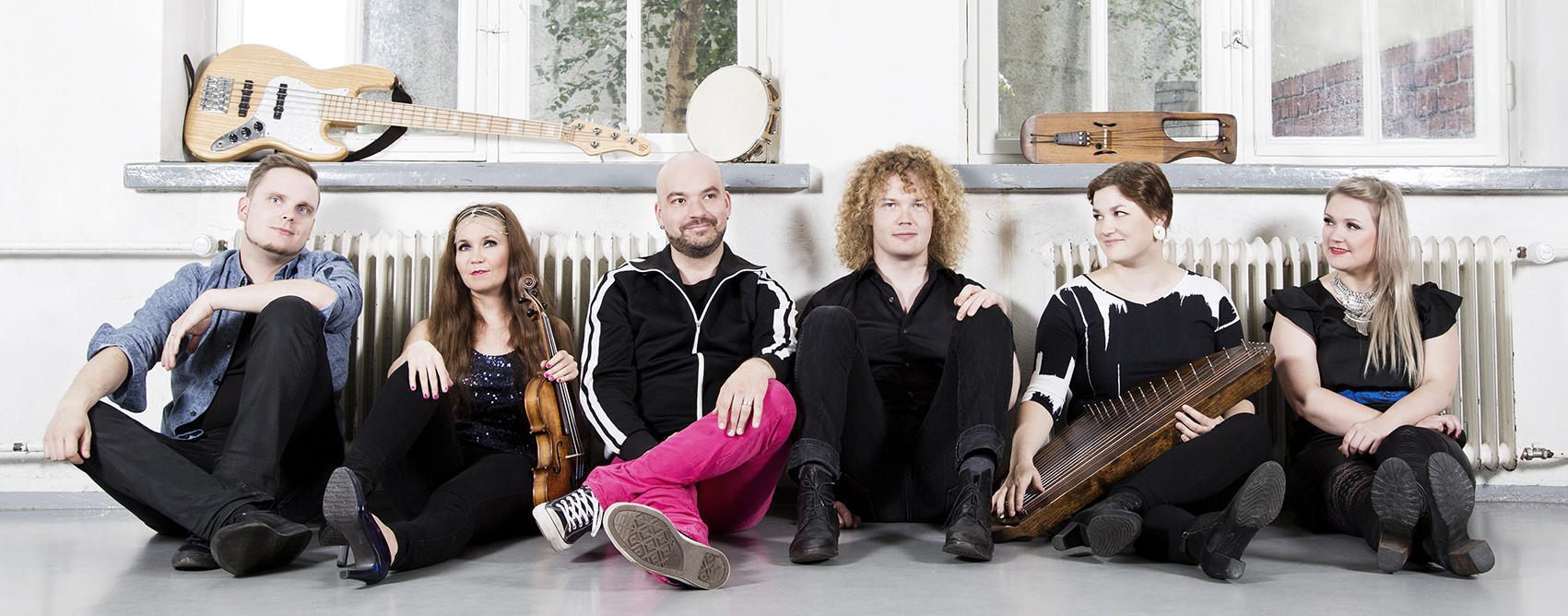
Okra Playground, a musical ensemble that combines traditional instruments with modern soundscapes and powerful song harmonies, also received EUR 10,000 for a networking and performing trip to the Mundial Montréal event in Canada. Artists’ association Hiljaisuus ry was granted the same amount for its artistic designers to network in France and the UK.

Several smaller grants and support for residencies

Arctic Circle residenssi sijaitsee Norjan Huippuvuorilla. Kuva: Claire Dibble

The Arctic Circle Residency is located in Norway, in the high-Arctic Svalbard Archipelago and Arctic Ocean. Photo: Claire Dibble

The foundation approved a total of 19 grants worth EUR 2,000–3,000. The youngest grantees were Anni Martinsen (aged 16) and Johanna Birch (18), who study at the Ballet School of the Finnish National Opera and Ballet and each received EUR 2,000 to attend a summer course in the United States.

Artist Nastja Säde Rönkkö was granted EUR 6,500 to cover residency costs in Svalbard, Norway. There were two EUR 6,000 grants: one will enable a work group led by cellist Hsin-Di Shih to take the AEKI Ensemble to perform in Guatemala and Mexico, while the other will help choreographer Linda Martikainen with residency and networking costs in Italy and Germany.

Applications for the Cultural Foundation’s mobility grants are accepted twice a year, in March and August. All the mobility grants awarded in 2020 are found (in Finnish) here. From the drop-down select “erillishaut” (separate applications) and “liikkuvuusapurahat” (mobility grants).

Regional Funds pay out eur 13,5 million in grants

– The Cultural Foundation decided to grant additional aid for coronavirus-related difficulties, aimed primarily at freelancers in the arts but also available to organisations without separate application, explains Juhana Lassila, who is in charge of grants at the foundation. The additional funding was divided between the regional funds proportionately to the amounts they granted to the arts last year.

– We trusted that our regional funds would know how best to fund the arts in their areas in this difficult situation.

The numbers of applicants to the regional funds grew compared to the previous year. The funds received 6,686 applications from academic disciplines and 2,624 from the arts, and awarded 341 grants to academia and 839 to the arts. Grants were distributed to 175 municipalities around Finland. The proportion of applicants competing for the funds’ grants varied significantly between regions; where in Uusimaa the fund was only able to provide 3% of the funding applied for, in South Karelia, South Savo and Satakunta the corresponding figure was 15%.

The coronavirus situation also meant that the regional funds gave out a larger quantity of grants numerically, although were for smaller sums than usual. The regional funds granted more money than average to fund activities such as art exhibitions, whose share grew by 55% from the previous year. Full-year (12-month) grants numbered 165.

Some regional funds gave out over one million euros in funding, and they were the Varsinais-Suomi (EUR 1.4 million), South Ostrobothnia (EUR 1.1 million), Pirkanmaa and Uusimaa (EUR 1.3 million) and North Savo (EUR 1.0 million) Regional Funds. The smallest grant total was paid out by the Kainuu Regional Fund (EUR 276,000).  

Among the grants awarded by the regional funds are larger Spearhead Project grants, which total EUR 20,000–40,000 and are intended for projects with a broader impact within the region. In South Ostrobothnia, for example, the Vaasa City Theatre received a EUR 25,000 grant to start up an opera project together with other local operators, while in Päijät-Häme a EUR 20,000 grant will help facilitate the production of an anti-bullying TV series for young viewers.  

The Cultural Foundation has also taken the exceptional circumstances into account in its grant terms, accepting, without further notification, a 12-month extension to the use of grants for projects which have been affected by the pandemic. Similarly, organisers of cancelled events will be allowed to use grants they have received for similar events next year.

Learning for life

Teaching social and emotional skills from young age has proven to be beneficial in many ways. The ability to understand and regulate emotions is likely to result in more positive and supportive relationships, and can help children achieve at a higher level during early years in school.

The importance of the matter was officially recognized in 2016 when social and emotional skills were introduced to the Finnish early childhood educational plan. Postdoctoral Researcher Shupin Li is pleased about the recent developments.

– Learning these skills in kindergarten prepares children for school and protects them from having mental problems later in life, she says.

Scientific evidence matters

Funded by a research grant from the PoDoCo program worth 28 000€, Li has started collaboration with the University of Turku and Aittokoski Experience Oy, a Finnish startup company producing educational materials for young children based around a bird character called Pikkuli. What started off as a book was first turned into a TV series, and then a social emotional learning application developed together with kindergartens in the city of Espoo in 2018 and 2019.

The company is currently preparing to expand to the Chinese market, where they have already established partnerships and secured funding. In order to do so, Li and Aittokoski Experience will conduct a study in six kindergartens – three in Finland and three in China  – with 200 children aged from three to five. In the first part of the research project the children, their teachers, and parents use the existing Pikkuli app as part of their daily routine. After examining the results, the technical team at Aittokoski Experience will optimize the application for a second round of studies. The final outcome determines whether two different versions of the app are needed for adapting to two culturally different markets.

– We have already received great feedback from the users of the app and we know that the pedagogical content works. But considering that we operate with large organizations in educational market, it is important to have scientific evidence to back it up, says Metsämarja Aittokoski, founder of Aittokoski Experience and the creator of the Pikkuli brand.

Preparing children for future

Working with technology comes with preconceptions because it is sometimes thought to be harmful to young children. Li say that the subject is not black and white; it is proven that excess usage can indeed cause harm but she also points out that technology is unavoidable – especially in the future.

– That’s why it is important to provide guidance to children and prepare them for their future life. Playing outdoors with other kids is one way to learn social and emotional skills but technology provides new opportunities. We just need to teach children to use it in a productive way.

Text: Laura Iisalo
Photo: Ting Xu

Finnish foundations and ministry provide millions in emergency aid for cultural sector in distress

The Ministry of Education and Culture has granted Taike EUR 500,000 in extraordinary funding. Taike had already announced that it was setting aside around EUR 100,000 for alleviating the coronavirus crisis. The Finnish Cultural Foundation will match the sum granted to Taike by the ministry, at EUR 500,000. The Jane and Aatos Erkko Foundation, the Saastamoinen Foundation, the Swedish Cultural Foundation in Finland and the Jenny and Antti Wihuri Foundation are each providing EUR 100,000 in emergency aid via Taike. This brings the total aid from the government and the foundations up to EUR 1.5 million.

Taike will open a grant application round at the beginning of April, and grant decisions will be made at the end of the month. Primarily the aid is intended to take the form of short-term grants for freelance artists whose work has been significantly hampered by the coronavirus epidemic. More detailed application criteria will be published later. With this funding, Taike is expecting to provide at least 500 grants.

“The coronavirus epidemic is stirring the Finnish society at large, but its impact is felt particularly keenly in the cultural sector. We want to do our bit to help as effectively and quickly as possible. This aid will provide some relief during the acute situation this spring, but as the effects of the epidemic are likely to roll over into the autumn, significantly more drastic actions will be needed from the society,” explains Jari Sokka, Chairman of the Board of Trustees of the Finnish Cultural Foundation.

“The fact that this project has worked out and succeeded in gathering a EUR 1.5 million aid package in just a couple of days is a sign of the collective responsibility that the Finnish society is willing to assume, and of the collaboration ability of the public and private sectors.  The foundations have been exceptionally obliging in assisting arts and culture professionals in these singular circumstances. I value that very highly,” says the Minister of Science and Culture, Hanna Kosonen.

“This aid package will provide vital first aid for the urgent distress of the arts and cultural sector. However, it is just one of many measures that will be needed for the sector to survive the circumstances. The government has also decided on several actions that will provide support for businesses and entrepreneurs in the creative industries.  Preparatory work on further measures is under way,” the minister says.

In addition to the funding apportioned to Taike, the Finnish Cultural Foundation will pay out a total of EUR 13.5 million in academic and artistic grants this spring via its regional funds, based on applications received in January. Half a million euros of this total consists of additional funding to help the arts sector withstand the crisis, as decided yesterday by the Cultural Foundation’s Board of Trustees. The regional funds are also paying attention to the particular predicament in which freelancers find themselves. Grant decisions will be made during April and May, and the grants will be payable by the end of May.

The Swedish Cultural Foundation in Finland and Föreningen Konstsamfundet have adopted a temporary aid form entitled “Kultur under tiden” (Culture in the Now), intended for artists and cultural sector professionals impacted by the corona crisis. The total sum for this aid is EUR 400,000. It is open to applications from arts professionals who work in Swedish in Finland, and who are unable to complete projects meant for audiences according to plan, but who are carrying out other high-quality operations or new projects during the epidemic situation. For more information on the grants, see www.kulturfonden.fi www.konstsamfundet.fi.

Further information:

Ministry of Education and Culture: Eeva Kärkkäinen, Special Advisor to Minister Hanna Kosonen, +358 40 1492 201
Ministry of Education and Culture: Riitta Kaivosoja, Director General, +358 40 7028 704
Arts Promotion Centre Finland: Paula Tuovinen, Director, +358 40 5838 549
Finnish Cultural Foundation: Antti Arjava, Secretary General, +358 50 385 7600
Jane and Aatos Erkko Foundation: Marja Leskinen, Secretary General, +358 40 514 6969
Saastamoinen Foundation: Petteri Karttunen, Chairman of the Board, +358 40 500 1053
Swedish Cultural Foundation in Finland: Sören Lillkung, Executive Director, +358 40 620 7500
Jenny and Antti Wihuri Foundation: Arto Mäenmaa, Executive Director, +358 50 2536

Grand prizes for significant achievements in culture

Reetta Kivelä

The prize is awarded for developing the perfect basic oat product, for responsible culinary innovation, and for modernising Finnish cuisine.

Reetta Kivelä is a Doctor of Science in Food Technology and a co-inventor of the oat-based vegetarian protein Pulled Oats (Nyhtökaura).

Kivelä graduated with a Master of Science in Food Chemistry from the University of Helsinki in 2003. In 2011, her thesis was selected as the the year’s best dissertation in applied biosciences from the University of Helsinki. Kivelä was the first researcher in the world to discover in an oxidation mechanism the cause for oat beta-glucan degradation during storage.

In 2014, Kivelä began testing the possibilities for using oats as a source of protein, based on an idea from her old friend, the industrial designer Maija Itkonen. Itkonen, Kivelä and Zhongqing Jiang established the start-up Gold&Green Foods. After a long and winding journey, reaching as far as China, the product branded as Pulled Oats was launched in shops in 2016. It has just five basic ingredients: oat, yellow peas, broad beans, cold-pressed rapeseed oil and salt. Demand for Pulled Oats was huge from the start, and in 2017 consumers voted it the Finnish Food of the Year.

Accolades received by Reetta Kivelä have included Chief Technology Officer of the Year, Young Research Entrepreneur of the Year, and University of Helsinki Alumna of the Year.

Outi Pieski

The prize is awarded for tying everlasting knots, for defending northern nature and peoples, and for making nonverbal history come alive.

Visual artist Outi Pieski is known for her impressive installations, as well as for paintings and photographs with themes relating to northern nature and Sámi culture. 

Pieski grew up in Helsinki and graduated from the Academy of Fine Arts. She also studied traditional Sámi crafts at the Sámi Education Institute in Inari, northern Finland. She now divides her time living and working between southern Finland and her Sámi father’s home region of Utsjoki in the far north.

Sámi handcrafts are an immeasurably valuable cultural heritage. Pieski combines the ancient colours, forms and techniques of Sámi handcrafts with contemporary art traditions. Her paintings glow with northern light, while drawing from present-day subject matter. Some of her central themes are the history and future of the Sámi peoples, indigenous rights, human relationships with nature, equality, and sustainable development. Her light artwork at the Lux Helsinki festival in 2017, which consisted of images of water flowing freely from the windows of Helsinki Cathedral, drew attention to the issues of water rights, water usage and environmentalism.

Pieski is not only an active advocate of Sámi culture but also a master craftswoman. Her work manages to make nature, culture and art simultaneously local and universal. Pieski received the Fine Arts Academy of Finland Prize in 2017, and took part in creating the Finnish pavilion at the 2019 Venice Biennale.

Risto Saarinen

The prize is awarded to an ecumenical thinker for building bridges and upholding hope.

Risto Saarinen is a Professor of Ecumenical Research at the University of Helsinki, a highly valued investigative scientist, and a member of the international community of non-denominational theologians. 

Saarinen has doctorates in both Theology and Philosophy from the University of Helsinki, as well as an honorary doctorate in Theology from the University of Copenhagen. He has led numerous research projects, most recently a centre of excellence of the Academy of Finland entitled Reason and Religious Recognition.

Saarinen’s publications include hundreds of scholarly articles and 27 books. In parallel with his extensive international career, he has written some works for a more lay audience, and has recently completed a trilogy on love, trust and hope for scholarly and lay audiences alike, published by Gaudeamus.

Saarinen tutors younger theologians and philosophers at all levels, from first-year students to recognised Finnish and international talents. He has made significant efforts to construct global research networks. Within the field of theology, Saarinen builds bridges between systematic, empirical and practical theology. In recent years, Saarinen has also tackled the contemporary theme of relations between religion and politics. His answer to fear-mongering and confrontation is a theology of hope.

Edvard Fazer Prize Awarded to principal dancer Linda Haakana

Linda Haakana sai Edvard Fazer palkinnon vuonna 2020

The prize was presented by the Chairman of the Board of Trustees of the Finnish Cultural Foundation, Jari Sokka, and a jury member Madeleine Onne, Artistic Director of the National Ballet. Besides Onne, the jury includes Gita Kadambi, General Director of the Finnish National Opera and Ballet, and Leena Niemistö, Chair of the Finnish National Opera and Ballet.

The jury based its decision on Linda Haakana’s long and successful career at the Finnish National Ballet. Haakana excels in the classical repertoire as well as the contemporary dance and she is an exceptional artist, with a special intensity which will draw the viewer into the performance. She is always willing to share her skills and expertise with her colleagues, making her a genuine inspiration for the next generation of Finnish dancers.

Linda Haakana was signed on by the Finnish National Ballet in 2002, and named as a soloist dancer in 2013 and a principal dancer in 2014.

This is the 18th instalment of the Finnish Cultural Foundation’s Edvard Fazer Prize, which has been awarded within the Finnish National Opera and Ballet since 1984. Previous winners are the dancers Aku Ahjolinna, Ulrika Hallberg, Maija Hänninen, Tommi Kitti, Jarkko Niininen, Juha Kirjonen, Barbora Kohoutková, Minna Tervamäki, Jaakko Eerola, Carolina Agüero, Timo Kokkonen, Nicholas Ziegler, Salla Eerola, Tiina Myllymäki, Samuli Poutanen, Michal Krčmář and Eun-Ji Ha. All the dancers of the National Ballet received the Prize as an ensemble in 1994.

The Finnish Cultural Foundation’s Edvard Fazer Prize

The Edvard Fazer Prize is a rotating trophy awarded biennially by the Finnish Cultural Foundation within the Finnish National Ballet for merits in promoting dance. The Edvard Fazer Prize was created during the Finnish National Ballet’s sixtieth anniversary year in 1982, and was first awarded in 1984. The trophy is a silver cup donated by the Titular Commercial Counsellor and Mrs Roger Lindberg and gifted by the staff of the Finnish National Opera to their then Director, Edvard Fazer, on the occasion of his seventieth birthday in 1931. In 1996, the Fazer Music Foundation transferred its assets to the Finnish Cultural Foundation, and the Fazer Music Fund was established. At that point the award was renamed the Finnish Cultural Foundation’s Edvard Fazer Prize. Today the Fazer Music Fund is known as the Roger Lindberg Music Fund, and its purpose is to support Finnish musical arts and to continue awarding the prize that carries Edvard Fazer’s name.

Giving art a second chance

Showing work at a gallery is undoubtedly a highlight for any emerging artist but it can also be a cause of stress. It might take a whole year of hard work to put together a show but as soon as the exhibition is taken down it all fades away.

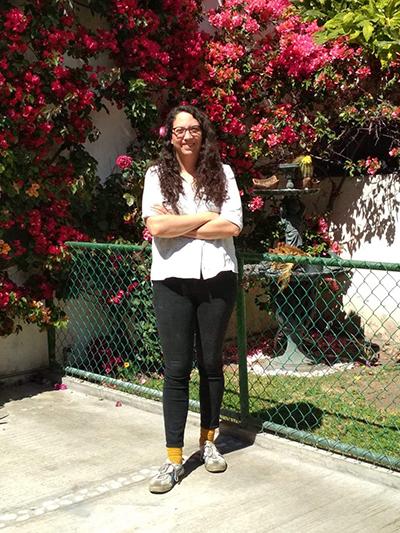
Andrea Coyotzi Borja in Mexico. Picture: Patricia Borja Osorio

Andrea Coyotzi Borja in Mexico. Photo: Patricia Borja Osorio

It is often difficult to sell the artworks and after the exhibition one has to figure out what to do with them. Many artists don’t have a studio or storage space because renting one is too expensive, tells Andrea Coyotzi Borja, a Mexican-born artist and a doctoral student at Aalto university.

To address this matter Coyotzi Borja and his fellow artworker and curator Farbod Fakharzadeh came up with a concept of acquiring a big space where these artworks are offered another chance by making them visible to anyone: the public, other artists, collectors, and curators. They titled their project Taidekirppis, which humorously refers to the way the artworks are recycled after an exhibition.

The missing link

Taidekirppis is about to kick off in March 2020 and the funding covers the project for one year. Coyotzi Borja and Fakharzadeh will be managing the space and the website, picking up artworks, handling social media, and organizing open calls for artists to take part in the project.

Part of their plan is to engage resident curators to work with the collection while the artworks are in the space. If someone wants to buy a piece of art, they can contact the artist directly but Fakharzadeh and Coyotzi Borja say that selling is not their main intention and there is no profit involved. Their goal is to create a space and an archive of exhibitions and works by emerging artists in the Finnish art scene.

In order to look at art or any other phenomena in a meaningful way you need to look at it in historical context. But there is no wholesome record of exhibitions and works by Finland-based emerging artists so everything seems a bit scattered. A big part of this project is to put together a physical and digital archive that can be looked back on to give a historical context to how things were, how they are, and what can be, explains Fakharzadeh.

Addressing important issues

Another key objective is allowing Taidekirppis to be a platform for new ideas and discussions, and to critically address complex issues in the emerging art scene. Fakharzadeh points out that making ends meet is difficult for most artists who often don’t get compensated for the hours they put in – yet they have decided that art is what they want to dedicate their lives to.

Contemporary art is not always made with an eye on the market, and young artists are not necessarily taking into account how to make money out of it. There should be alternative ways that are more protective towards the people putting their lives in to this. Artworkers are people too, they have mortgages, lives, and children, Fakharzadeh tells.

Both Coyotzi Borja and Fakharzadeh are excited to see how the project will unfold and how it will be received, hoping to make a change for the better.

First this was just an idea, which is now turning into an actual project with this funding, Fakharzadeh says.

My motivation comes from doing something about a situation that really frustrates me.

taidekirppis.com/
instagram.com/taidekirppis/
facebook.com/taide.kirppis

Text: Laura Iisalo

Cultural Foundation doubles its multi-year grants

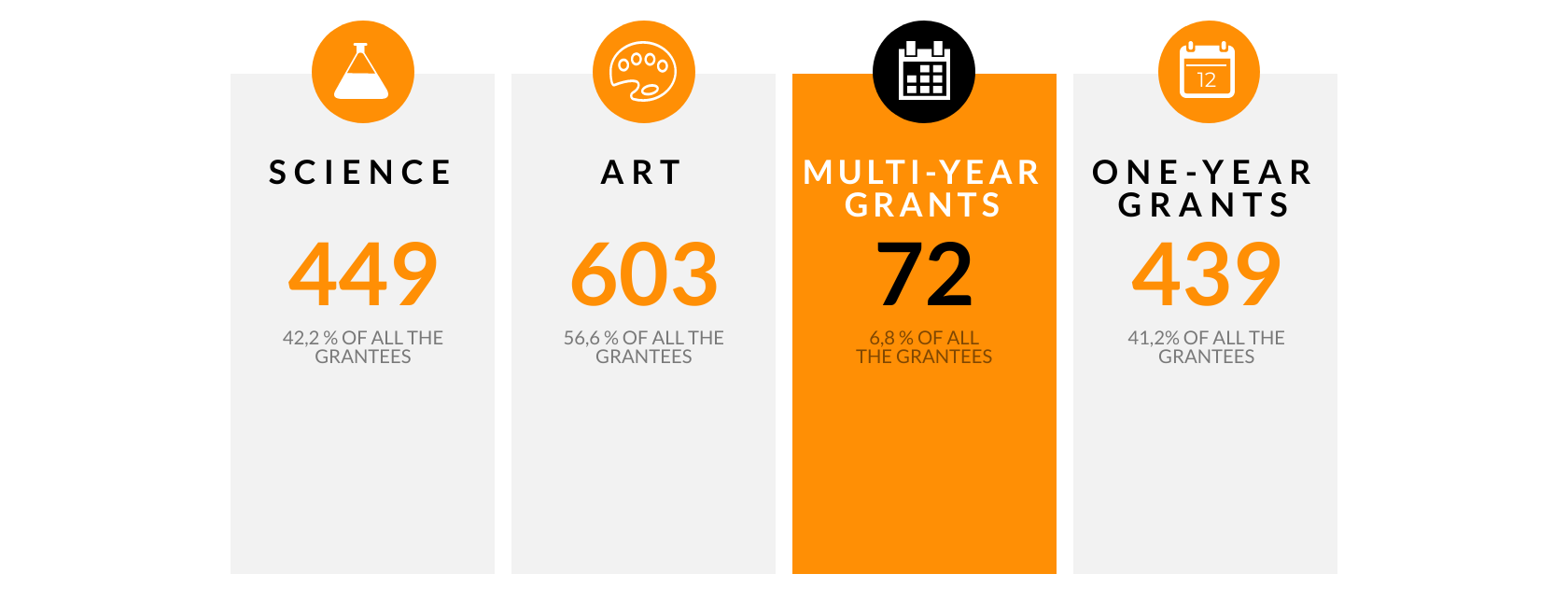
In its October round of grant applications, the Cultural Foundation received 8,800 applications, which was 500 more than the previous year. The foundation has decided to award EUR 24 million in grants for the October round, making the total for the whole financial year EUR 44 million.

This round saw 439 full-year working grants being awarded, 285 for sciences and 154 for arts. A record number of multi-year grants is being awarded this year, totalling 72 grants for nearly EUR 3.4 million. This comprises 34 grants spanning two years, 21 spanning three years and 17 four years.

The most explicit objective of the Foundation’s new strategy was to increase our support for long-term academic and artistic work, explains Jari Sokka, Chairman of the Board of Trustees.

Additionally, the Foundation awarded 40 co-funding grants for doctoral students, which can be combined with salaried employment at a university or other research institution.

This is another form of funding that we are looking to increase further. It doubles the grant period, meaning that a two-year grant, for example, can optimally provide the four-year funding needed for a PhD. It is also probably the most lucrative form of funding in terms of the grantee’s net income, Sokka explains.

Näppäri Method activities receive largest arts grant

Näppärit areenalla. Kuva: Krista Järvelä

The largest arts grant, EUR 215,000, was awarded to the Finnish Folk Music Institute in Kaustinen for developing activities related to its Näppäri Method.

Glims & Gloms dance company from Espoo was awarded EUR 110,000 for expanding its Mall Theatre operations. This is a touring pop-up theatre company devised by Glims & Gloms that brings performances for the whole family to easily accessible locations in shopping centres.

Fifteen grants worth EUR 360,000 in total were awarded within the arts to projects aiming to bring art into care institutions. The objective of these grants is to promote cultural equality and through art to improve the quality of life of persons requiring special support or care.

One million euros in additional funding

For its October 2019 grant application round, the Foundation released EUR 1 million in additional funding earmarked for research concerning the energy market of the future and/or the technology revolution. There were 65 applicants, almost all of them research groups. The applicants represented many disciplines, and the total sum applied for exceeded EUR 13 million. Six applicants were successful.

Increasing competition

The sciences made up for 53% of all grants awarded, and the arts 47%. Within scientific grants, 31% were for thesis work, 11 % for research and 9% for post doc research. The number of applicants for science grants grew this year by nearly 400, to total around 3,600. Within art grants, 35% were for artistic work and 9% for organising events. The number of arts applicants grew by just over 100, totalling 5,200.

Despite the increase in funds to be awarded, competition for the grants is increasingly tough. The Foundation was only able to award around 9% of the funds applied for (compared to over 10% last year). Approval rates were almost equally strict in both science and art, even though there are differences between fields due to donations received by the Foundation.

Thanks to our donor funds, our funding pressure is slightly lower within the musical arts than in visual arts, for example, explains Secretary General Antti Arjava.

This year, women made up 59% of grantees (and 58% of all applicants). Non-Finnish citizens accounted for 11% of applicants and 10% of grantees. Grants from the October round were awarded to applicants in around one hundred municipalities in Finland. The regional funds’ grants will be given out later in the spring, based on the January round of applications.

A list of the successful grantees from the Central Fund’s October round can be found at https://apurahat.skr.fi/myonnot

Fighting the mold we are forced into

Women are expected to invest plenty of time and effort in caring for their looks. The requirement remains, even as beauty ideals change from one society and generation to another. In current Western society, you must first and foremost be skinny. It is a prerequisite for being seen as beautiful.

A prime manifestation of the requirement are the weight loss shows on TV.

There are structures of discipline and control in these shows. Participants’ diets are controlled and they are subjected to extreme exercise situations that cross the line, Susanne Ritter says.

There is an aspect of surveillance, too, as participants are basically watched all the time, either by the coaches, cameras or viewers.

According to the shows, being fat is the worst, being skinny is great, and being fat and happy is just not possible.

I think it is important to research these shows that influence people so much. If there is enough awareness, maybe things can change.

The shows dangle a carrot in front of people’s noses, making them think they should change, too, instead of being content with themselves the way they are. It has become the norm for women to always be dieting, and this starts already in childhood.

Obviously, I am not against exercise, just this ideal set in stone. It discourages women from participating in public life, unless they fit a certain mold. If you are fat, then necessarily you are lazy, too, and undisciplined as well. You won’t be hired, you can’t get married or be a proper bride if you are fat. Thin is equated with healthy, which is not true. People, and women especially, would have better things to do than worry about their looks.

Ritter sees a vested interest in the preoccupation with thinness.

So you have to be fit to be seen as productive, which means you have to buy gym memberships etc. There are far too many parties benefitting financially for the pressure to stop.

Originally from Dusseldorf, Germany, Ritter moved to Helsinki in 2013 to study for her MSSc. Since 2018, she has been with Åbo Akademi University in Turku as a PhD student.

I have a BA in Journalism from the University of Vienna. Media research into the way overweight was portrayed on TV interested me already then. I was lucky enough to be accepted to the Media and Global Communication program of the University of Helsinki. I did my Master’s thesis on makeover shows. In it, I researched the thin ideal in relation to oppression. I wanted to expand the concept into a doctoral thesis.

In her thesis, Ritter will compare Finnish and US TV makeover shows.

There are differences in Finnish and US societies. The American Dream permeats the local shows, too; you can achieve a thin body, if you just want it bad enough. Finnish society is more collective and in the Finnish shows there is more emphasis on working as a group.

Text and photograph: Susanna Bell