Courses on the Defence of Culture
What are the Courses on the Defence of Culture?
Courses on the Defence of Culture bring together participants from different areas of society, such as politics, business, and various scientific and artistic disciplines.
The programme of the two-day course is designed to facilitate shared discussion – sometimes laser-focused on a particular theme, other times spanning a broader agenda. Each participant has a role to play, as either a moderator, an opening speaker, or a commentator. The discussion follows the Chatham House principle, i.e. it is not shared with the public. This allows for a deeper discussion in a confidential environment.
Seminars under the name ‘Kulttuurinpuolustuskurssi’, or Course on the Defence of Culture, have been taking place since the 1990s, with the courses having adopted their current form in 2011.
Course participants and themes are being published from 2026 onwards.
The courses are funded by the Finnish Cultural Foundation’s Association.
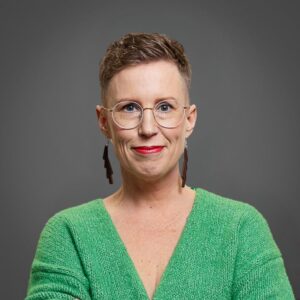
Johanna Ruohonen
Development Director
Public affairs, Residency programme
May, course 22
What outlooks does the theatre sector have in Finland? On this course, participants considered how we can ensure the provision of high-level theatre throughout Finland, what internationality means for Finland’s theatre sector, and what future theatre audiences and potential forms of collaboration might look like.
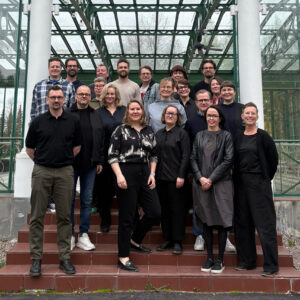
- Susanna Airaksinen, artistic director, KOM-teatteri
- Janne Auvinen, CEO, TTT Theatre (Tampereen Työväen Teatteri)
- Emilie Gardberg, director general, Finnish Arts and Culture Agency
- Maija Karasvaara, research and arts funding specialist, Kone Foundation
- Mikko Kanninen, artistic director and CEO, Tampere Theatre
- Mikko Korsulainen, theatre manager, Kotka City Theatre
- Antti Lahti, director, Kuopio City Theatre
- Saana Lavaste, professor of directing, Uniarts Helsinki’s Theatre Academy
- Päivi Loponen-Kyrönseppä, head of music, Finnish Cultural Foundation
- Juho Mantere, artistic director, Q-Theatre
- Hanna-Mari Peltomäki, secretary general, Jane and Aatos Erkko Foundation
- Valtteri Raekallio, dance company director, Helsinki Dance Company
- Saara Rautavuoma, producer, theatre sector expert
- Johanna Ruohonen, development director, Finnish Cultural Foundation
- Katri Santtila, senior ministerial adviser, Ministry of Education and Culture
- Maria Sid, artistic director, Kulturhuset City Theatre of Stockholm
- Jussi Sorjanen, artistic director, & Espoo Theatre
- Joachim Thibblin, artistic director, Svenska Teatern
- Sarianne Tursas, theatre manager and director, Joensuu City Theatre
- Arto Valkama, CEO, Turku City Theatre
March 2026, course 21
Why are sports and art, exercise and cultural pursuits, often positioned as opposites? Sports and culture are the foundations of an active life, providing wellbeing, experiences, a sense of community, and national spirit. In the conversations that took place, participants considered how the practice of setting the two in opposition to one another could be dismantled, what the sectors could learn from each other, and whether we could find new kinds of partnership and ways of doing things together.
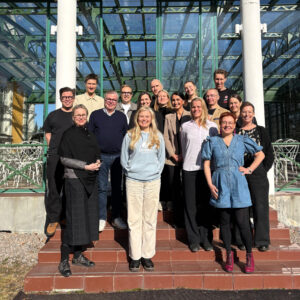
- Samuli Emery, artistic director, Kuopio Dance Festival
- Katariina Havukainen, actor, screenwriter
- Karo Hämäläinen, author
- Minna Kauppinen, head of development, National League
- Hilkka Koskenranta, CEO, Breakthrough Foundation
- Ari Lahti, president, Football Association of Finland
- Pauliina Lerche, chair, Finnish Music Creators’ Association
- Ruth Palola, chair, Roihu
- Jarkko Partanen, artistic director, Zodiak
- Susanna Pettersson, CEO, Finnish Cultural Foundation
- Nasima Razmyar, member of parliament
- Samppa Rinne, director, Turku Music Centre Fuuga
- Johanna Ruohonen, development director, Finnish Cultural Foundation
- Eeva Saarinen, head of culture and leisure, Mänttä-Vilppula
- Olli Seuri, editor-in-chief, Uusi juttu
- Tatu Säisä, CEO, 3D Talo Finland
- Tiina-Maija Toivola, CEO, We Foundation