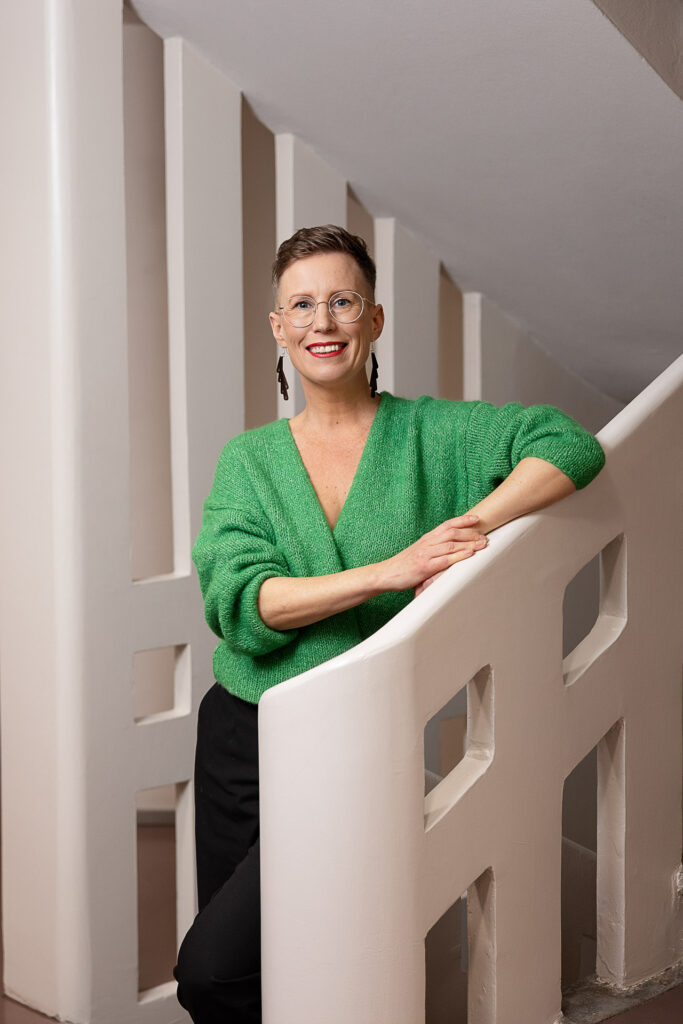
The people behind culture: Iiris Autio Advocates Stronger Connections Between Art and Society

Where did your interest in culture, and dance in particular, begin?

From an early age, I loved the visual arts, literature, music, dance and theatre. I was drawn to the world of culture, but soon realised that I didn’t have what it takes to be an artist. I was also interested in social and political issues, which led me to study international politics at the Faculty of Social Sciences at the University of Helsinki.

My first summer job, in the late 1980s, was at the Retretti Art Centre, where I came to understand that artists and cultural organisations need professionals with expertise in funding, management and marketing to succeed. At university, I came across a report by Ritva Mitchell, which predicted that the role of arts managers would become increasingly important in the future. I found the idea fascinating and started to pursue a career in arts management.
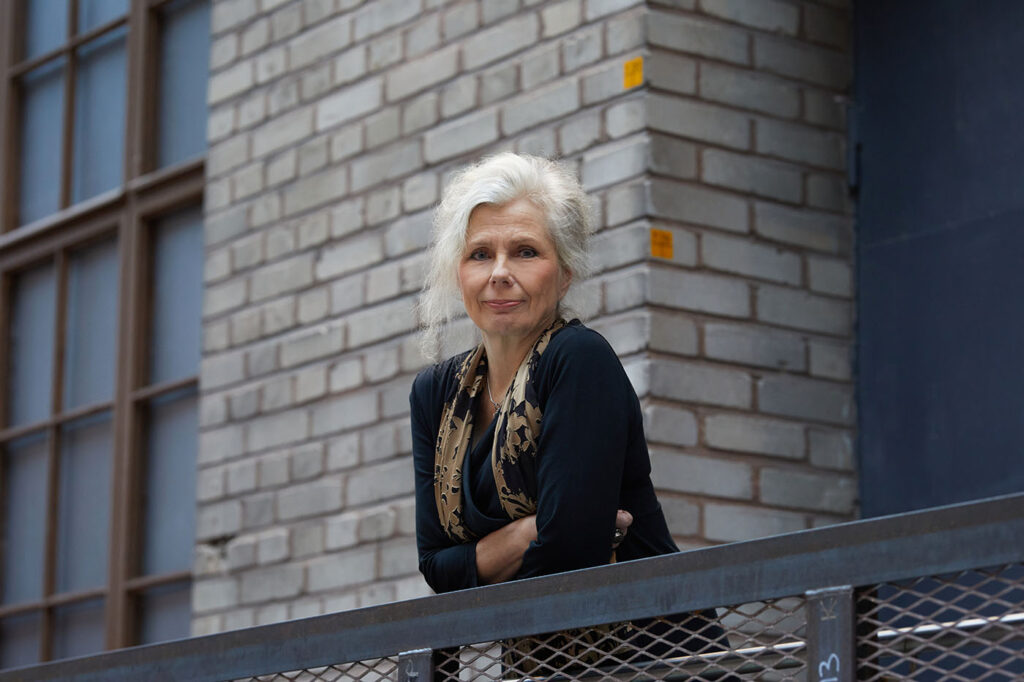
I completed the Arts Management PD postgraduate programme jointly organised by the Sibelius Academy, the Theatre Academy and the University of Art and Design Helsinki. Later, I completed a master’s degree in arts management in London, supported by a grant from the Finnish Cultural Foundation.

My first job after graduation happened to be in dance marketing and sales, although I could just as easily have ended up working in music, opera or the visual arts. I have been Managing Director of Tero Saarinen Company since 2001.

How would you describe the Finnish Cultural Foundation?

The Foundation is one of Finland’s most significant funders of science, art and culture, with a unique history. It was established in response to a need that emerged from civil society, supported by a nationwide fundraising campaign. Its structure, comprising a central fund, regional funds and named funds, also makes it exceptional. Although the Finnish Cultural Foundation is a private foundation, it has the character of a national institution. In recent years, the Foundation has developed and renewed its activities, strengthening its impact not only as a funder but also as an active participant in society.

What is the role of the Supervisory Board?

Under the Finnish Foundations Act and the Finnish Cultural Foundation’s own rules, the Supervisory Board is the Foundation’s highest governing body, bringing together influential figures from across the arts, sciences, culture and business. Its role is to oversee the Foundation’s administration and ensure that it operates responsibly and with a long-term perspective.

However, the significance of the Supervisory Board extends beyond its statutory responsibilities. Its expertise and networks give the Foundation exceptionally broad connections across different sectors of society. This makes the Board a valuable resource for the Foundation.

What kind of support and collaboration do science and the arts need in the current climate?

Particularly in times of financial constraint, funding should be as strategic and impactful as possible. Peer review is essential for ensuring quality, but one of its recognised challenges is a tendency to spread limited resources evenly rather than make clear choices.

Strategic direction is needed to enable sufficiently substantial, long-term investments that can deliver meaningful impact. At the same time, we must ensure that emerging talent across different fields, as well as independent research and artistic practice, have sufficient opportunities, even when the impact of such investments cannot be predicted in advance.

Partnerships and collaboration can achieve larger, more meaningful and impactful results than organisations working alone. A good example of this is collaboration between foundations.

You have extensive experience in cultural exports, particularly in dance. What do Finnish art and culture need to achieve greater international reach?

Art and culture do not exist in a vacuum. They are in constant dialogue with the surrounding world. Finland’s most celebrated artists have also been part of the international movements of their time.

Finnish art needs international engagement to develop, but it also needs a strong domestic foundation to succeed. We must be able to provide the core funding and infrastructure for art and culture ourselves – internationalisation cannot solve that challenge.

On the other hand, the international market offers creative professionals economic opportunities on an entirely different scale from those available in a small country like Finland.

However, artistic excellence is not enough in an increasingly competitive international environment. Success requires stronger expertise in arts management, production and intermediary services, long-term network building and the resources to develop international activities.
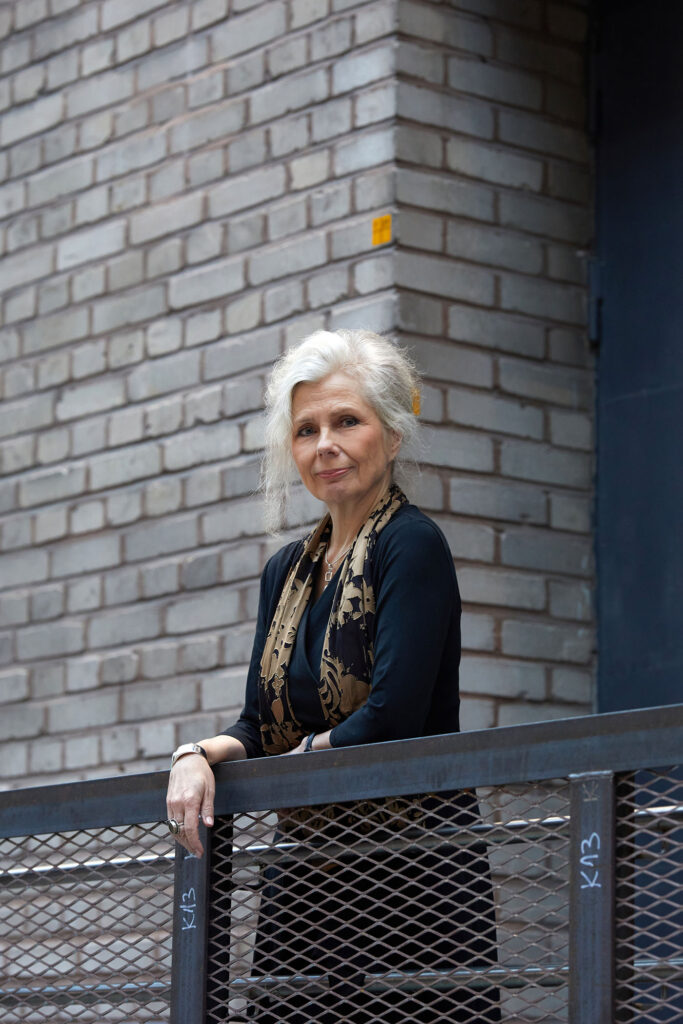
If we invest in the entire cultural value chain, art, culture and intangible creative content could become significant drivers of economic vitality. South Korea provides an interesting example of what can be achieved through a long-term strategy and political commitment. In Finland, too, this would require a conscious decision to recognise culture not only for its intrinsic value, but also as a means of diversifying and renewing the economic structure.

What are you excited about right now?

I find myself constantly inspired by the development and progress of my own organisation and our sector as a whole, as well as the wider possibilities that culture has to offer.

These days, we spend an enormous amount of time in front of various devices and have, in many ways, become disconnected from our bodies. Dance is one of humanity’s oldest forms of expression, and its power lies in its ability to enhance wellbeing, participation and a sense of community, as well as to bring people together across linguistic and cultural boundaries.

The more technologically advanced our world becomes, the more valuable embodied wisdom and everything that makes us human will be. That is why I continue to believe in the fundamental importance of culture, now and in the future.

The people behind culture: Wisam Elfadl creates platforms for science and art

You are the Finnish Cultural Foundation’s new producer – how would you like to develop its events in the future?

We plan to make the events more consistent and establish a more coherent production framework. Our Science & Art (Tiede & Taide) events are held across Finland, and they are open to everyone. The theme throughout autumn and next spring is democracy, and in these events we highlight what is being achieved in research and the arts locally. I’m really looking forward to travelling around the different regions myself.

We also want to create new kinds of events in collaboration with different stakeholders. In the future, we want to take a more active role in identifying potential partners and opportunities for collaboration.

The Finnish Cultural Foundation stands for research and the arts – what does this mean in terms of your role?

The foundation supports research and art, and the events provide a platform for them. In Finland, we don’t really have many TED Talk-style events or opportunities to practise performing on stage in front of a large audience. Many scientists are doing incredible research and projects, and I’m keen to make their work better known.

Nainen turkoosissa takissa istuu kalliolla ja katsoo hymyillen pois kamerasta
Wisam Elfadl wants to raise the profile of science and the arts across Finland.

You graduated in cultural management from Metropolia University of Applied Sciences and have vast experience in the cultural sector – what drew you to cultural production in the first place?

As the eldest of my siblings, taking care of people is rooted in my personality and my culture – I want people to enjoy themselves. At the same time, I crave intellectual and sensory stimulation. When I entered the field, I just wanted to organise fun parties for myself and my friends. With them, I’ve been able to create concepts, seminars and different kinds of gatherings that have inspired many others.

I’m involved with the Museum of Impossible Forms cultural centre in Kalasatama, Helsinki, where we organise seminars, film screenings and discussions. It attracts practitioners who have yet to be discovered by institutions. At the events, they get to talk about their working methods, their art and their own areas of interest.

“I’ve been able to create concepts, seminars and different kinds of gatherings that have inspired many others.”

Wisam Elfadl Producer

The most heart-warming event was when I managed to persuade my brother Basam to present his cassette tape collection. Saban Ramadani’s presentation has also stayed with me. He presented his master’s thesis, which explored the white institution. In his video installation, Saban scrubbed the floors of the Amos Rex museum. The floor scrubbing continued at Stoa cultural centre in Itäkeskus in Helsinki, where the event was held. I like looking at structures and the hierarchies within them.

Were you familiar with the Finnish Cultural Foundation? Did anything surprise you when you started working at the foundation?

I had previously known the foundation only from the perspective of a grantee. It’s only now that I’ve realised what a huge operation processing grant applications actually is. They are reviewed by real people, and the process takes almost six months.

Nainen turkoosissa takissa istuu puisella penkillä nojaten kyynärpäätä penkin selkänojaan. Taustalla keltainen seinä.
Producer Wisam Elfadl also enjoys culture in her spare time.

What role does culture play in your everyday life?

The funny side of working in this field is that going to events, exhibitions or museums is, in a way, work – my brain is switched on when I’m there. Many of my friends are artists or work in the cultural sector, and I engage with culture by supporting them. I’d like to go to more concerts, especially outside Helsinki.

“I would like to change the perception that culture is somehow insignificant or that it has no impact on public health. ”

Wisam Elfadl Producer

If you could change one thing about the discussion around culture in Finland, what would it be?

I would like to change the perception that culture is somehow insignificant or that it has no impact on public health. I didn’t take part in any artistic activities until adulthood, and I would like parents to understand how important arts education is for children from an early age. When children are exposed to culture early on, their brains develop differently. Children’s arts activities also bring their parents into contact with culture. Art broadens the way we see the world and teaches empathy and social skills. If you have access to culture from childhood, it is easier to stand for research and art as an adult.

The People Behind Culture

The People Behind Culture series introduces people who work to support research, art and culture as trustees or employees of the Finnish Cultural Foundation.

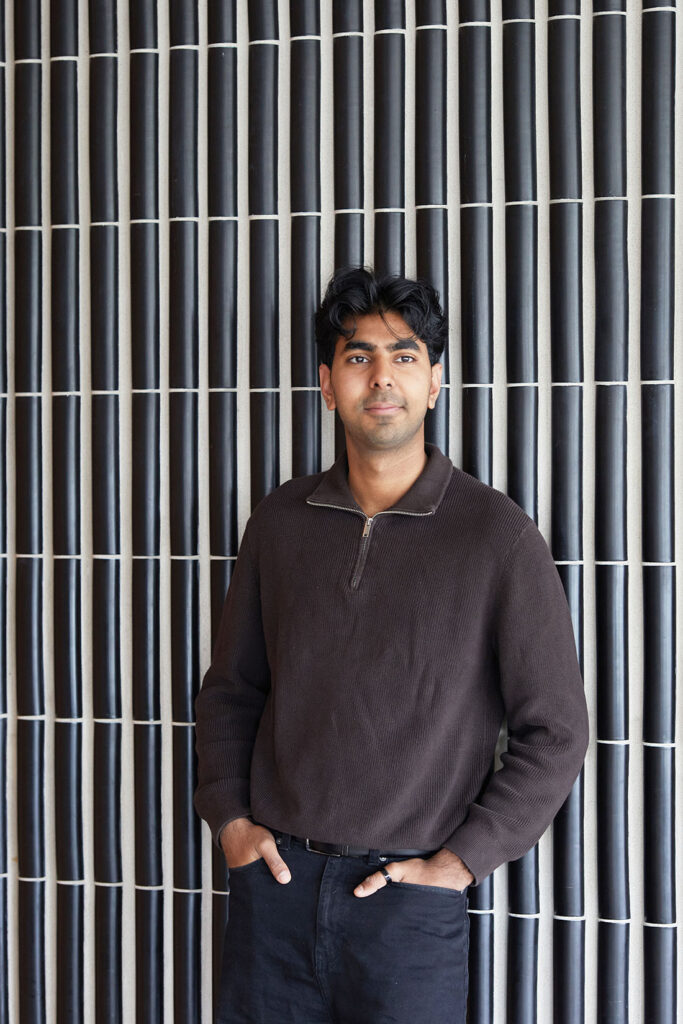
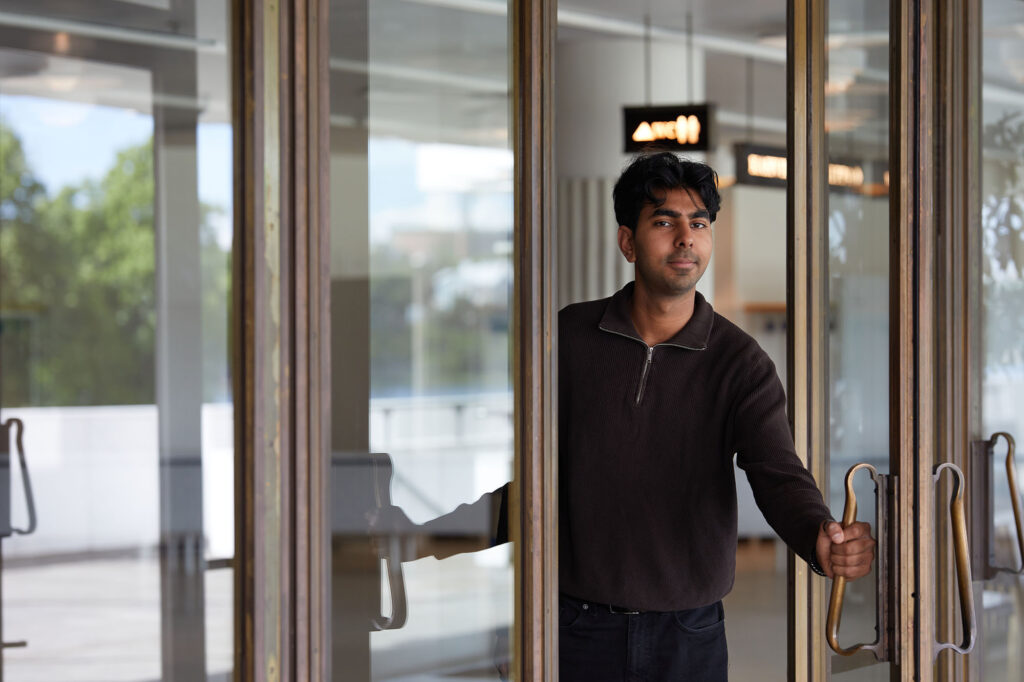
The people behind culture: Event production trainee Aayush Jain wants to make culture more accessible

For many young people, the transition from studies to working life can be overwhelming. For those new to Finnish society, the challenge can be even greater, as they are navigating not only a new role but also a new culture.

Aayush Jain moved to Finland in 2023 for his studies.

Inclusion is a two-way process. To support its members in developing more equitable workplaces, the Association of Finnish Foundations launched an equality accelerator initiative last year, delivered by Co-Consulting, a company specialising in diversity, equity and inclusion.

For the Finnish Cultural Foundation, the initiative provided an opportunity to deepen its understanding of the topics while taking concrete steps towards fostering greater diversity within the organisation. One outcome was the launch of a new trainee programme for students from a wide range of cultural backgrounds.

“People here look at competence rather than a title, and they have trusted me because they have seen that I can do it.”

Aayush Jain

This February, the Foundation welcomed its first-ever event production trainee, Aayush Jain. During his internship, Jain – also known as Aimo, a Finnish nickname given to him by friends – has been assisting in producing events including the Annual Galas of the regional funds.

”I have worked on things I had never done before, such as creating a manual to ensure consistency across all events. People here look at competence rather than a title, and they have trusted me because they have seen that I can do it,” Jain says.

Consistency through detail

Originally from India, Jain moved to Finland in January 2023 to study at Haaga-Helia University of Applied Sciences, where he is about to graduate from the degree programme in Hospitality and Tourism Experience Management. During his studies, Jain has been volunteering in student unions and the Foundation for Student Housing in the Helsinki Region while completing two other internships.

”I have tried to gain as much knowledge as possible and learn about leadership and trust. Breaking into working life is not easy anywhere, and in Finland it is even more difficult because of the language barrier. But if you set your mind to it, it is not impossible”, he says.

”Things feel culturally different at the Foundation. We are not selling pitches or sponsorships. We are facilitating something that really matters to people.”

Aayush Jain

Before joining the Foundation, Jain was more accustomed to the fast-paced startup scene, where the focus is often on scaling up. In his current role, the biggest learning has been something quite different: understanding the importance of details and the careful planning that goes into every aspect of an event.

”Things feel culturally different at the Foundation. We are not selling pitches or sponsorships. We are facilitating something that really matters to people. That changes the level of responsibility and pressure, but in a positive way. I have learned that sometimes it is better to think more slowly and thoughtfully”, he says.

Making culture more accessible

Working closely with art and science has also given Jain new perspectives on the subjects. One question he has been reflecting on lately is why some people feel welcome in spaces dedicated to art, while others do not. He believes many young people perceive cultural institutions as places meant for someone else.

Aayush believes he’ll find his place in the working life, even though his plans for the future are still open.

”If I walked into a place where I didn’t know anyone, I would probably feel out of place. I think many people share that feeling, but culture should be accessible to everyone. The Foundation already supports projects for children, and hopefully these kinds of programmes can be expanded through government support. If you are exposed to these things early on, the threshold becomes lower”, he says.

Jain’s trainee period at the Foundation comes to an end in late June. He will continue working in his volunteer positions while looking for the next step in his career. Jain feels optimistic about the future, even if he does not yet know exactly where it will lead.

”I do not know what comes next, and I am okay with not knowing. I am sure I will figure it out”, he says.

Heta Kaisto to become Director of the Kirpilä Art Collection and Senior Advisor to the Finnish Cultural Foundation

Until starting at the Finnish Cultural Foundation, Heta Kaisto will continue in her current position as Curator of the Rauma Art Museum, where she has served since 2019. Kaisto has previously worked, among others, at the City of Lapua’s museums and the Finnish National Gallery. She has also been involved in various multi-arts research projects and is an active writer and lecturer.

“In addition to her vision and experience, Heta Kaisto has an extensive network of artists and excellent connections within the Finnish museum scene and the art sector. Our aim is to promote the role of art in society and for that we need the best experts available,” says Susanna Pettersson, CEO of the Finnish Cultural Foundation.

Photo: Heidi Piiroinen

“For me, the Kirpilä Art Collection represents humanism and a warm way of encountering and working with the public. I very much appreciate this opportunity to develop my skills and knowledge as an art and museum expert, together with the Kirpilä team and the entire network of the Finnish Cultural Foundation. I believe that museums play an increasingly important role in strengthening Finnish culture in our time. I also see art in a very practical way as a part of society and the network of various organisations,” says Heta Kaisto.

Kirpilä Art Collection is an art museum in Töölö, Helsinki, run by the Finnish Cultural Foundation. The Kirpilä Art Collection showcases the art collected by Doctor Juhani Kirpilä (1931–1988) and organises exhibitions of contemporary art, concerts, guided tours and other events.

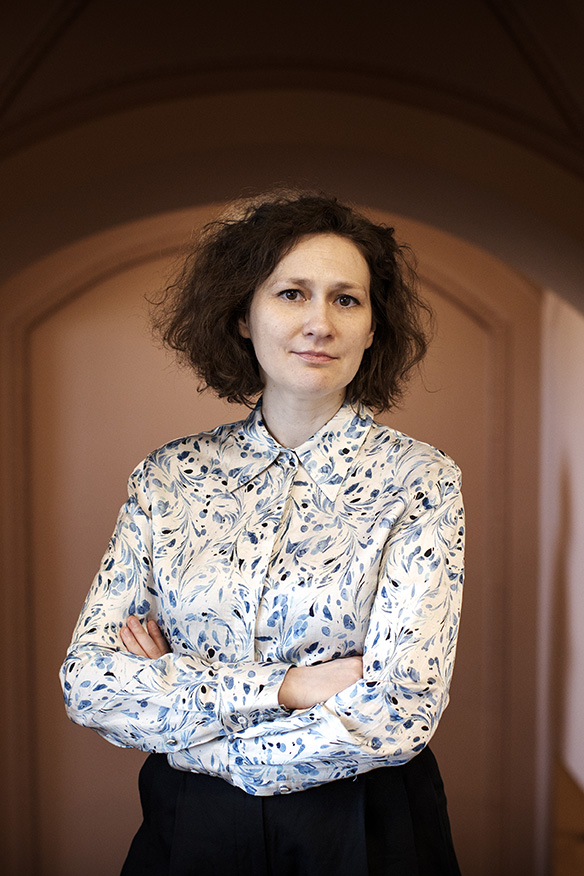
Johanna Ruohonen appointed Development Director

Johanna Ruohonen, PhD, has been appointed Development Director of the Finnish Cultural Foundation from 1 April 2025. The Development Director is a member of the foundation’s management group.

In her new role, Ruohonen will be responsible for the development of the Finnish Cultural Foundation, with a focus on international issues. She will also be responsible for the foundation’s Science & Art (Tiede & Taide) activities as well as events aimed at strengthening the national visibility of science, research and art. Ruohonen will also continue to manage the foundation’s residency programme for artists.

“Foundations play an important role as advocates for science, research and the arts. We want to play our part in building a multi-voiced societal debate in Finland and internationally. Johanna Ruohonen’s solid experience is a good starting point for advancing our goals,” says Susanna Pettersson, CEO of the Finnish Cultural Foundation.

“In this day and age, it is extremely important to highlight the importance of art, research and science. Social polarisation, alternative truths, funding cuts and the decline of public debate are eroding the foundations of science and art, and this trend needs to be countered,” says Johanna Ruohonen.

“In this day and age, it is extremely important to highlight the importance of art, research and science”, says Ruohonen.

Ruohonen joined the Finnish Cultural Foundation in 2015. She currently works as a Museum Director at the Kirpilä Art Collection and as a Senior Advisor for grants and projects. Over the past ten years, Ruohonen has renewed the Kirpilä Art Collection by introducing contemporary art exhibitions and queer-themed guided tours, among other things. The number of visitors to the Kirpilä Art Collection has tripled during her tenure. Ruohonen has also been responsible for developing the foundation’s international residency programme and many projects, including Museovisio, Selkopolku, Taide2 and a support programme for Finnish Romani language and culture.

“The Finnish Cultural Foundation provides a wide range of support for artists, researchers and scientists throughout the country, and also internationally through various mobility programmes, among other things. Art and science are highly international fields of activity, which is why our aim is to increase cross-border cooperation models,” says Ruohonen.

The Finnish Cultural Foundation will start recruiting a new Museum Director for the Kirpilä Art Collection at the beginning of March 2025.

Anna Kulju and Tommi Tähtinen to join the Finnish Cultural Foundation

Tummahiuksinen nainen mustassa puvussa

Anna Kulju

Anna Kulju, LL.M, MSc, will take up her post as Director of Legal Affairs at the Finnish Cultural Foundation on 1 September. She comes to the foundation from Hypo, where she has worked as senior legal counsel, data protection officer and contact person for the prevention of terrorism and money laundering for the Hypo Group. Previously, Anna Kulju has worked as a legal specialist at Nordea and Danske Bank, mainly in family and inheritance law.

Anna Kulju feels that at this point in her career, moving to a new environment is particularly interesting. “It is great to bring my professional skills and experience to a new community and to meet new people and challenges,” she says.

“For me, the content and relevance of the work is very important. Especially now, when there are so many cuts in cultural funding, I am particularly keen to work for culture and science. Literature, culture, science and the arts in their various forms have always played a big role in my life,” says Anna Kulju.

Harmaahiuksinen, silmälasipäinen mies mustassa puvussa.

Tommi Tähtinen

Tommi Tähtinen, MSc, will take up his position as Investment Director at the Finnish Cultural Foundation on 1 November 2024. He joins the Foundation from Aktia Bank, where he has worked as Head of Asset Allocation since 2017, and before that as a Portfolio Manager. Prior to that he worked at Kaupthing Bank and Evli, among others.

“The Finnish Cultural Foundation is an organisation I have known for a long time, having had the opportunity to work with the current asset management team. I have a high regard for the foundation as a long-term investor and a broad-based player,” says Tommi Tähtinen. 

“The Finnish Cultural Foundation’s large investment portfolio offers the opportunity to learn a lot of new things, even though my own knowledge is diverse and up to date. I am also looking forward to seeing how the world of culture, science and art opens up through the Foundation and its stakeholders”. 

“Our long-standing Directors of Legal Affairs and Investment are due to retire shortly. We were pleased to see a high level of interest in the open positions. I am delighted that Anna Kulju and Tommi Tähtinen will bring their experience and expertise to our skilled team,” says Susanna Pettersson, CEO of the Finnish Cultural Foundation.